
Section 1244 Stock: Tax Rules for Startup Investors
Brian Nichols is the co-founder of Angel Squad, a community where you’ll learn how to angel invest and get a chance to invest as little as $1k into Hustle Fund’s top performing early-stage startups.
General education only, not legal or tax advice. Section 1244 treatment depends on the taxpayer, issuer, instrument, transaction, records, and current law. Ask qualified independent legal and tax professionals to review your facts.
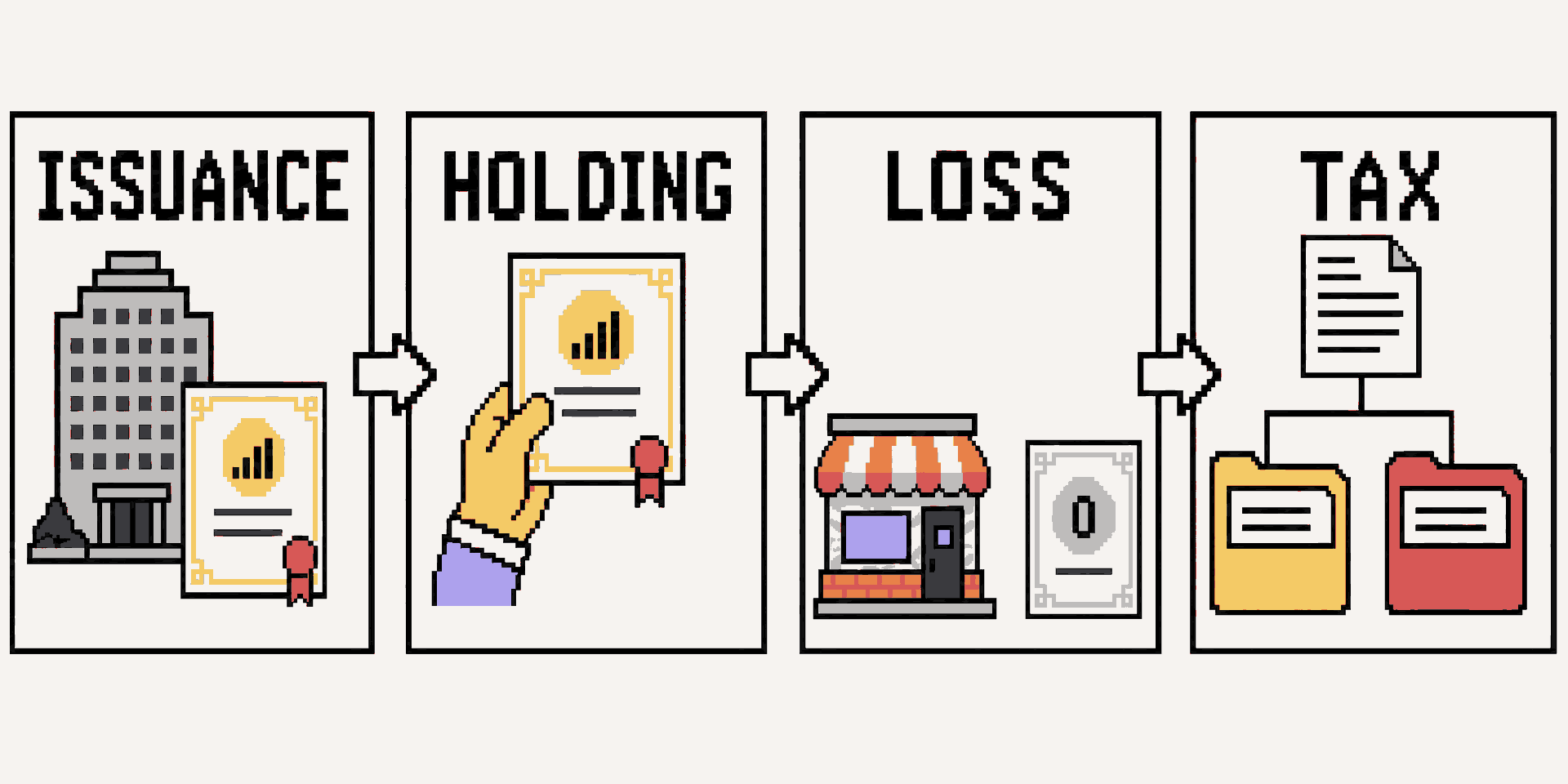
A failed startup can leave an angel with more than a painful zero. The loss may also trigger a tax question: is it a capital loss, or can Section 1244 treat some of it as an ordinary loss? The answer depends on facts that start at issuance and continue through the year of loss.
What is Section 1244 stock?
Section 1244 stock is qualifying stock in a small domestic corporation. When an individual sustains a loss on that stock, Section 1244 can reclassify up to $50,000 of the loss as ordinary for the tax year. The ceiling is $100,000 on a joint return.
That distinction matters. A net capital loss generally offsets capital gains first, then up to $3,000 of ordinary income per year, or $1,500 for married taxpayers filing separately. The rest carries forward. A qualifying Section 1244 loss can reduce ordinary income within its annual limit, subject to the rest of the tax code. The statutory requirements control.
Section 1244 offers loss treatment. It does not reimburse the investment, guarantee a deduction, or turn a weak deal into a good one. Our co-founder and general partner Elizabeth Yin puts the underlying reality plainly: “Investing in risky/uncertain things (such as startups) is a total mindwarp.”
The Section 1244 qualification checklist
A label on a cap table or stock certificate does not create eligibility. The issuer, shares, holder, business activity, and loss all have to line up.
1. The issuer was a domestic corporation
The issuer must be a U.S. corporation when it issues the shares. A domestic C corporation can qualify, and a domestic S corporation can qualify. A typical limited liability company membership interest is not stock.
A later conversion from an LLC to a corporation does not make the earlier LLC interest Section 1244 stock. The new shares and conversion steps need their own analysis.
2. The corporation met the $1 million capital-receipts test
At the time of the issuance in question, the corporation generally must not have received more than $1 million in aggregate for:
- All stock issued up to that point
- Contributions to capital
- Paid-in surplus
This is a cumulative capital-receipts test. It is not the company's valuation, revenue, current cash balance, or the size of one financing round. Returning money to shareholders does not reset the tally.
Each issuance gets tested at its own date. Earlier shares can qualify even if later fundraising takes the company beyond $1 million. Shares issued after the applicable transitional year generally do not qualify. Shares issued during that transitional year can involve a formal designation or a proportional allocation under the Treasury regulations.
That transitional-year rule is one reason a simple founder assurance is thin evidence. You need the corporation's capitalization history through your issuance date.
3. The corporation issued actual stock for eligible consideration
The corporation must issue the shares for money or property other than stock or securities. Stock issued for services does not qualify. For shares issued after July 18, 1984, common or preferred stock can qualify.
A direct cash purchase in a priced equity round is the cleanest fact pattern. Several familiar startup instruments create harder questions:
- Simple Agreement for Future Equity (SAFE): A SAFE gives you a contractual right to future equity. You do not buy stock on the SAFE purchase date. If it converts, Section 1244's rule for stock issued in exchange for stock or securities can become relevant. Do not assume the cash date, conversion date, or resulting shares qualify.
- Convertible note: A note is debt before conversion. The resulting shares require analysis of the original instrument, the exchange, and the applicable reorganization rules.
- Option or service equity: Stock issued for services is outside the rule. An exercise payment, compensation element, and issuance documents can produce a mixed or disputed fact pattern.
- Secondary purchase: Shares bought from a founder, employee, or another investor are not issued to you by the corporation, so they do not qualify in your hands.
The tax characterization of a SAFE, note, option, or conversion can turn on drafting and facts. Treat “Section 1244 eligible” as a conclusion that needs professional support. The instrument's name cannot establish it.
4. The claimant was an eligible original holder
The ordinary-loss treatment is for an individual to whom the corporation issued the stock. The individual must hold it continuously from issuance through the loss.
Section 1244 sets no minimum holding period. Continuous ownership and the other requirements still apply.
Purchasing shares from another shareholder does not work. Receiving them later by gift, inheritance, or distribution from a partnership does not work either. Corporations, trusts, and estates cannot claim the Section 1244 ordinary loss.
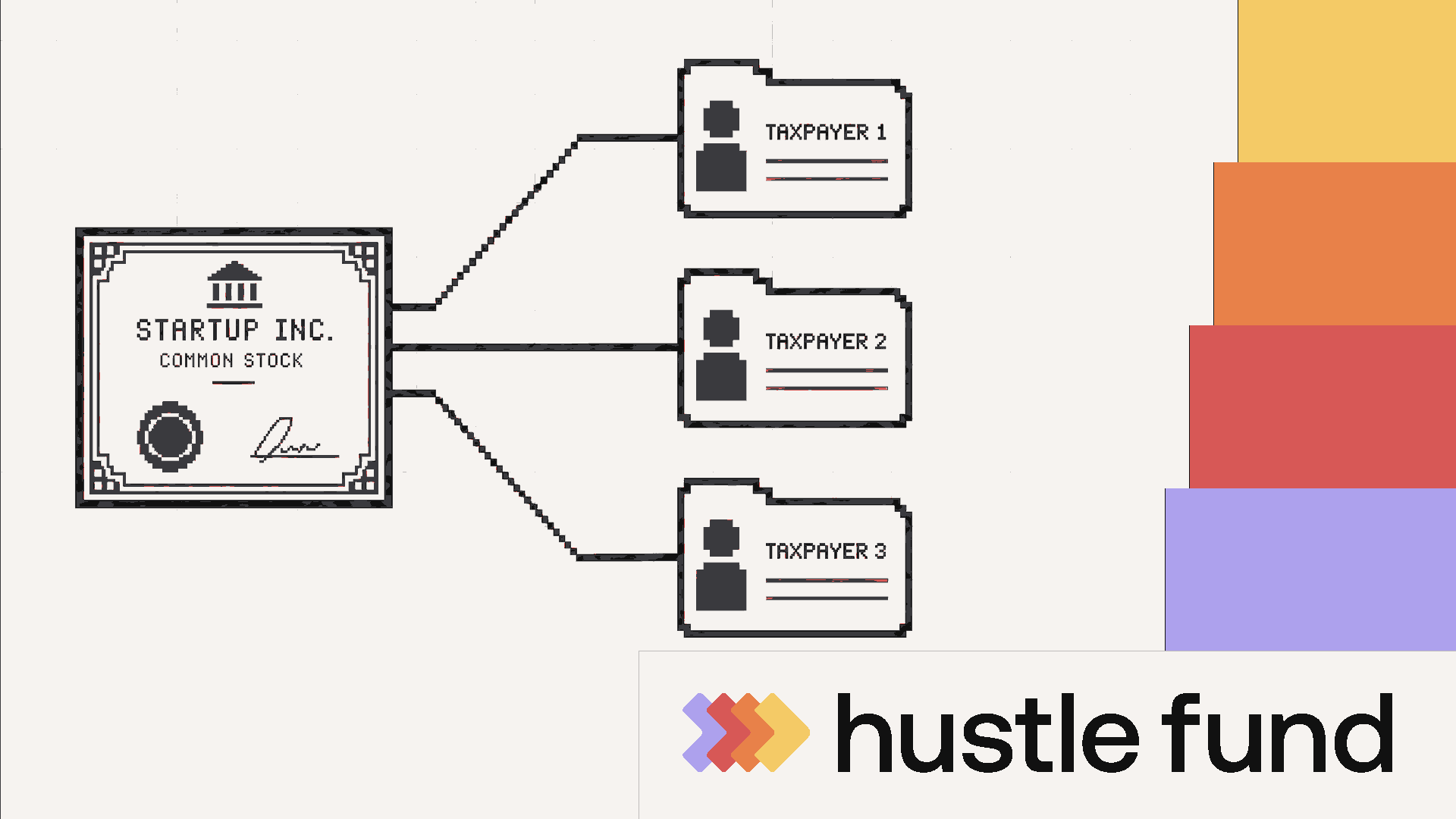
There is a narrow partnership route. A partnership can acquire stock directly from the corporation, and qualifying loss can pass through to an individual who was a partner when the partnership acquired the stock and remained a partner through the loss. The partnership must also hold the shares continuously. The holder regulations limit the loss to the lesser of the partner's distributive share at acquisition or at the time of loss.
This makes the ownership chain material for special purpose vehicle (SPV) investors. An SPV taxed as a partnership may fit the partnership rule, subject to its documents, allocations, membership history, and direct acquisition. An entity taxed as a corporation will not pass a Section 1244 ordinary loss to its investors. Our guide to investing through an SPV explains the broader ownership and administration mechanics.
5. The company passed the operating-business test when the loss occurred
The company must satisfy a gross-receipts test over its five most recent tax years ending before the loss. If it has existed for less time, the test uses that shorter period.
More than 50% of aggregate gross receipts must come from sources outside these passive categories:
- Royalties
- Rents
- Dividends
- Interest
- Annuities
- Gains from sales or exchanges of stocks or securities
The statute waives that percentage test when specified deductions exceed gross income over the testing period. That can matter for a pre-revenue startup spending to build an operating business. The regulations still require the corporation to be largely an operating company, so a shell holding passive investments does not qualify simply because it has expenses.
Eligibility therefore cannot be confirmed for good on the investment date. Issuance facts are tested then, while the operating-business requirement is determined when the loss occurs.
Does the company need to make a Section 1244 election?
There is no general federal election that turns stock into Section 1244 stock. Qualification follows the underlying facts. The company should still maintain records that support those facts. If capital receipts cross $1 million in the transitional year, a timely designation can identify qualifying shares; without one, the regulations apply a proportional allocation. Calling the shares “1244 stock” cannot repair an ineligible issuance.
6. You sustained a deductible loss
Section 1244 applies when qualifying shares are sold or exchanged at a loss or become worthless. A markdown on a quarterly statement is not enough. Worthlessness means the stock became completely worthless during the tax year.
The tax year can be contentious. Dissolution documents, bankruptcy records, final financial statements, creditor claims, asset-sale proceeds, board communications, and cancellation of the shares can help establish when value disappeared. Bankruptcy or a shutdown announcement alone may leave unresolved value or recovery rights.
Under the general worthless-securities rules, stock that becomes completely worthless is treated as sold on the last day of that tax year. The IRS also provides an extended deadline for a refund claim based on worthless securities, generally seven years from the due date of the original return or two years after the tax was paid, whichever is later. The IRS worthlessness guidance explains both rules.
How the annual loss limit actually works
The $50,000 and $100,000 amounts are annual caps across all of a taxpayer's qualifying Section 1244 losses. They are not per company. A joint return gets one $100,000 cap even if both spouses have losses.
Any excess is a capital loss. It does not become another Section 1244 ordinary loss in the next tax year.
Hypothetical, simplified example: Maya files as a single taxpayer. She paid $80,000 cash directly to a qualifying corporation for newly issued shares, held them continuously, and the shares became completely worthless in one tax year. Assume her full basis is eligible and every corporate and holder requirement is met.
- $50,000 is eligible for ordinary-loss treatment under Section 1244.
- The remaining $30,000 is a capital loss.
- The capital portion follows the normal rules for offsetting capital gains, the annual net-capital-loss deduction, and carryforwards.
If Maya had Section 1244 losses in two companies during that year, the combined ordinary amount would still stop at $50,000. Gains on Section 1244 shares remain capital gains when the shares are capital assets, and the IRS says those gains do not net against losses inside the ordinary-loss limit.
The size of the tax benefit depends on taxable income, other gains and losses, filing status, basis, state law, and other return items. A $50,000 ordinary loss does not mean a $50,000 refund.
The records to collect before a startup fails
The issuer often has the evidence that proves corporate eligibility. Once a company shuts down, those people and files may be hard to reach. Collect the core record while the relationship is active.
For each potential Section 1244 position, keep:
- Issuance evidence: The stock purchase or subscription agreement, stock certificate or electronic ledger entry, board approval, cap-table entry, issuance date, class, share count, and wire confirmation.
- Capital-receipts evidence: A company-prepared schedule of money and property received for prior stock, capital contributions, and paid-in surplus through your issuance. Include any transitional-year designation.
- Holder evidence: Records showing direct issuance and continuous ownership. For an SPV, keep the entity's tax classification, investor admission date, cap table, subscription documents, and evidence that the SPV acquired the shares directly.
- Operating-company evidence: Tax returns, financial statements, or a qualified adviser's analysis of gross receipts for the required lookback period.
- Basis evidence: The amount paid, later capital contributions, distributions, reorganizations, stock splits, and other adjustments. Later basis increases may not receive Section 1244 treatment.
- Loss-year evidence: The sale agreement or records supporting complete worthlessness and its timing.
IRS rules require the taxpayer to keep enough records to establish eligibility and distinguish Section 1244 shares from other shares in the same company. Our investor record-keeping guide shows how to organize the wider deal file.
This habit fits a broader Hustle Fund belief. As Elizabeth Yin says, “The more disciplined you are in your thought process/rubric, the more you can improve over time.” In Angel Squad, our angel-investing community, members learn to ask sharper questions about investment structures and deal documents alongside peers. Tax conclusions still belong with independent professionals who can review the complete record.
How to report a Section 1244 loss
Individuals report the allowable ordinary portion on Form 4797, Part II, line 10. The IRS instructs taxpayers to:
- Enter “Losses on Section 1244 (Small Business Stock)” in column (a)
- Enter the allowable ordinary loss in column (g)
- Attach a computation of the loss
- Report losses above the ordinary cap on Schedule D, using Form 8949 as applicable
- Report gains on Schedule D and Form 8949
The current Form 4797 instructions also tell taxpayers to keep adequate records separating Section 1244 stock from other stock in the corporation.
A tax return preparer will need more than a K-1, statement marked “worthless,” or founder email. Give them the full issuance, ownership, corporate, basis, and loss-year file.
Section 1244 stock versus QSBS
Section 1244 and qualified small business stock (QSBS) under Section 1202 solve different tax problems.
- Section 1244 addresses a loss. It can make a limited amount ordinary when qualifying stock is sold at a loss or becomes worthless.
- Section 1202 addresses a gain. It can exclude some or all eligible gain when its separate taxpayer, issuer, issuance, asset, active-business, and holding rules are met.
One block of shares can potentially satisfy both provisions, but neither status proves the other. The corporate thresholds also measure different things. Section 1244 uses a $1 million cumulative capital-receipts test at issuance. QSBS uses its own gross-assets rules. Our current QSBS guide covers that separate analysis.
Questions to take to your tax professional
Send the documents with specific questions. These prompts expose the facts that decide the result:
- Was the issuer a domestic corporation on the exact issuance date?
- Did I receive stock directly, and what did the corporation receive for it?
- How should my SAFE, convertible note, option, reorganization, or SPV interest be classified?
- What were the corporation's cumulative capital receipts immediately after my issuance?
- Did a transitional year require a share designation or proportional allocation?
- Did the corporation satisfy the gross-receipts test or its operating-company exception?
- Did I or the partnership hold the shares continuously?
- Which basis adjustments qualify for ordinary treatment?
- What event proves the stock became completely worthless, and in which tax year?
- How should the ordinary and capital portions appear on my federal and state returns?
Our co-founder and general partner Eric Bahn describes hustle as “great execution meets high velocity.” Apply that standard to the company first. Section 1244 belongs in your downside file, after the investment case, structure, and risk fit make sense.
Startup losses are part of angel investing, and tax labels are easy to misread. Apply to Angel Squad to learn how experienced investors assess early-stage deals, ownership structures, and the documents worth saving before you write a check.













.png)