
QSBS Stacking: A Risk-First Guide to Gifts and Trusts
Brian Nichols is the co-founder of Angel Squad, a community where you’ll learn how to angel invest and get a chance to invest as little as $1k into Hustle Fund’s top performing early-stage startups.
This is general education, not legal, tax, investment, accounting, or valuation advice. Every example is hypothetical and simplified, not a projection. Startup investments are speculative, illiquid, long term, and may lose all value. Past results and current marks do not guarantee future results. Outcomes depend on eligibility, governing documents, fees, carry, tax facts, cap-table records, valuation policy, and timing. Read the governing documents and engage qualified independent legal, tax, investment, accounting, and valuation professionals before any transfer, trust, sale, filing, or investment decision.
QSBS stacking sounds like a way to copy one tax exclusion several times. The real transaction is much heavier: you give qualified small business stock to another genuine taxpayer, who may have a separate federal gain limit for that issuer. That transfer changes ownership and creates gift, trust, documentation, and audit questions. Here is the risk-first way to understand it.
What is QSBS stacking?
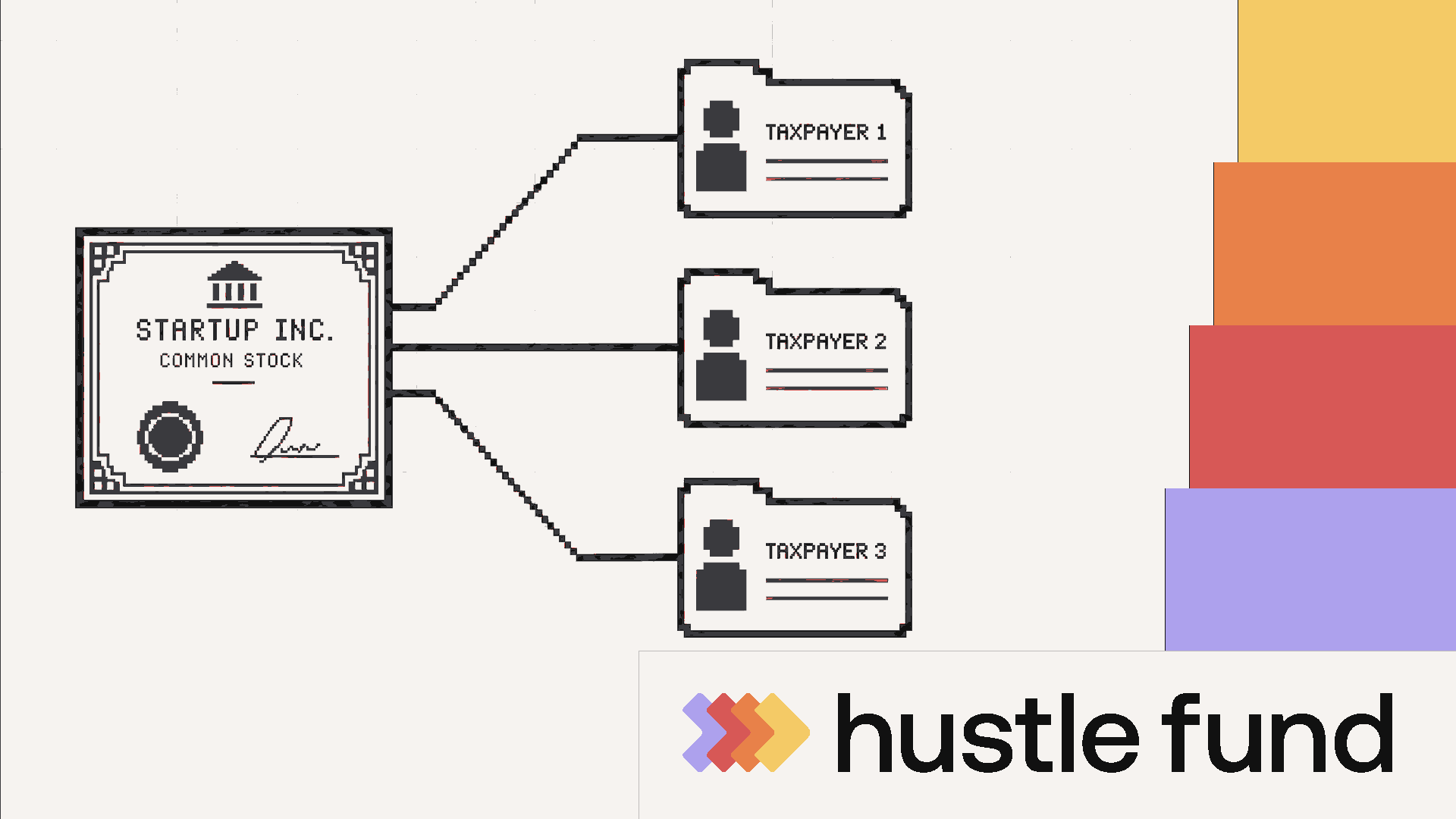
QSBS stacking is the practice of transferring qualified small business stock (QSBS) to separate taxpayers so that more than one taxpayer may use an Internal Revenue Code Section 1202 gain exclusion for stock from the same company.
The usual routes are an outright gift to another individual or a gift to an irrevocable non-grantor trust. A revocable or grantor trust generally does not create a separate federal income taxpayer for this purpose because the grantor reports the trust’s relevant income.
Three rules create the opening:
- The limit applies by taxpayer and issuer. For stock acquired on or before July 4, 2025, the base fixed-dollar limit is generally $10 million. For stock acquired after that date, it starts at $15 million and is indexed for taxable years beginning after 2026. The other arm is 10 times the aggregate adjusted bases of the issuer’s QSBS disposed of during that tax year, with any basis addition after original issuance disregarded. The fixed-dollar limits are coordinated, not additive.
- A valid gift can preserve the QSBS history. Section 1202(h) treats a gift recipient as acquiring the stock in the same manner as the donor and adds the donor’s continuous holding period. A gift does not restart the clock or turn an ineligible share into QSBS.
- The recipient must be a real separate taxpayer. An individual recipient controls their shares. A non-grantor trust has its own trustee, governing terms, administration, tax reporting when required, and beneficiaries. Paper separation with retained practical control is a weak foundation.
Section 1202 supplies the exclusion, per-issuer limits, and gift carryover rules. It is not the sole source of the transaction’s mechanics. Whether a trust is taxed to a grantor or as a separate taxpayer also depends on Sections 641 and 671-679, while state law and the transfer documents help determine who owns the property and whether a gift was completed. Together, those rules create a planning possibility, not an automatic result.
Stacking cannot repair weak QSBS eligibility
Start with the shares. A trust diagram is useless if the stock fails Section 1202.
Confirm all of these points before modeling another exclusion:
- Issuer: The company was a domestic C corporation when it issued the shares and during substantially all of the required holding period.
- Original issuance: You generally acquired stock directly from the company for money, eligible property, or services. Ordinary secondary purchases do not satisfy this rule.
- Asset ceiling: For otherwise eligible stock issued after August 10, 1993 and on or before July 4, 2025, the base ceiling is $50 million. For stock issued after July 4, 2025, it is $75 million. The corporation and any predecessor must not have exceeded the applicable ceiling at any time from August 10, 1993 through the moment before issuance, and must also pass a separate immediately-after-issuance test that includes the amounts received in the issuance. For taxable years beginning after 2026, the two $75 million figures are adjusted for inflation using a 2025 base and rounded to the nearest $10,000.
- Active business: At least 80% of the company’s assets by value were used in qualified active businesses during substantially all of the holding period.
- Excluded activities and redemptions: The business did not fall into an excluded category, and company share repurchases around issuance did not taint the stock.
- Holding period: Pre-cutoff stock generally needs more than five years for its available exclusion. Post-cutoff stock can qualify for a 50% exclusion after three years, 75% after four, and 100% after five.
The current Section 1202 text contains the asset period, both limit formulas, and the 2025 changes. Our guide to the new QSBS rules explains the eligibility tests in more detail. Stacking adds another layer. It never replaces this eligibility work.
The $10 million and $15 million limits are not additive
A taxpayer who owns old and new QSBS from the same issuer cannot claim a $10 million bucket plus a $15 million bucket.
Section 1202(b)(4) measures these reductions using eligible gain taken into account under subsection (a), before the 50%, 75%, or 100% exclusion percentage is applied. For stock acquired on or before July 4, 2025, the $10 million limit is reduced by that eligible gain from prior years for the same issuer, including gain on stock from either side of the cutoff. For stock acquired after July 4, 2025, the $15 million limit is reduced by that eligible gain from all prior years for the issuer and by eligible gain on old lots taken into account in the current year.
That cross-reduction controls mixed-lot sales. In a base-limit example, taking $10 million of eligible gain into account on an old lot first generally leaves no more than $5 million of the $15 million new-lot limit. Taking the full $15 million of eligible gain into account under the new-lot limit first can leave no fixed-dollar limit for a later old-lot sale. Future inflation adjustments can change the new-lot figure, but they do not turn the two limits into $25 million.
The distinction matters for post-cutoff stock sold after three or four years. Taking $10 million of eligible gain into account after three years can produce a $5 million exclusion, yet it uses $10 million of the dollar limit. After four years, the exclusion can be $7.5 million, while the same $10 million counts against the limit.
The 10-times-basis arm is a separate alternative for the tax year. It uses the aggregate adjusted bases of the QSBS disposed of that year, determined without any addition to basis made after the stock was originally issued. A later capital contribution therefore does not automatically enlarge this limit.
How gifts and non-grantor trusts can change the limit
Outright gifts
An outright gift is the cleanest ownership story. The recipient owns the shares, controls the later sale subject to company restrictions, and reports the result. If the transfer qualifies as a gift under Section 1202(h), the stock can keep the donor’s acquisition manner and prior holding period.
The tradeoff is equally clean: you no longer own the shares. The recipient’s creditors, divorce, estate plan, age, and judgment can affect the asset. A gift also needs its own gift-tax and valuation analysis.
Non-grantor trusts
An irrevocable non-grantor trust may be a separate income taxpayer with its own Section 1202 limit. “Irrevocable” alone does not establish that result. A trust can be irrevocable and still be treated as owned by the grantor for income-tax purposes.
The trust instrument and administration have to match the intended tax status. Counsel will examine the trustee, distribution powers, borrowing, swaps, reimbursement rights, beneficiaries, grantor access, and state law.
A non-grantor trust may need its own taxpayer identification number and Form 1041 when the applicable filing conditions are met. Those conditions depend on facts such as taxable income, gross income, and beneficiary status, so an annual return is not a categorical requirement for every trust in every year. Separate books, ownership records, and genuine fiduciary administration still matter.
Spouses
Do not model two full fixed-dollar limits merely because a couple files two returns. Section 1202 halves the applicable fixed-dollar limit for a married person filing separately. Joint-return allocations and separately owned shares add more facts. Marital status is a tax-analysis input, not a stacking shortcut.
A simplified QSBS stacking example
Hypothetical, simplified tax-only example. The sale occurs January 2, 2027 and covers direct common stock in one issuer acquired January 1, 2019. The original total basis is $100,000, with no follow-on investment. Gross cash proceeds are $18 million and fully realized. The figures are before transaction fees, carry, federal and state taxes, trust costs, and gift-tax effects. Assume the company and shares satisfy every QSBS test, each transfer is a completed bona fide gift, each recipient is respected as a separate taxpayer, no prior Section 1202 gain was claimed for this issuer, and the fixed-dollar arm controls. These assumptions are illustrative and do not establish eligibility or predict a return.
If one person owns all the shares, the eligible gain is $17.9 million. The pre-cutoff fixed-dollar limit is generally $10 million, leaving $7.9 million outside that arm.
Now assume the investor completed a valid gift of 45% of the shares to one separate non-grantor trust well before a sale was fixed. At exit, the investor realizes $9.9 million of gross proceeds and the trust realizes $8.1 million. Their carryover bases and gains follow the transferred shares. Each taxpayer’s gain is below $10 million, so the combined amount that may fit within two fixed-dollar limits is larger.
That arithmetic hides the hard questions: Was the stock QSBS? Was the trust a separate taxpayer? Was the gift complete? Was a sale already practically certain? Did the company approve and record the transfer as its documents required? Did the appraisal and gift-tax reporting support the value? A spreadsheet cannot answer any of them.
The biggest QSBS stacking risks
Multiple trusts face two distinct anti-abuse questions
The Section 643(f) rule sits in Subchapter J, the part of the Code governing estates, trusts, beneficiaries, and decedents. It says that, under regulations, two or more trusts may be treated as one for purposes of that subchapter when they have substantially the same grantor and primary beneficiary and a principal purpose is avoiding federal income tax. A husband and wife are treated as one person for this test. There is no statutory safe number of trusts.
Section 1202 sits in Subchapter P. That placement leaves an unsettled question: Section 643(f) does not expressly say that multiple trusts are combined for Section 1202’s per-taxpayer exclusion limit. It should not be described as a settled Section 1202 aggregation rule. It can still affect Subchapter J treatment and makes duplicated trusts with little independent substance harder to defend.
Section 1202(k) is different. It separately authorizes Treasury to issue regulations preventing avoidance of Section 1202 through split-ups, shell corporations, partnerships, “or otherwise.” It does not turn Section 643(f) into a Subchapter P rule. Treasury and the IRS included Section 1202 guidance in their 2025-2026 priority plan, but the plan does not settle whether, how, or when future regulations might address trust stacking.
Different names and taxpayer identification numbers do not establish different economic arrangements. Repeated beneficiaries, identical trustees and terms, coordinated distributions, retained control, and a thin non-tax purpose can all weaken the separateness story. Counsel needs to analyze Section 643(f), Section 1202(k), Subchapter J classification, state law, and the actual administration as distinct issues.
Late gifts can trigger assignment-of-income problems
Signing the gift document the week before closing does not necessarily move the gain. Courts examine whether the donor’s right to sale proceeds was already practically fixed. Negotiations, approvals, unresolved conditions, corporate formalities, and closing probability all matter.
The Tax Court’s primary Estate of Hoensheid opinion involved a charitable stock gift, not QSBS stacking. The court looked beyond whether the charity was legally bound to sell and held that the donor had a fixed right to income when the sale was practically certain. The lesson is to complete the legal and economic transfer before the right to income becomes fixed, with qualified counsel analyzing the actual sale timeline.
Gift tax and income tax are separate systems
A transfer can be a completed gift for gift-tax purposes while the trust has a different status for income tax. It can also consume lifetime gift and estate tax exemption without creating current cash to pay advisers or tax.
Private-stock value at the gift date needs support. A recent financing, a 409A valuation, and a common-stock appraisal answer different questions. Share class, preferences, transfer restrictions, company performance, and sale discussions can change fair market value. Form 709 reporting and adequate disclosure deserve their own review.
Control, access, and administration are real costs
An irrevocable gift means giving up rights. Side agreements, routine loans back to the grantor, or rubber-stamped distributions can contradict the intended separation. Trustees also owe duties to beneficiaries and may make decisions the donor dislikes.
Add legal setup, appraisal, return preparation when required, trustee, investment, and ongoing administration costs to the model. A theoretical exclusion with weak governance can create a very expensive argument.
Company documents and state taxes still apply
Private-company stock can carry a right of first refusal, board-consent requirement, permitted-transferee definition, joinder, securities restriction, or notice duty. Complete every step required by the governing documents and ask the company or transfer agent to update the stock ledger and certificate or electronic records.
Ledger registration is important evidence and may be a required operational step. It does not, by itself, decide whether a gift was completed under every governing document, state-law rule, or federal tax doctrine. Delivery, acceptance, control, and other records can matter too. Our guide to putting stock in a trust walks through the ownership file.
Section 1202 is a federal rule. States can reject or modify it, and trust taxation can turn on the grantor, trustee, beneficiaries, administration, source of gain, and residence. A trust formed in a no-tax state does not automatically erase another state’s claim.
Special purpose vehicles and Simple Agreements for Future Equity need a different analysis
Many angels invest through a special purpose vehicle (SPV) or a Simple Agreement for Future Equity (SAFE) rather than owning startup shares directly.
- Special purpose vehicle (SPV): The SPV may own the QSBS while you own a partnership interest. Section 1202(g) generally requires a claimant to have held the pass-through interest when the vehicle acquired the stock and continuously through its sale. A later gift of the SPV interest may fail that continuity test. Do not assume it creates another exclusion.
- Simple Agreement for Future Equity (SAFE): A SAFE is a contract that may convert into stock. Its federal tax classification and QSBS start date are unsettled and fact-specific. Gifting the contract does not prove that you transferred QSBS.
- Secondary share: Stock bought from another shareholder usually fails the original-issuance requirement. Moving it to a trust does not cure that history.
First identify the exact asset, legal owner, tax owner, and acquisition chain. Then ask whether Section 1202’s gift or pass-through rules apply.
QSBS stacking and packing are different
Stacking tries to increase the number of taxpayers with an available per-issuer limit. Packing tries to increase the 10-times-basis arm for one taxpayer, often through how high-basis stock is created or disposed of.
Section 1202 disregards basis additions made after original issuance when it calculates the 10-times-basis limit. Contributing more capital to existing shares therefore does not automatically pack that limit. Entity conversions, contributed property at original issuance, later share issuances, and basis allocation can also change the asset ceiling, holding period, and exclusion math.
Neither “stacking” nor “packing” appears as a defined strategy in Section 1202. They are practitioner labels for fact-heavy planning. Treat packing as a separate tax project rather than an add-on to a trust stack.
A risk-first review checklist
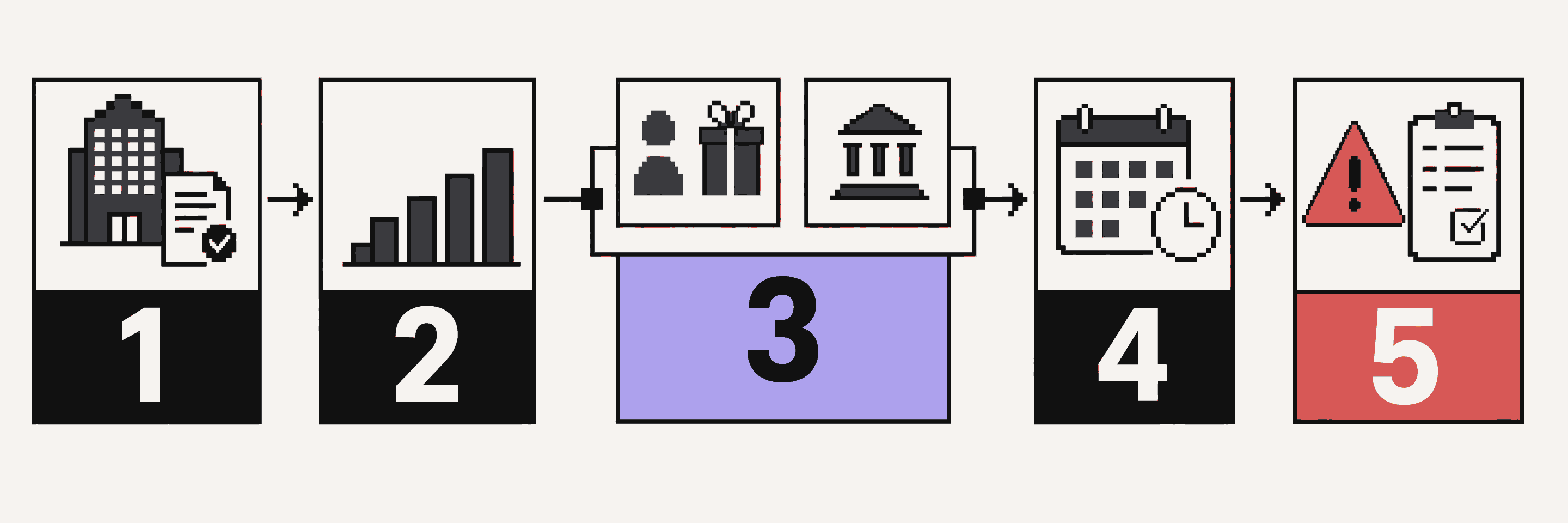
Run these gates in order:
- Prove the asset and QSBS eligibility. Identify direct stock, a SAFE, option, note, warrant, SPV interest, or fund interest, then rebuild the issuer, issuance, asset, active-business, redemption, and holding-period record for every lot.
- Model the existing limit. Include basis, acquisition date, mixed lots, prior Section 1202 claims for the issuer, spouse rules, sale year, and state treatment.
- Identify a genuine separate taxpayer and non-tax purpose. Choose between an individual gift and a non-grantor trust based on the beneficiary goal, distribution design, trustee role, estate plan, and reason each arrangement exists.
- Test and administer the transfer. Review company restrictions, sale timing, assignment of income, gift completion, valuation, reporting, trustee costs, tax filings when required, and years of records.
- Stress-test a failed exclusion and preserve the file. Model tax, penalties, interest, legal cost, and family consequences if one or all taxpayers lose the position. Keep the evidence another taxpayer will need years later.
Our co-founder and general partner Elizabeth Yin puts the investing principle plainly in Democratizing Knowledge: “Don't try to pick a co. Select a portfolio.” A possible tax break should never turn one concentrated, illiquid startup position into a larger bet than you can afford to lose.
The same discipline belongs in the evidence file. As Elizabeth Yin says in Democratizing Knowledge, “The more disciplined you are in your thought process/rubric, the more you can improve over time.” Record each assumption when you invest, update it after financings and redemptions, and preserve the documents another taxpayer will need years later.
When is QSBS stacking worth professional analysis?
The question becomes relevant when expected eligible gain from one issuer could exceed your available limit, the shares have a strong QSBS record, you have a genuine wealth-transfer goal, and you can permanently part with ownership well before an exit is fixed.
Pause when any of these is true:
- expected eligible gain fits within your existing limit;
- the holding is a SAFE, secondary purchase, or transferred SPV interest with unresolved eligibility;
- the company cannot support its asset, active-business, or redemption history;
- you need to keep control or regain the money later;
- a sale is already far along;
- several near-identical trusts exist mainly to produce more limits; or
- the plan only works if pending guidance preserves today’s most aggressive reading.
QSBS stacking can change a federal tax result. It also transfers real property to real people or fiduciaries. Start with the investment and ownership facts, then let independent tax and legal professionals decide whether the structure can carry its weight.
If you want to build structure-first diligence habits with experienced peers and review real early-stage opportunities, apply to Angel Squad.







.png)






.png)