
Fintech market map: 9 sectors angel investors should know
Brian Nichols is the co-founder of Angel Squad, a community where you’ll learn how to angel invest and get a chance to invest as little as $1k into Hustle Fund’s top performing early-stage startups.
This is general educational content, not legal, tax, or investment advice. Fintech rules vary by product and jurisdiction. Startup investments are speculative, illiquid, and can result in total loss. Review the governing documents and use qualified independent advisers.
Fintech now covers everything from merchant checkout to bank cores. A logo wall will show you who exists, but it won't tell you where a startup sits in the value chain, how it makes money, or which dependency could break the business.
For angel investors, those details are the map. Use this framework to sort deals, spot category concentration, and ask sharper questions before you write a check.
How to read a fintech market map
A fintech company uses software, data, or a new business model to deliver a financial service or help another business deliver one. That broad definition creates messy boundaries. A spend-management company may combine software, cards, payments, and lending in one product.
This map is global and organized by business model rather than headquarters. We solve category overlap with three rules:
- The financial job must be central. Generic software sold to banks is not automatically fintech.
- The primary customer job determines the category. We place a company where its main buyer gets the core value, even if it could fit elsewhere.
- The names are reference points, not picks. Established companies belong beside startups because they define the competitive bar. Inclusion is not a ranking, endorsement, or statement that shares are available.
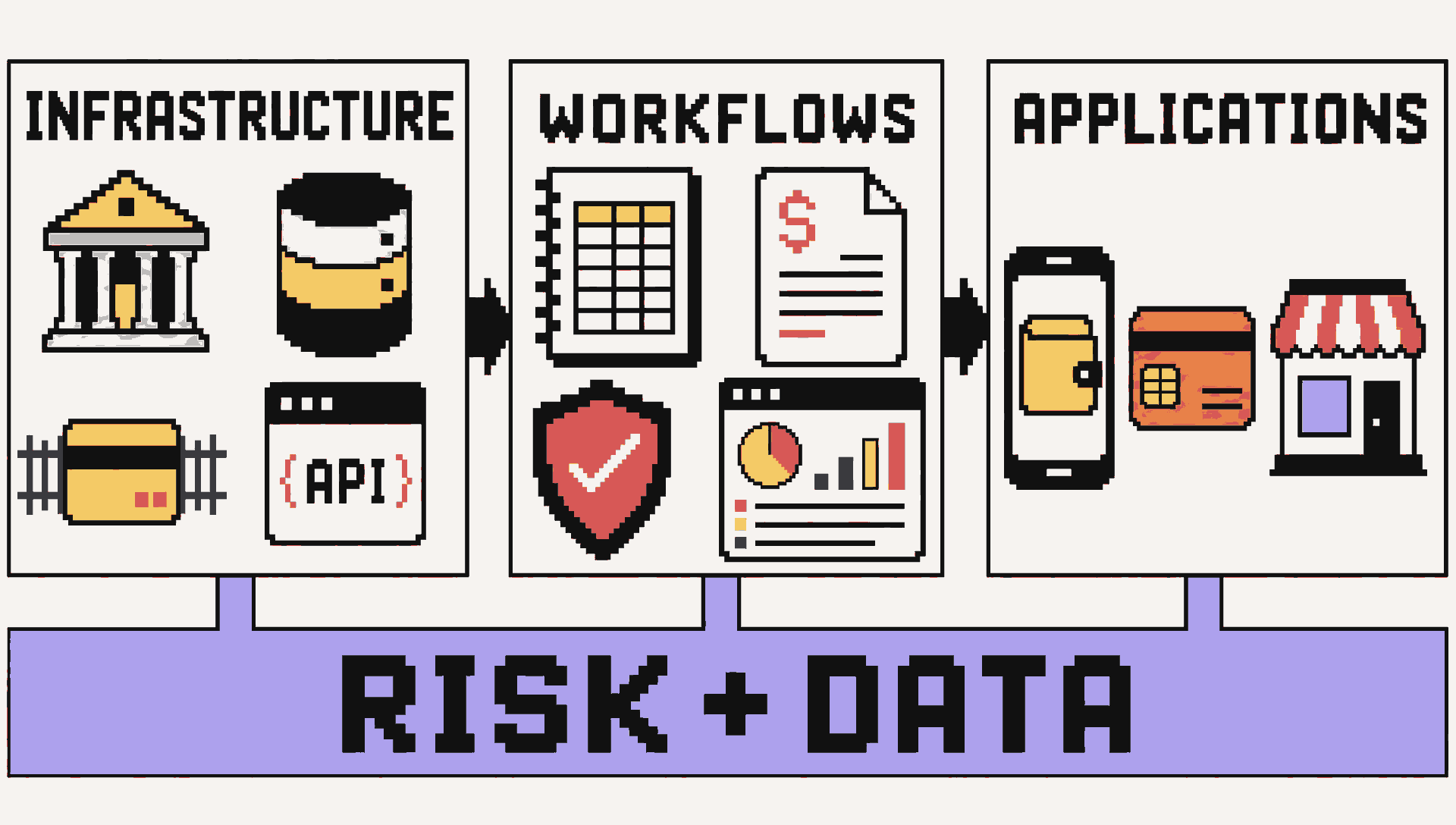
It also helps to see fintech in three layers. Customer applications help people and businesses save, spend, borrow, invest, or insure. Workflow products help finance teams and financial institutions complete a job. Infrastructure provides the ledgers, data connections, card issuance, custody, and money movement underneath both. Identity, fraud, compliance, and data quality cut across all three.
Our co-founder and general partner Elizabeth Yin says, “Don't try to pick a company. Select a portfolio.” A market map makes that advice concrete. Five payments startups can still be one concentrated bet if they depend on the same customer, rail, or sponsor bank.
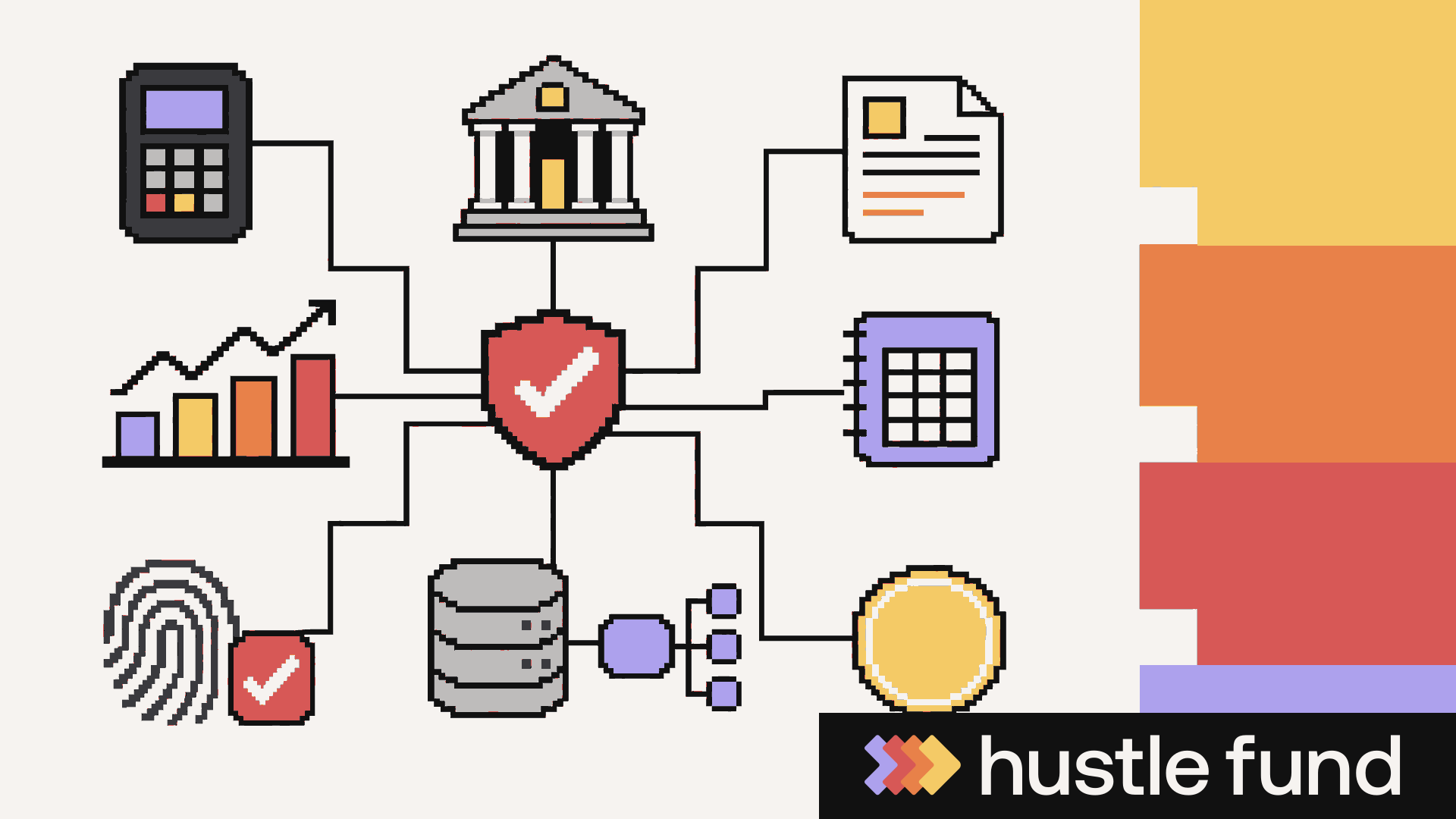
The 2026 fintech market map
The nine sectors below use each company's primary job as the organizing principle. Some names span several sectors. Put a startup where its strongest customer value and economic engine live, then note the adjacencies in your diligence memo.
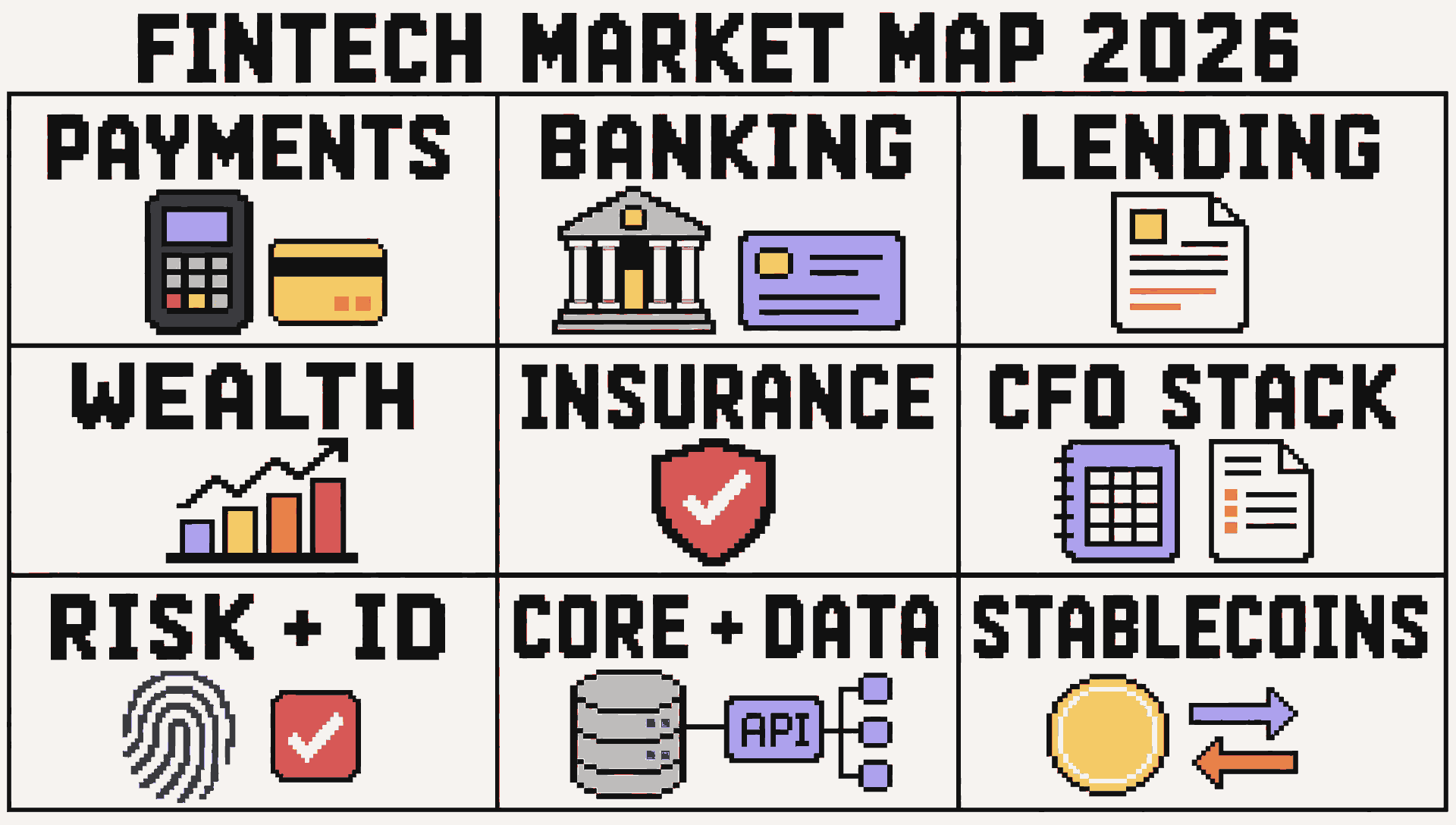
1. Payments and money movement
This sector covers merchant acceptance, payment orchestration, payouts, business transfers, foreign exchange, remittances, and cross-border settlement. Embedded payments are a distribution method inside this sector, not a separate market.
Reference companies: Stripe, Adyen, Checkout.com, Airwallex, and Modern Treasury.
Economics to inspect: payment volume, net take rate after network and processing costs, gross margin, fraud losses, chargebacks, foreign-exchange revenue, and customer concentration.
Investor lens: Volume can rise while economics deteriorate. Ask which part of the payment flow the company controls, which costs are passed through, and whether the product still matters if an incumbent matches its price.
2. Financial accounts and embedded banking
This category includes digital banks, business accounts, banking-as-a-service platforms, card and account programs, and the software that lets a non-bank company add financial products.
Reference companies: Mercury, Nubank, Unit, and Treasury Prime.
Economics to inspect: interchange, subscription and platform fees, deposit economics, rewards, support costs, account activity, and revenue per active customer.
Investor lens: Follow the regulated chain. Who holds the charter, the customer funds, and the compliance responsibility? U.S. banking agencies' third-party risk guidance explicitly includes relationships between banks and fintech companies, covering planning through termination. A startup's sponsor-bank concentration is an operating risk, not a footnote.
3. Lending and credit decisioning
Consumer credit, small-business lending, buy now pay later, revenue-based financing, loan marketplaces, underwriting software, and servicing tools sit here.
Reference companies: Affirm, Upstart, Tala, Fundbox, and Pipe.
Economics to inspect: approval rates, cost of capital, net interest margin, origination and servicing fees, delinquency and loss rates by cohort, funding concentration, and repayment duration.
Investor lens: Separate the software from the balance-sheet risk. Ask who funds each loan, who absorbs losses, how performance changes by vintage, and whether the underwriting advantage survives a different rate or credit environment.
4. Wealth, investing, and capital markets
This sector includes brokerage, automated investing, portfolio management, market data, trading infrastructure, custody, alternative-investment access, and tools for advisers or asset managers.
Reference companies: Robinhood, Betterment, Public, Alpaca, and Wealthfront.
Economics to inspect: funded accounts, net deposits, assets under management or administration, trading activity, subscription revenue, cash-sweep revenue, custody fees, and revenue concentration by product.
Investor lens: Acquisition can look cheap during a market frenzy and painful during a quiet year. Compare customer retention and net deposits across market cycles. Then identify the custodian, clearing partner, and revenue sources that sit behind the interface.
5. Insurance
Insurance fintech, often called insurtech, includes digital carriers, managing general agents, brokers, comparison marketplaces, underwriting and claims software, and compliance tools for carriers and agents.
Reference companies: Lemonade, Root, Coalition, Newfront, and AgentSync.
Economics to inspect: premium growth, commission or software revenue, customer retention, claims frequency and severity, loss ratio, acquisition cost, reinsurance, and carrier concentration.
Investor lens: Two similar apps may carry very different risk. Establish whether the company is the carrier, an agency, a managing general agent, or a software vendor. Then ask who sets prices, holds reserves, pays claims, and owns the customer relationship.
6. Finance operations and the CFO stack
Spend management, accounts payable and receivable, billing, accounting, tax, treasury, payroll, benefits, travel, and financial planning software belong in the CFO stack. Many products blend subscription software with payments or interchange.
Reference companies: Ramp, Brex, BILL, Rillet, and Navan.
Economics to inspect: annual recurring revenue, payment volume, interchange, product attach rate, retention, implementation cost, and the share of gross margin produced by software versus financial services.
Investor lens: Find the daily or weekly workflow that makes the product hard to remove. A broad platform story matters only after the startup earns a wedge. Ask which system of record it replaces or improves, how long implementation takes, and whether services work is hiding inside software margins.
7. Identity, fraud, risk, and compliance
This cross-cutting sector includes identity verification, know-your-customer and know-your-business checks, anti-money-laundering monitoring, fraud detection, case management, regulatory reporting, and risk decisioning.
Reference companies: Socure, Middesk, Alloy, Sardine, and Unit21.
Economics to inspect: verification or decision volume, price per check, false-positive and false-negative rates, manual-review cost, expansion revenue, and data-provider concentration.
Investor lens: “Uses AI” is not a moat. Ask what proprietary feedback improves the model, which decisions still require a person, how customers audit an outcome, and what happens when an upstream data source disappears.
8. Financial data, core systems, and developer infrastructure
These are the picks and shovels: account connectivity, financial-data normalization, ledgers, core banking, card issuing, treasury infrastructure, and application programming interfaces (APIs) that let developers build financial products.
Reference companies: Plaid, MX, Mambu, Thought Machine, and Marqeta.
Economics to inspect: API or account volume, platform fees, implementation revenue, uptime, customer concentration, time to launch, retention, and gross margin after support and services.
Investor lens: Infrastructure wins through reliability and integration depth, but both take time. Ask how long a customer takes to go live, how expensive migration would be, which regulated or network partners sit underneath the product, and whether high-touch implementation limits scale.
9. Stablecoins and digital-asset infrastructure
This category covers stablecoin issuance and orchestration, wallets, custody, on-ramps and off-ramps, settlement, institutional trading infrastructure, and developer tools for moving tokenized value. Consumer speculation is a use case. It is not the whole sector.
Reference companies: Circle, Anchorage Digital, BVNK, Zero Hash, and Rain.
Economics to inspect: payment and conversion volume, custody or platform fees, spread, reserve-related revenue, assets on platform, liquidity cost, and concentration by bank, chain, token, or customer.
Investor lens: Start with the customer job. Does the product make settlement faster, cheaper, more available, or easier to program than existing rails? Then trace custody, liquidity, banking, smart-contract, and jurisdiction dependencies. A token label does not remove ordinary counterparty or operational risk.
Where angels can build a sourcing edge
The map becomes more useful when it points to people and problems you already understand. Start with your operator network, then follow recurring pain into a narrow sector.
- Finance and accounting leaders: Focus on the CFO stack, payments, treasury, and financial data. You can test whether a workflow is frequent, painful, and worth changing systems to fix.
- Banking, credit, insurance, and risk operators: Focus on accounts, lending, insurtech, identity, and compliance. You can separate a product innovation from a fragile regulatory or balance-sheet setup.
- Product, engineering, and data leaders: Focus on infrastructure, core systems, fraud, and developer tools. You can challenge API quality, implementation work, reliability, and claims about proprietary data.
- Marketplace and vertical-software operators: Focus on embedded payments, credit, and insurance. You can judge whether the financial product improves retention and margin or merely adds complexity.
- International operators: Focus on cross-border payments, remittances, and stablecoin rails. You can see local payment habits, banking gaps, and distribution channels that a U.S.-only investor may miss.
When you hear the same manual workaround, rejected transaction, reconciliation problem, or partner failure three times, write it down. Identify who feels the pain, who owns the budget, and which incumbent benefits from the status quo. That is the beginning of a sector thesis and a targeted founder-sourcing list.
What fintech capital is rewarding now
Headline funding can mislead. Global fintech investment reached $103.1 billion across 2,100 deals in the first half of 2026, up from $72.2 billion in the prior half. Yet mergers and acquisitions accounted for $67.9 billion, while venture capital accounted for $31.5 billion. One $24.3 billion payments acquisition also lifted the total. The same KPMG fintech data says investors are concentrating capital in proven business models and scaled market leaders.
Three signals matter for an early-stage map:
- Infrastructure and workflow depth beat a thin feature. A startup that owns a painful process, critical integration, or trusted data loop has more room to expand than one shipping a nicer interface.
- AI belongs inside every sector. It can change underwriting, reconciliation, compliance review, claims, research, and support. Classify the company by the financial job it completes, then assess whether AI improves cost, speed, accuracy, or customer outcomes.
- Exit activity does not equal broad early-stage appetite. Large acquisitions can make sector totals look healthy while seed funding stays selective. Compare a startup with companies at the same stage and business model, not the largest headline in fintech.
Turn the map into an investment thesis
A thesis narrows the landscape into a repeatable decision process. You do not need to predict the winner in all nine sectors.
- Choose one narrow cell. “Fintech” is too broad. “Cross-border payments for vertical software platforms” gives you a buyer, job, and competitive set.
- Trace money, data, and responsibility. Draw the customer, fintech, banks, networks, data vendors, and regulators involved. Mark who earns each fee and who absorbs each loss.
- Set category-specific evidence. A lender needs credit cohorts. An insurer needs claims data. Infrastructure needs uptime, implementation, and retention. Do not grade them with one generic software scorecard.
- Define the why now. Look for customer behavior, technology, or policy changes that make adoption easier. Our guide to evaluating startup market size explains why actual market pull tells you more than a giant total addressable market slide.
- Write the disconfirming case. Name the dependency, incumbent response, or unit-economic assumption most likely to break the thesis. Elizabeth's partner-dependency question is blunt and useful: “What happens if the other business decides to go after this market themselves?”
- Log decisions and revisit them. Our co-founder and general partner Eric Bahn puts it: “Investing requires practice like everything else.” Save what you believed, the evidence you used, and what changed after the check.
In Angel Squad, peer learning helps operators challenge category assumptions while curated deal flow provides real companies on which to practice. Your domain experience becomes useful when you turn it into explicit questions that another investor can test.
A fintech diligence checklist
Before a fintech pitch moves forward, answer these eight questions:
- Customer: Who uses the product, who pays, and who controls distribution?
- Revenue: Which transaction, balance, subscription, or service produces gross profit?
- Risk: Who absorbs fraud, credit loss, claims, chargebacks, or operational failures?
- Permission: Which charter, license, registration, or partner makes the product possible?
- Concentration: Could one bank, processor, data source, customer, or channel stop the company?
- Proof: Which cohort, loss curve, retention measure, or workflow result validates the pitch?
- Moat: What improves with scale: data, distribution, liquidity, trust, integration depth, or cost?
- Expansion: Can the company add products without weakening focus or taking on unattractive risk?
A good market map tells you where a startup sits. A good investment process tells you what must be true for it to win.
If you want to practice that process with curated early-stage opportunities and experienced investors, apply to Angel Squad. Bring your operator expertise. We'll help you turn it into repeatable investing judgment.












.png)