
Equity Crowdfunding Platforms: 4 Options Compared
Equity crowdfunding platforms have made startup investing easier to access. They have also made it easier to mistake a polished campaign page for a good investment.
The platform matters because it controls which offerings you can see, what you pay, which disclosures are easy to find, and how your records are handled after closing. Comparing those details before the pitch helps you choose the right access point and protect your portfolio budget.
What an equity crowdfunding platform actually does
Equity crowdfunding lets many people invest in a private company through an online securities offering. You receive a security, such as stock, a Simple Agreement for Future Equity (SAFE), a convertible note, debt, or an interest in a special purpose vehicle (SPV). This differs from donation crowdfunding and rewards campaigns, where backers do not receive an investment security.
In the United States, a Regulation Crowdfunding offering, usually shortened to Reg CF, must run through a broker-dealer or funding portal registered with the Securities and Exchange Commission (SEC). The intermediary must also be a Financial Industry Regulatory Authority (FINRA) member. You can confirm a portal on FINRA's current list.
This is an established market. SEC filing data counts 9,461 Reg CF offerings from the rule's 2016 launch through December 2025. Of those, 4,303 reported proceeds totaling at least $1.546 billion. The SEC calls the proceeds total a lower-bound estimate because some successful offerings did not report complete figures. SEC crowdfunding statistics track the filings, not investor returns.
A registered portal provides transaction infrastructure and regulatory controls. Registration does not mean the SEC or FINRA approved the company, its valuation, or its return potential.
Compare the offering exemption before the platform
One platform may show you several legal types of offering. Those labels determine who can invest, what the company must disclose, and how soon you may transfer the security.
- Reg CF: Both accredited and non-accredited investors can participate. Non-accredited investors face aggregate limits across all Reg CF investments during a 12-month period. Companies can raise up to $5 million in 12 months, and they file a Form C with the SEC.
- Regulation A+: Both investor groups can participate, although limits can apply to non-accredited investors in some Tier 2 offerings. Companies use an SEC-qualified offering circular and have different reporting duties from Reg CF issuers.
- Regulation D: These offerings are generally limited to accredited investors. Minimums are often higher, disclosures are less standardized, and SPV fees or carried interest may apply.
- International offerings: Eligibility follows the offering documents and the laws where you live. A platform's global reach does not give every investor access to every deal. Canadian and UK restrictions also differ among the four platforms below.
An individual commonly qualifies as accredited through a net worth above $1 million, excluding a primary residence, or qualifying income above $200,000 individually or $300,000 with a spouse or partner in each of the prior two years. Certain professional credentials and roles also qualify. The SEC accreditation criteria contain the complete definition.
Our equity crowdfunding guide goes deeper on the mechanics and risks. This comparison stays focused on choosing a platform.
This is investor education, not legal or tax advice. Securities rights, eligibility, and tax treatment depend on the offering and your circumstances. Get independent review from qualified securities counsel and a tax professional before relying on those details.
The six filters that matter
A long platform directory creates the illusion of choice. Six practical filters narrow the field:
- Eligibility: Can you invest under the offering exemption, from your country, through your preferred entity or retirement account?
- Fully loaded minimum: Add the stated investment minimum, transaction fee, payment fee, SPV expenses, management fee, and carried interest.
- Deal type: Decide whether you want direct equity, a SAFE, convertible debt, revenue-based financing, an SPV interest, or a fund. These instruments do not produce the same rights or timing.
- Diligence standard: Separate a portal's compliance review from investment-quality diligence. Then identify what work still belongs to you.
- Disclosure access: Look for the original filing, financial statements, cap table information, amendments, investor questions, and post-close reporting.
- Portfolio operations: Confirm where signed documents, company updates, tax forms, and transfer-agent details will live. A secondary-market feature is useful only when your specific security is eligible and a buyer exists.
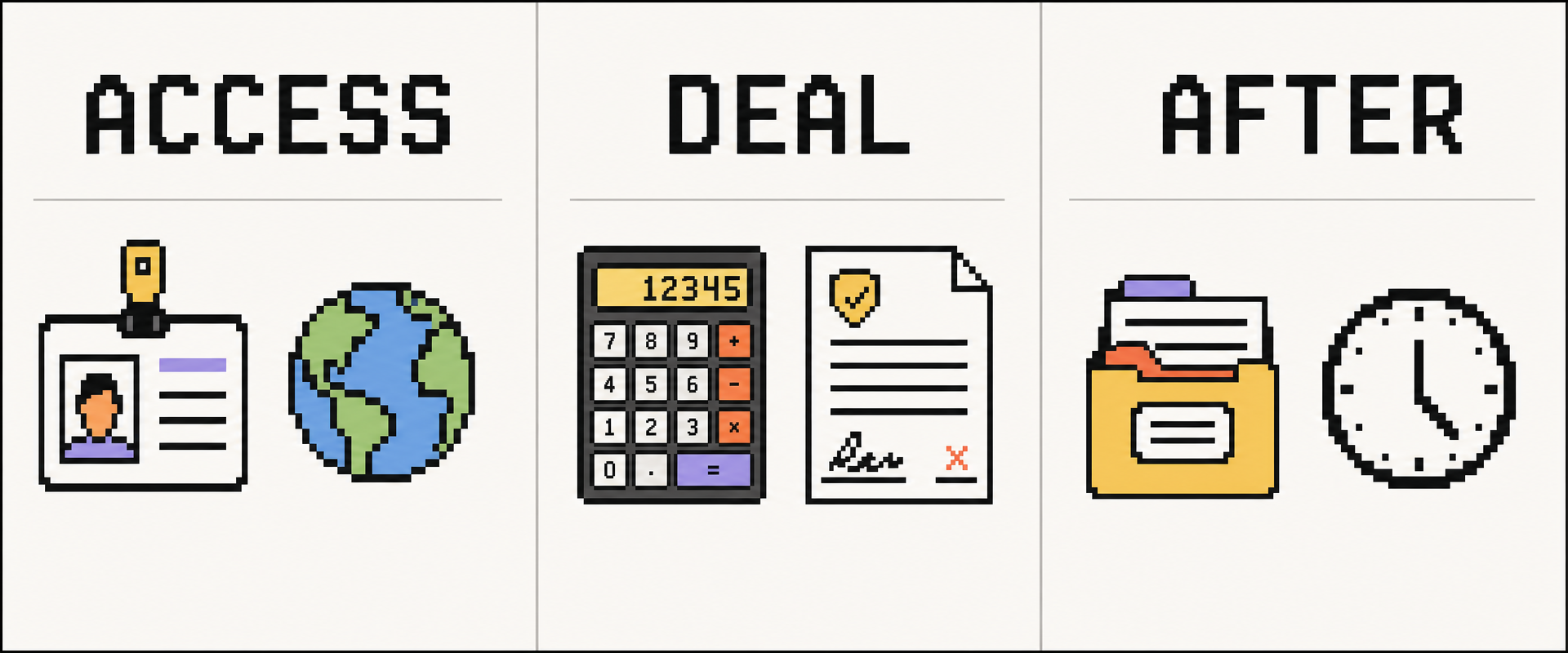
A platform handles access and execution. Learning to evaluate founders, terms, and portfolio fit is a different job. In our Angel Squad community, investors learn that process with peers, see curated Hustle Fund deal flow, and decide independently whether an opportunity belongs in their portfolio.
Four U.S. equity crowdfunding platforms to compare
These four cover the main routes a U.S. startup investor is likely to consider:
- Wefunder for a broad mix of community-led startup and small-business raises.
- StartEngine for startup, Reg A+, and pre-IPO discovery with a built-in marketplace path for some securities.
- Republic for screened startup offerings within a wider private-market catalog.
- MicroVentures for Reg CF access alongside accredited primary, secondary, and fund opportunities.
1. Wefunder
Best suited to: Investors who want a large, varied pipeline and are comfortable doing their own deal-level diligence.
- Access: Public Reg CF offerings are open to accredited and non-accredited investors subject to legal limits. The current terms prohibit Canadian residents from investing. Other international access depends on the offering and local law.
- Minimum and fees: Issuers generally set minimums from $100. For bank automated clearing house (ACH), wire, or check payments, the standard Reg CF investor fee is 2%, with an $8 minimum and $100 maximum. Other payment methods can cost more, so the checkout figure controls.
- Deal mix: Community rounds can use direct securities or an SPV. Listings span venture-backed startups, consumer brands, local businesses, debt, and revenue-share structures. Wefunder also hosts private rounds, syndicates, and funds under other exemptions.
- Diligence and disclosures: Wefunder performs the required intermediary checks, but its investor agreement says it does not approve issuer-supplied information or undertake separate startup due diligence. Treat the lead investor's view and campaign discussion as inputs. Read the filing yourself.
- After investing: The account holds contracts and issuer communications. Reporting quality still depends on the company, and most investments have no ready market.
Wefunder's range is its main strength and its main risk. A full pipeline makes it easier to build a watchlist. It also makes strict filters essential.
2. StartEngine
Best suited to: Investors who value a stock-like browsing experience and want a possible secondary-market route for eligible holdings.
- Access: Reg CF and Reg A+ offerings admit both accredited and non-accredited investors. StartEngine Private offerings are accredited-only. The platform does not currently accept most UK or Canadian investors, although accredited UK investors may be accepted.
- Minimum and fees: The issuer sets the minimum, and many startup offerings begin around $500. Many offerings charge investors no platform fee. An issuer can instead add a 3.5% processing fee, shown on the investment form.
- Deal mix: The catalog includes early-stage companies, Reg A+ raises, accredited pre-IPO opportunities, and securities eligible for StartEngine Marketplace.
- Diligence and disclosures: StartEngine reviews offerings for platform and regulatory eligibility and surfaces financial information, terms, and an issuer comment area. It does not give investment advice or recommend an offering.
- After investing: The portfolio shows order history, signed subscription documents, updates, and watchlists. Marketplace buyers pay 3.5% and sellers pay 5%. Listing eligibility does not ensure trading volume, an acceptable price, or a completed sale.
The secondary feature deserves precise expectations. Reg CF securities are generally restricted for one year, and only eligible securities can trade after that period. Most startup investors still wait for an acquisition, public offering, tender, or company-approved transfer.
3. Republic
Best suited to: Investors who want startup deals plus access to other private-market categories in one account.
- Access: Republic's Reg CF and Reg A+ deals are open to accredited and non-accredited investors. Reg D opportunities require accreditation. International participation is issuer-specific, and Ontario residents are currently barred from Republic opportunities.
- Minimum and fees: Startup minimums vary by offering and can be as low as $150. The typical investor administration fee is 2.5%, with a $5 minimum and $250 cap, although an offering can use a different fee. Accredited Deal Room and SPV opportunities have separate economics.
- Deal mix: Republic lists startups alongside selected funds and other private assets. Read the intermediary and exemption on each opportunity because different Republic entities handle different products.
- Diligence and disclosures: Republic uses an initial fit screen followed by a formal review of accepted startup candidates. The platform review still leaves the investment decision and independent diligence with you.
- After investing: The portfolio centralizes commitments and documents. Issuer updates and annual reports may live on the company's own website, and Republic warns that post-close disclosure can be less regular than public-company reporting.
Republic's variety can be convenient. It also puts more security types, fee structures, and disclosure regimes beside each other. Compare the documents, not the card layout.
4. MicroVentures
Best suited to: Accredited investors who want private-company and fund access, plus investors who want screened Reg CF offerings without an investor platform fee.
- Access: Reg CF and Reg A offerings are public, subject to applicable limits. Reg D primary deals, secondary transactions, and many funds are accredited-only.
- Minimum and fees: Reg CF opportunities can start around $100. MicroVentures does not charge investors a fee on Reg CF or Reg A offerings. Reg D, fund, and secondary deals have offering-specific costs that can include placement, annual management, administration, and carried-interest charges.
- Deal mix: Investors can see Reg CF startups, accredited venture deals, private funds, and negotiated secondary transactions.
- Diligence and disclosures: MicroVentures describes a pre-listing review across the product, business model, intellectual property, team, market, regulation, traction, and financials. That screen narrows the pipeline. It does not remove startup, valuation, or liquidity risk.
- After investing: Documents are stored in the portfolio and the platform alerts investors to company updates. MicroVentures does not promise ongoing investment monitoring, and secondary transaction availability varies.
MicroVentures has the clearest fee split of the group: Reg CF and Reg A have no investor platform fee, while private placements and funds require a close read of the offering memorandum.
Small checks make fees look bigger
Platform fees hit before the company creates any value. Compare a $500 Reg CF commitment under the standard terms above:
- Wefunder's 2% fee adds $10.
- A StartEngine offering using the 3.5% processing fee adds $17.50.
- Republic's typical 2.5% fee adds $12.50.
- MicroVentures charges no investor platform fee for Reg CF.
The security terms may matter much more than a $10 difference. The fee still comes out of a fixed portfolio budget. Minimum charges also penalize very small checks. Wefunder's $8 minimum equals 8% on a $100 investment.
“Don't try to pick a co. Select a portfolio.”
Elizabeth Yin, general partner at Hustle Fund, Democratizing Knowledge
Apply that lens before opening several platform accounts. Choose the number of positions you can diligence and track, then calculate how platform fees reduce the capital reaching those positions. Do not let a low campaign minimum set your portfolio strategy for you.
Platform diligence is only the first layer
The four platforms take different approaches to screening, but none gives you a reason to skip the source documents. For a Reg CF deal, open the Form C on EDGAR and read these items before the campaign summary:
- Security and price: Identify what you are buying, the valuation or valuation cap, conversion mechanics, interest and maturity, and any liquidation rights.
- Capital structure: Map existing securities, prior SAFEs or notes, major owners, dilution, and whether you invest directly or through an SPV.
- Financial condition: Compare cash, revenue, losses, debt, burn, and the proposed use of proceeds. Reg CF financials can be certified, reviewed, or audited depending on the issuer and raise. An audit is not universal.
- Conflicts and compensation: Read related-party transactions, intermediary compensation, lead or sponsor economics, and any carried interest.
- Changes and questions: Read Form C amendments, issuer answers in the discussion area, and inconsistencies between the pitch and the filing.
The SEC issuer guide explains the required filings. Our startup diligence checklist helps turn those documents into an investment process.
“The more disciplined you are in your thought process/rubric, the more you can improve over time.”
Elizabeth Yin, general partner at Hustle Fund, Democratizing Knowledge
Write a short decision memo even for a $100 check. Record the thesis, terms, risks, missing evidence, and reason the position fits your portfolio. That note will be more useful than your memory when the company asks for follow-on capital two years later.
Plan for quiet years after checkout
Every platform can store a contract. No platform can force a private company to communicate forever.
Reg CF issuers generally file an annual Form C-AR within 120 days after fiscal year-end. They can eventually end that duty under several conditions, including record-holder and asset thresholds. Reg A and Reg D follow different reporting rules. Save the signed agreement, final offering documents, cap table or transfer-agent contact, and every material update outside the platform too.
Liquidity needs the same realism. Reg CF securities generally carry a one-year resale restriction, with limited exceptions. Once the year ends, a legal ability to transfer does not create a buyer. The Investor.gov crowdfunding bulletin warns that these securities are speculative and illiquid.
Expect a long holding period, sparse valuation data, dilution, and the possibility of a total loss. A dashboard value is often cost basis or the latest known round price. It is not a live market quote.
A 30-minute platform screen
Apply the same screen to one live offering from each platform before creating four funded accounts:
- Find the exemption, intermediary, investor eligibility, and geography restrictions.
- Calculate the total cost of a position, including fees paid now and at a future exit.
- Open the original filing and locate the financial statements within two minutes.
- Explain the security and conversion or payout terms in two sentences.
- Find where annual reports, issuer updates, tax forms, and transfer records will appear.
- Identify the realistic exit path and assume no secondary buyer arrives.
The result usually makes the choice obvious. A low fee cannot rescue poor disclosure. A large catalog cannot replace a thesis. A formal platform screen cannot size the position for you.
If you want to practice this process with other investors and learn from Hustle Fund's early-stage experience, Angel Squad adds education, peer discussion, and curated deal flow around the transaction tools.
Equity crowdfunding platform FAQs
Can non-accredited investors use equity crowdfunding platforms?
Yes. Reg CF offerings are open to non-accredited investors, subject to aggregate 12-month investment limits based on income and net worth. Reg A+ can also admit non-accredited investors. Reg D offerings are generally accredited-only. The exemption on each offering controls, since one platform can use several rules.
Can I sell equity crowdfunding shares?
Sometimes, but plan as if you cannot. Reg CF securities generally have a one-year transfer restriction, with exceptions. After that, the company, security, transfer agent, and marketplace must all support the transaction, and a buyer must accept your price.
Which equity crowdfunding platform is best for beginners?
The right first platform has deals you understand, source documents you can find, fees that fit your position size, and a clear recordkeeping process. Wefunder has broad deal flow, StartEngine adds a marketplace path for some holdings, Republic combines startups with other private assets, and MicroVentures combines public crowdfunding with accredited opportunities. Your diligence process matters more than the interface.
Startup access is easy to buy. Judgment takes reps. Apply to Angel Squad to build that judgment with a community of investors and decide which opportunities deserve a place in your portfolio.














.png)