
409A valuation: What startup investors should know
Brian Nichols is the co-founder of Angel Squad, an angel investing community where aspiring and active angels learn from Hustle Fund’s approach, review curated deal flow, and connect with peers.
A startup can have a preferred-share price from its latest financing and a much lower common-share value in its 409A report. The two numbers price different securities for different purposes.
Here is how the valuation works, when a company needs current support, and how to read the report without turning one compliance number into an investment verdict.
What is a 409A valuation?
A 409A valuation is the market name for an analysis that typically estimates the fair market value of a private company’s common stock as of a specific date for employee option pricing. The regulation addresses service-recipient stock, and its independent-appraisal presumption applies to the valuation of a class of stock. Companies use the conclusion to support the exercise price, also called the strike price, for compensatory stock options.
The name comes from Section 409A of the Internal Revenue Code, which governs nonqualified deferred compensation. The section reaches beyond startup options. Under the Treasury regulation, a nonstatutory option to purchase service-recipient stock can fall outside the definition of deferred compensation when its transfer or exercise is subject to taxation under Section 83 and Treasury Regulation §1.83-7, its exercise price can never be below the underlying stock’s fair market value on the grant date, its share count is fixed on the original grant date, and it has no additional deferral feature beyond the permitted delay in recognizing income.
Keep three distinctions straight:
- The report typically estimates common-stock value for employee options. The regulation addresses service-recipient stock, and the independent-appraisal presumption covers the valuation of a class of stock. A preferred financing has its own negotiated price.
- The report supports a grant-date decision. The company separately approves the award and its terms through the process required by its charter, equity plan, board approvals, delegations, and applicable law.
- The appraised value supplies a minimum exercise price for this Section 409A exclusion. A company may set an option exercise price at or above the supported fair market value. Many choose the reported value.
A 409A report supports option pricing. Fairness opinions, investment decisions, and portfolio marks require separate analysis.
When a company needs current valuation support
Ask what fair market value support existed when each option was granted.
Companies should address that question at these points:
- Before an initial option grant. A private company needs a supportable grant-date fair market value if it wants to issue compensatory options at or above that value.
- Before later grants that rely on an older conclusion. The regulation says a previously calculated value is not reasonable if its valuation date is more than 12 months earlier than the date for which it is used.
- After new material information. An older calculation becomes unreasonable when it omits later information that may materially affect company value. The regulation gives resolved material litigation and a newly issued patent as examples.
- Around a financing or other major event. A priced round, meaningful secondary transaction, acquisition development, major forecast change, or significant milestone may provide material new information. A financing adds evidence. Its materiality depends on the facts and timing.
“Valid for 12 months” is incomplete shorthand. Twelve months is an outside boundary for the independent-appraisal presumption. Material later information can require fresh analysis sooner. A company making no new grants can base its next step on its compensation arrangements and current facts.
Tax treatment turns on the option’s terms, grant date, fair market value at that date, vesting status, and Section 409A treatment. The age of the report is one part of that analysis.
The participant consequences can be severe when an arrangement fails Section 409A. Under Section 409A, they can include income inclusion to the extent specified, a 20% additional federal tax, and interest calculated at the underpayment rate plus one percentage point. The failure applies to affected participants. Option-pricing support protects employees.
Who performs a 409A valuation?
Startups hire independent valuation firms because the regulation gives a rebuttable presumption of reasonableness to a valuation of a class of stock determined by an independent appraisal only when the appraisal meets the requirements of Section 401(a)(28)(C) and its regulations and is dated no more than 12 months before the relevant transaction.
“Safe harbor” creates a rebuttable presumption. The Internal Revenue Service (IRS) can overcome it by showing that the method or its application was grossly unreasonable.
Other routes include a consistently applied formula presumption and a written illiquid-startup valuation presumption with detailed eligibility and qualification conditions. A company can also use the reasonable application of a reasonable valuation method outside those presumptions. Each route carries its own facts, documentation, and burden.
For an operator selecting a provider, credentials are the starting point. Ask whether the team has experience with the company’s industry, stage, capital structure, recent financing instruments, audit requirements, and likely liquidity scenarios. Confirm who signs the report, what records the provider needs, how later events are handled, and what support is available if an auditor or buyer asks questions.
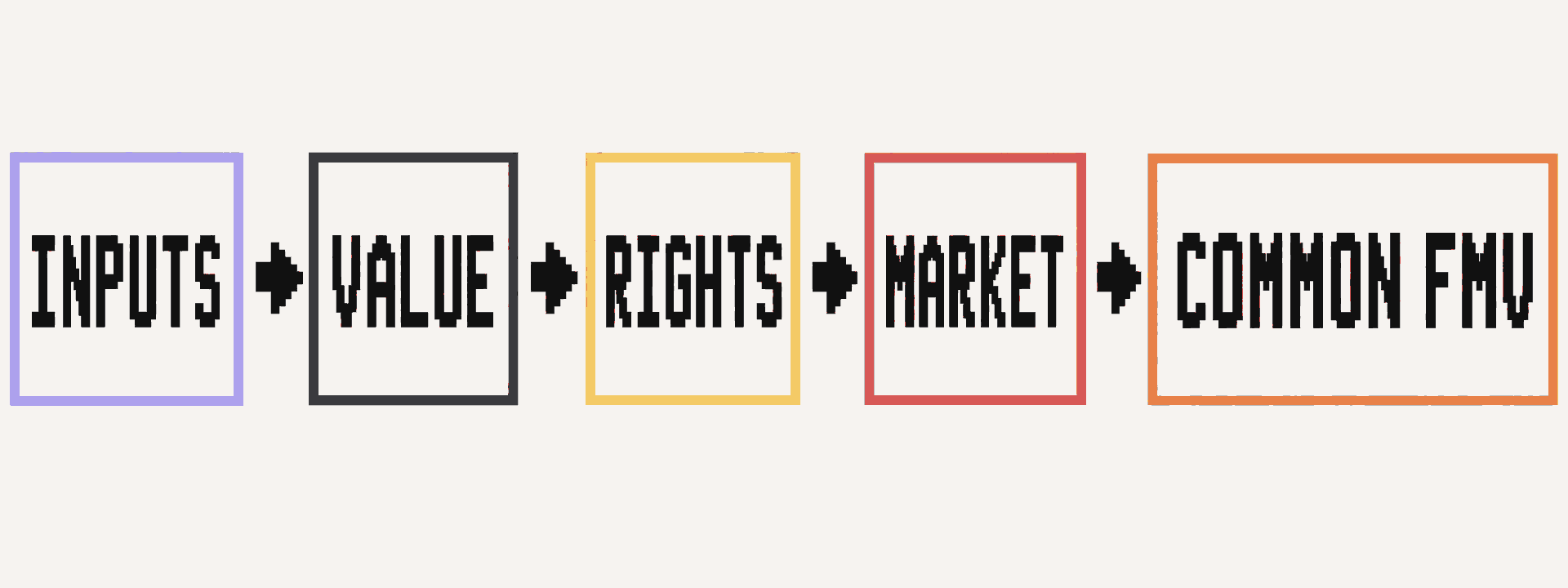
How the report gets from company value to common-share value
The technique changes with company stage and available evidence. The work has five core parts:
- Set the valuation date. Every input and conclusion should tie to a specific date.
- Estimate total company value. The appraiser may use a market approach, an income approach based on expected cash flow, an asset approach, or a weighted combination.
- Reconcile transactions and company facts. Recent financings, secondary transfers, cash, debt, forecasts, comparable companies, milestones, and possible liquidity events can affect the analysis.
- Allocate value across securities. An option pricing model, probability-weighted expected return method, or hybrid method can reflect how preferred and common holders participate across possible outcomes.
- Estimate the common share’s marketability. Private common stock cannot be freely traded like a public share. A supportable discount for lack of marketability may be part of the conclusion.
The regulation allows the reasonable application of a reasonable method. It lists relevant factors, including tangible and intangible assets, expected cash flows, comparable businesses, recent arm’s-length transactions, control premiums, and discounts for lack of marketability.
Why 409A common-stock value can differ from a preferred financing price
A financing price and a 409A conclusion answer different questions.
A new investor may buy preferred stock with a liquidation preference, conversion rights, protective provisions, anti-dilution protection, information rights, or other negotiated terms. Founders and employees hold common stock without the same package in many venture-backed companies. Our liquidation preference guide shows how those rights can change payouts even when both classes represent ownership in the same company.
Consider a company that closes a Series A and grants employee options soon afterward. The Series A price is strong evidence because an arm’s-length investor just paid it. The appraiser has to read what the investor bought, model how every class participates at different company outcomes, and assess the marketability of private common stock.
The preferred price is one input to the common-share analysis.
A fixed-percentage shortcut conflicts with the regulation’s demand for current, material information and a reasonable method. The report should explain the bridge from the recent round to common fair market value.
Our broader startup valuation guide explains how financing valuations are negotiated. The 409A analysis adds another layer: it values a particular class for compensatory option pricing under a tax framework.
What investors and operators should examine
A clean report documents process. Financing attractiveness and company performance require separate analysis. Many startups fail, and a clean 409A report does not make a company a good investment.
Our co-founder and general partner Elizabeth Yin advises: “The more disciplined you are in your thought process/rubric, the more you can improve over time.” Use the same rubric each time you encounter a 409A report:
- Valuation date: Was the conclusion current on the option grant date you care about?
- Later events: What happened between the valuation date and the grant date? Ask about financing terms, secondary sales, major customer changes, litigation, patents, forecasts, acquisition interest, and capital-structure changes.
- Security being valued: Does the report identify the common class? Does it reconcile the preferred securities in the capitalization table?
- Company-value methods: Which methods were used, how were they weighted, and why do they fit the company’s stage?
- Financing bridge: How did the analysis use the most recent arm’s-length round? If management claims the preferred round is irrelevant, the report should explain why.
- Rights and preferences: Were liquidation preferences, participation, conversion, dividends, seniority, and other material class terms modeled from the actual charter and financing documents?
- Forecast consistency: Do projections match the information used by the board, investors, and auditors at the same time? Differences need a documented reason.
- Marketability: Is the discount for lack of marketability supported by the company’s facts and expected path to liquidity?
- Governance trail: Do the report, board or delegated approval, grant list, plan documents, and effective grant dates line up?
Investors should use the report to understand employee option economics, cap-table hygiene, and the company’s valuation narrative. Analyze a Simple Agreement for Future Equity (SAFE), convertible note, or preferred share using its own rights, conversion mechanics, dilution, and entry date. A gap from common fair market value says little by itself.
Operators should protect the chronology. Preserve the actual grant date, disclose unfavorable developments to the appraiser, assess each newly closed round, and keep the cap table, charter, forecasts, approvals, and report synchronized.
Elizabeth Yin frames capital allocation this way: “Decisions are never in isolation - they are a comparison game.” Record the security, date, rights, and purpose beside every number. The preferred-to-common gap becomes meaningful only with those facts.
Common 409A questions
Does a new 409A change existing option strike prices?
Generally, a new valuation supports grants made after its valuation date. An existing option’s exercise price was set when that option was granted. Repricing an existing option is a separate corporate, tax, accounting, and plan-document issue.
Is a low 409A value good for investors?
It can make new employee options less expensive to exercise. The financing price, terms, dilution, and company prospects determine an investor’s assessment of the preferred security.
Are 409A valuations public?
Private-company reports are confidential company records in most cases. An investor may see the report, a summary, or relevant conclusions during diligence, subject to the company’s process and confidentiality restrictions.
Is a 409A valuation the same as fair market value?
The valuation is the analysis and report. Fair market value is typically its per-share conclusion for the class of common stock used for employee option pricing as of the stated date.
Apply the checklist to a real report
Take one report and trace the valuation date, security, class rights, transaction inputs, marketability analysis, and approval trail. Write down every gap between the report and the company’s current facts.
In Angel Squad, we practice that kind of structured diligence with operators and investors who want to learn Hustle Fund’s approach, review curated deal flow, and compare reasoning with peers. Apply to join us.
Important: This material is general education. It is not legal, tax, accounting, valuation, or investment advice, and it is not a recommendation or fairness opinion. Startup securities are speculative, illiquid, long-term investments and can result in total loss. A specific analysis depends on the option and plan documents, charter and financing documents, cap table, valuation policy, appraisal date, later events, fees, carry, tax circumstances, and timing. Past results and current marks do not guarantee future results. Obtain independent advice from qualified legal, tax, accounting, valuation, and investment professionals, and rely on the governing documents for any company, grant, or investment.















.png)