
How to sell startup shares before an exit: U.S. guide
Brian Nichols is the co-founder of Angel Squad, a community where you’ll learn how to angel invest and get a chance to invest as little as $1k into Hustle Fund’s top performing early-stage startups.
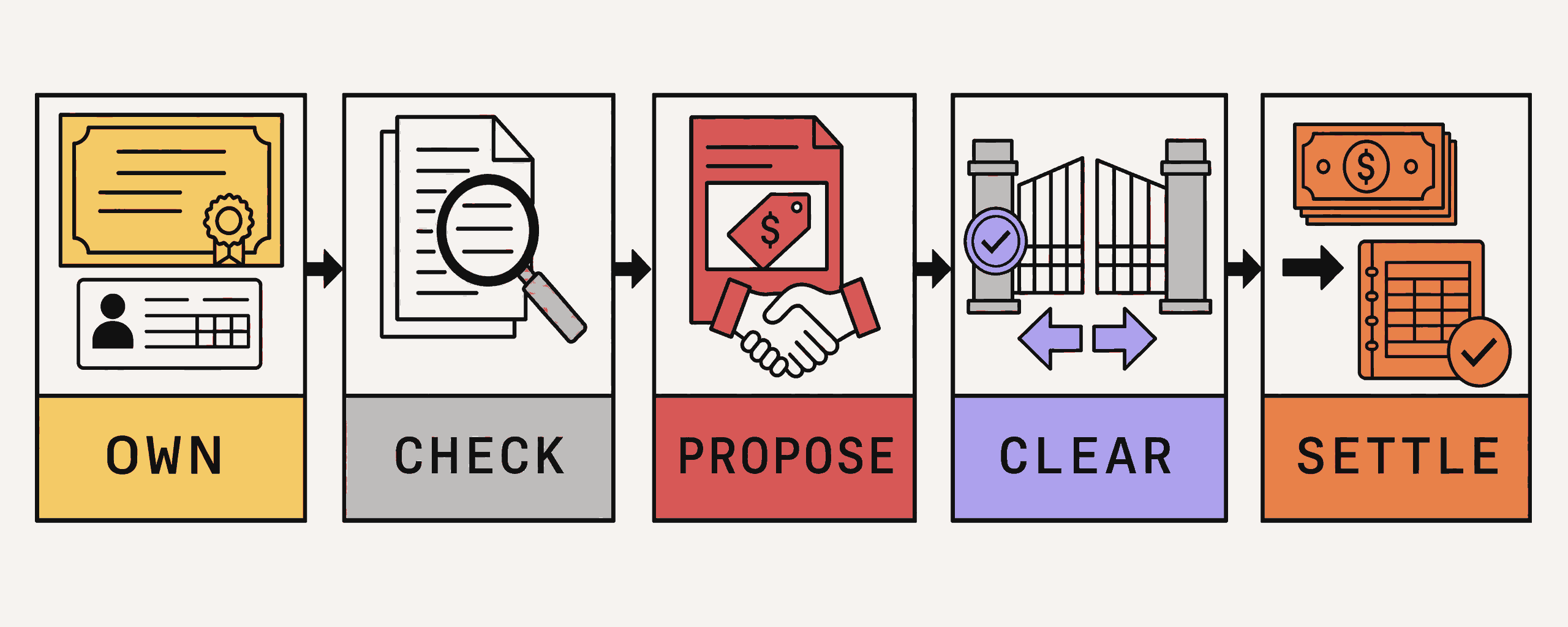
Private startup shares do not have a sell button. You may be able to create liquidity before an acquisition or initial public offering (IPO), but first you must identify the asset, clear company and legal restrictions, find an eligible buyer, agree on price, and close the transfer. Use this U.S. seller workflow to test whether a proposed sale can make it through every gate.
The information here is U.S.-focused education, not legal, tax, valuation, accounting, or investment advice. Terms, issuer jurisdiction, seller and affiliate status, buyer eligibility, securities exemptions, taxes, fees, timing, and platform policies vary. Private startup securities are speculative, illiquid, long-term investments that can lose their entire value. Have qualified securities counsel and a tax adviser review the actual transaction, governing documents, cap table, fees, valuation evidence, and timing before you market shares or sign anything.
A private share sale has two separate gates
Selling startup shares is usually a secondary transaction. The buyer pays an existing holder, so the cash generally goes to the seller rather than the company. Our secondaries market guide explains how the wider market works. The process here stays on the seller's side of the trade.
Every proposed sale must clear two gates:
- The company and contract gate. The issuer's governing documents, stock certificate or book-entry notice, equity agreement, and transfer policy may restrict who can buy, when a sale can happen, or whose consent is required.
- The securities-law gate. The resale needs an available federal exemption and must satisfy applicable state law. Seller status, the security, holding period, marketing method, buyer, and information supplied can all affect the route.
An interested buyer, marketplace listing, or signed term sheet does not clear either gate. Treat the trade as conditional until the required approvals, legal analysis, documents, funds, and stock-ledger update are complete.
1. Confirm what you own and who controls it
Start with the asset, because “startup equity” can describe several different things:
- Issued common or preferred shares. You may own stock directly, subject to the rights and restrictions attached to its exact class or series.
- An unexercised option. An option is a right to buy shares under an equity plan. Vesting alone does not turn it into transferable stock. Exercise terms, taxes, issuer rules, and the resale path all matter.
- A restricted stock unit (RSU). An RSU is generally a promise to deliver stock or cash after its settlement conditions are met. It is not an issued share before settlement, and the plan or award terms may prohibit transfer.
- A Simple Agreement for Future Equity (SAFE) or convertible note. This is a contract that may convert later. Its assignment provisions control whether the contract itself can move.
- An interest in a special purpose vehicle (SPV) or fund. The vehicle usually owns the startup security. You own an interest in that vehicle, and the manager may control any sale. Our SPV ownership guide explains the distinction.
Collect the records that establish the registered holder, share count, class or series, acquisition or exercise date, purchase price and adjusted tax basis. Then gather the charter, bylaws, stock purchase or exercise agreement, equity plan, voting or investor-rights agreements, right-of-first-refusal and co-sale agreement, side letters, certificate or book-entry notice, transfer policy, amendments, joinders, and prior waivers that affect your shares.
If the company uses electronic cap-table software, export the current evidence, but reconcile it with the signed documents. A dashboard entry does not settle a conflict in the contracts.
2. Contact the company before you shop the shares
Contact the company's finance lead, corporate secretary, general counsel, or another representative authorized to explain its transfer process. A founder may be involved, but founder approval is not a universal legal requirement. The operative documents identify any decision maker, which could be the company, its board, specified investors, another holder, or nobody for a permitted transfer.
Ask for written answers to these questions:
- Does the company currently allow secondary transfers, and does it have a transfer window or approved process?
- Do consent, right-of-first-refusal (ROFR), co-sale, prohibited-transferee, joinder, or minimum-size provisions apply?
- Will the company support a transaction, repurchase shares, include the sale in a financing, or run a holder-liquidity program?
- Which information may a prospective buyer receive, under what nondisclosure agreement, and through whose data room?
- Which notices, legal opinions, forms, fees, and deadlines will the company require?
Be direct about your reason and desired size. You might say: “We still support the company, and we are considering a partial sale to reduce concentration and meet an unrelated liquidity need. Could you share the current transfer policy and the person who manages secondary requests?”
That conversation protects the relationship and gives the company a chance to manage cap-table and information concerns. Goodwill cannot replace a required consent or waiver. If a valid restriction gives the company discretion, it may be able to reject the proposed transfer.
3. Choose a buyer and transaction route
Four routes cover most direct-share situations. Your documents, company policy, desired sale size, buyer access, and timing determine which routes are available.
- Company-sponsored liquidity or repurchase. The company or a third party may offer eligible holders a set price, quantity, deadline, and settlement process. Read the eligibility, proration, withdrawal, cancellation, fee, tax, and treatment-of-unsold-shares terms. Some programs are legally tender offers and some are not. When Rule 14e-1 applies, the offer generally must remain open for at least 20 business days.
- A secondary alongside a financing round. A live round can supply current company information and interested investors. Its preferred-share price remains only a reference if you are selling common or an earlier preferred series with different rights. The company can also cap or prohibit secondary participation in the round.
- A broker or secondary marketplace. An intermediary may help source buyers, qualify participants, coordinate diligence, and administer closing. “Platform” is a product label rather than a regulatory status. Identify the legal entity acting as broker, alternative trading system, adviser, principal, data venue, or SPV manager, and understand what asset the buyer will receive.
- A negotiated bilateral sale. A shareholder may find a buyer through an existing investor, founder-approved contact, fund, or other network. This route still needs the company process, securities-law analysis, accurate disclosure, buyer checks, documents, and settlement controls. Broad public solicitation or paying an unregistered finder can create additional problems.
No route guarantees a buyer or a close. If you need cash on a fixed date, treat a private secondary as uncertain until funds settle.
4. Price the exact share class and calculate net proceeds
“The company is worth $500 million” does not tell you what one specific share can sell for. Compare evidence for the same class or series, rights, restrictions, transaction size, date, and information package.
Use pricing evidence in this order:
- Recent signed or closed arm's-length secondary trades in the same class, adjusted for different size and terms.
- Live, executable bids for the same class. An indication of interest is weaker because the buyer can still walk away.
- A current company tender or repurchase price, including eligibility and quantity limits.
- The recent primary-round price and valuation, adjusted for differences in liquidation preference, conversion, voting, information, and protective rights.
- The company's 409A common-stock valuation as a tax and compensation reference. It is not a guaranteed market bid.
- A platform estimate or model, with its date, methodology, observations, and conflicts understood.
Ask for a written proceeds estimate before accepting a headline price. Start with price per share multiplied by shares sold. Then subtract any commission, spread or markup, company and legal charges, transfer-agent or cap-table fees, escrow and wire fees, vehicle fees or carried interest, and estimated taxes. Confirm whether the buyer or seller pays each item and what happens if the trade fails.
A lower gross bid can produce more usable cash if it has fewer fees, stronger funding proof, and fewer closing conditions. A higher bid can be worthless if it cannot clear company consent, the ROFR process, or settlement.
5. Establish the resale exemption and buyer eligibility
Private-company stock is often restricted. Each resale needs registration or an exemption, and company approval does not supply that exemption.
Counsel may analyze Section 4(a)(1), Rule 144, Section 4(a)(7), or another route. These paths have different conditions:
- Section 4(a)(1) covers transactions by a person other than an issuer, underwriter, or dealer. Whether a seller could be treated as an underwriter depends on the facts.
- Rule 144 is a nonexclusive federal safe harbor. For a qualifying non-affiliate selling restricted stock of a nonreporting issuer, it can provide a path after a one-year holding period. Affiliates and recent affiliates face extra conditions, and issuer or security facts can make the safe harbor unavailable. Our plain-English guide goes deeper.
- Section 4(a)(7) can support certain private resales when every buyer is accredited, there is no general solicitation, the required issuer information is available, and its other conditions are met.
That does not mean every private-share buyer must be accredited, or that a seller must be accredited. Buyer requirements come from the selected exemption, transaction documents, and platform policy. A buyer's accreditation alone does not make a sale lawful.
Federal exemption analysis also does not erase state securities law, company restrictions, confidentiality duties, legends, or antifraud rules. Cross-border holders, buyers, or issuers add another jurisdictional layer.
6. Run the ROFR and consent process exactly as written
A right of first refusal gives its holder a chance to buy proposed shares on specified terms before an outside buyer can complete the purchase. It exists only when an operative document grants it. Some startups give a ROFR to the company, some also give secondary rights to investors, and some have no ROFR at all.
Consent is separate. A company could waive a ROFR and still withhold consent if a valid consent provision applies. Co-sale rights, prohibited-buyer rules, transfer windows, and joinder requirements can also operate alongside both.
The sequence often looks like this, although your documents control:
- Negotiate a bona fide outside offer that remains conditional on required approvals and waivers.
- Deliver a transfer notice with the buyer, share count, price, payment structure, and other required terms.
- Let each ROFR holder decide within its stated window whether to match the covered offer.
- Handle any investor secondary-refusal or co-sale process.
- Obtain the consents and written waivers required for the outside transfer.
- Close within the permitted period on terms no more favorable to the buyer than the noticed terms, if the documents impose that limit.
- Have the buyer sign any required joinder and accept the security's continuing restrictions.
Changing the price, buyer, quantity, or payment terms may restart notice. Build enough time and an exit right into the purchase agreement. Our detailed ROFR guide explains why skipping notice can leave a signed deal unable to close.
Delaware law illustrates the range of possible restrictions, including purchase opportunities, consent rights, and limits on named transferees. Your issuer may be formed elsewhere, and Delaware's rules do not govern every corporation, limited liability company, fund, or foreign entity.
7. Run diligence on the buyer and everyone handling the trade
The buyer needs company information to evaluate the security. You need evidence that the buyer and intermediary can lawfully and actually perform.
Check the exact legal name of every provider, its role, fees, conflicts, custody or escrow arrangement, and disciplinary history. Search the firm and representative through FINRA BrokerCheck when broker registration is relevant. Registration is not an endorsement, price guarantee, or promise that a deal will close.
Confirm the buyer's identity, authority, eligibility under the selected exemption, and proof of funds. Verify payment instructions through a known contact if they change. Keep communications and files inside controlled channels.
Use only information you are authorized to share. Let the company control access to confidential financials, customer data, and other nonpublic information where possible. A nondisclosure agreement does not give you permission to disclose information you do not have the right to share. Antifraud rules prohibit material misstatements and omissions that make the statements actually provided misleading.
Walk away from promised guaranteed returns, an “imminent IPO” used as pressure, social-media cold pitches, unexplained changes of legal entity, claims that an SEC filing equals approval, or urgent requests to wire outside the documented process. Investor.gov's pre-IPO scam warnings apply to sellers as well as buyers who may be pulled into a sham transaction.
Our co-founder and general partner Elizabeth Yin describes the discipline well: “The more disciplined you are in your thought process/rubric, the more you can improve over time.” Keep a written decision log that records the proposed route, buyer, price evidence, unresolved conditions, and reason for selling.
8. Document, settle, and confirm the ledger update
The exact closing package varies. A direct secondary can require:
- proof of ownership and acquisition date;
- the securities-exemption analysis or legal opinion requested by the parties or issuer;
- a stock purchase agreement with representations, conditions, termination rights, and expense allocation;
- the transfer notice, ROFR responses, consents, and waivers;
- the buyer's joinder to shareholder agreements;
- identity, anti-money-laundering, accreditation, and tax forms;
- a stock power, certificate, or electronic transfer instruction; and
- escrow or delivery-versus-payment instructions.
The purchase agreement should say what must happen before closing, who holds the cash and shares, when either side can terminate, and what happens to fees if a condition fails. Do not transfer title based on an irreversible promise of later payment.
At closing, coordinate the funds and transfer documents. Then obtain written confirmation that the issuer or transfer agent registered the new owner in the issuer's official stock ledger. Confirm any separate cap-table system update when applicable. Keep the executed agreement, payment record, fee statement, proof of basis, tax forms, and ledger confirmation. The buyer usually receives restricted securities and will face its own future transfer limits.
Private trades have no universal settlement cycle. Ownership questions, buyer funding, company review, a ROFR exercise, a denied consent, revised terms, or failed identity checks can delay or end the sale.
Do the tax work before signing
For investment stock treated as a capital asset, gain or loss generally starts with amount realized minus adjusted basis. IRS Publication 550 explains that purchase costs can affect basis and sale expenses can reduce amount realized. More than one year is generally long-term, while one year or less is short-term. Compensation equity, entity ownership, and other facts can change that treatment.
Confirm the acquisition date, holding period, basis, deductible transaction costs, expected information reporting, estimated-tax timing, and federal, state, local, and cross-border exposure before committing to a sale.
An issuer repurchase needs separate tax analysis because the stock-redemption rules can produce exchange or distribution treatment depending on the facts. Qualified Small Business Stock (QSBS) is also highly specific. Original-issuance, C corporation, asset, business, holder, and holding-period requirements apply, and federal rules differ for certain stock acquired after July 4, 2025. An ordinary secondary buyer generally does not inherit QSBS eligibility simply by purchasing qualifying stock from another shareholder.
Options, restricted stock units, restricted stock, SAFEs, notes, SPV interests, installment payments, carried interest, and gifts add different questions. A tax adviser should model the timing and expected net cash before you sign, rather than after proceeds arrive.
When selling may be the wrong move
Pause the process if you cannot identify the asset, registered owner, operative documents, company process, buyer, resale exemption, or tax basis. Stop if the plan depends on sharing unauthorized information, public solicitation that counsel has not cleared, an unverified finder, or a buyer who resists identity and funding checks.
Even a feasible sale can be unattractive. Compare the after-tax cash you expect if the trade closes with:
- the uncertain upside and downside of the shares you would retain or give up;
- your concentration, liquidity need, and ability to wait indefinitely;
- lost voting, information, pro rata, or other rights;
- the relationship and signaling cost of selling now;
- the chance of a lower price, delay, proration, or no closing; and
- a partial sale that meets the need while preserving some exposure.
Founder communication still matters here. An early investor's sudden exit can create questions for employees or new investors. A clear, truthful explanation of a personal liquidity need or portfolio constraint helps the company manage those questions. It does not require you to claim continuing conviction that you do not have.
Our co-founder and general partner Elizabeth Yin puts the comparison plainly: “Decisions are never in isolation - they are a comparison game.” Members of Angel Squad practice portfolio decision frameworks and compare views with other investors. That can sharpen the concentration and sell-versus-hold questions, while transaction counsel and tax advisers handle the actual sale.
Your pre-signing checklist
Do not sign until you can answer yes to each item:
- I know the exact asset, registered owner, share class, quantity, acquisition date, basis, and rights involved.
- I have the governing documents and the company's written transfer requirements.
- I know who can consent, exercise a ROFR or co-sale right, or block the proposed buyer under a valid restriction.
- Qualified counsel has identified the federal and state resale path and any buyer-eligibility conditions.
- I compared same-class evidence and received a written, all-in proceeds estimate.
- The buyer and each provider have passed identity, role, registration, conflict, funding, fee, and settlement checks.
- The purchase agreement accounts for notice periods, waivers, conditions, failure, termination, and refunds.
- A tax adviser has reviewed basis, holding period, sale structure, reporting, and payment timing.
- Funds and transfer documents will move through coordinated closing mechanics, followed by written ledger confirmation.
- I can tolerate delay, no closing, or a total loss on every share I keep.
Selling startup shares before an exit is possible only when the asset, documents, buyer, exemption, price, approvals, and settlement all line up. One missing piece can stop the transaction, so solve them in that order and keep the sale conditional until the ledger and cash agree.
Apply to Angel Squad when you're ready to take your next step as an angel investor.







.png)