
How Do Angel Investors Make Money?
.png)
Brian Nichols is the co-founder of Angel Squad, our angel-investing community.
An angel's portfolio can look valuable on paper for years without producing a dollar of spendable cash. The missing step is realization: what the investor owns, which event makes it liquid, and how proceeds travel to the investor. Here is the complete cash path for direct deals and special purpose vehicles, including the terms that can shrink the final amount.
How angel investors make money
Angel investors make money when the equity they own, or the equity linked to their investment contract, becomes more valuable and a liquidity event turns that value into cash or saleable public shares.
The available paths include an acquisition, initial public offering (IPO), secondary sale, company repurchase, or uncommon dividend. Until one of those events occurs, a higher company valuation usually represents unrealized paper value. It is not cash in the investor's account.
Angels do not receive a salary for investing. Equity and SAFE investments also lack scheduled interest payments, while convertible notes may accrue interest under their terms. The economic upside comes from the difference between what the investor puts in and can eventually realize, after the deal's terms and costs.
“But the point of this story is MULTIPLES on your money is what matters.”
Elizabeth Yin, Democratizing Knowledge (Hustle Fund, 2021)
That outcome starts with the security the angel bought.
The complete cash path, from check to distribution
The route is simple at a high level: an investment instrument creates or leads to ownership, a liquidity event converts some of that value, and the direct holder or investment vehicle distributes the proceeds.
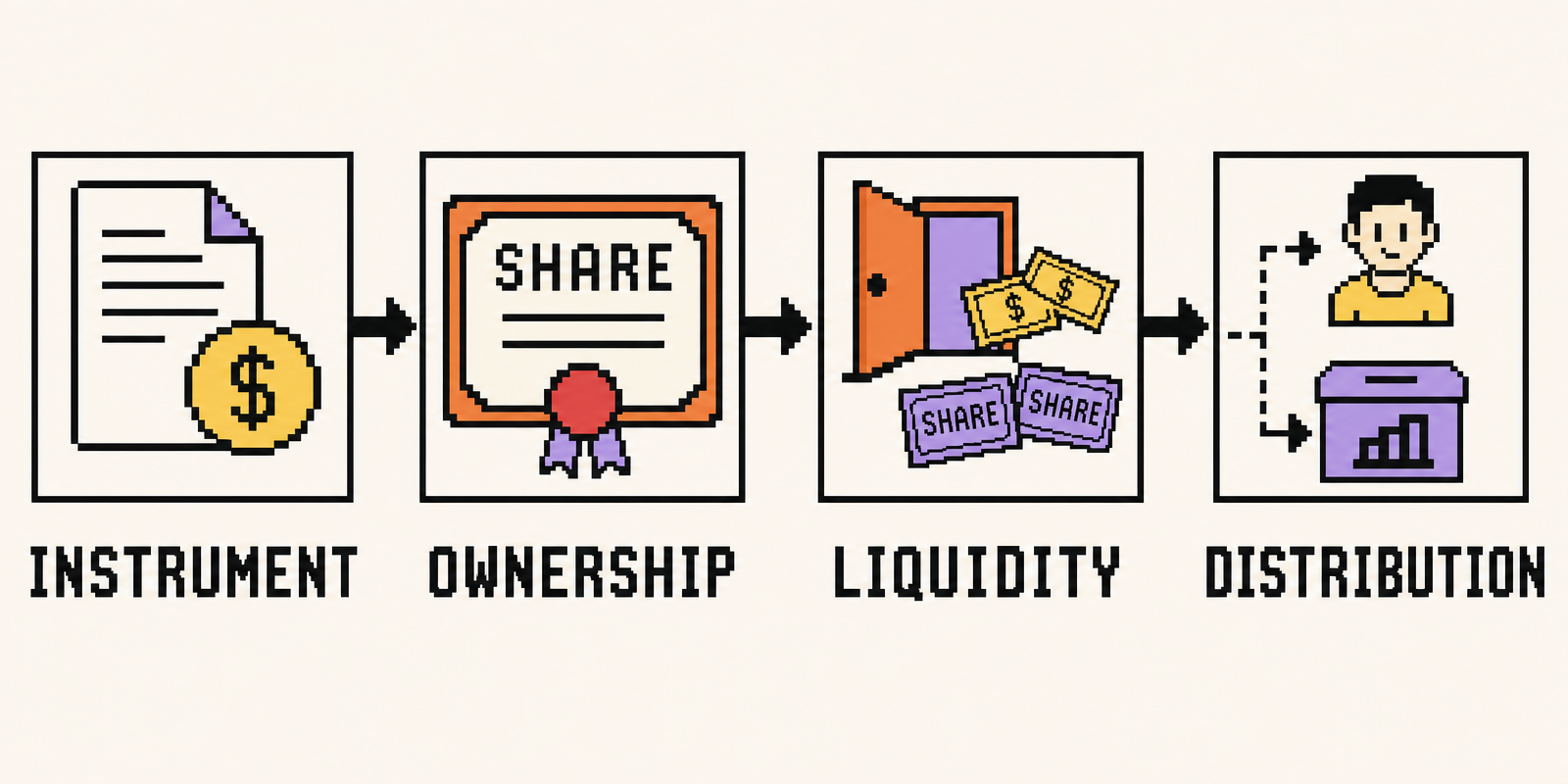
1. The angel invests through an instrument or vehicle
The paperwork determines what the angel holds on day one.
- Direct equity: The angel buys shares in the startup. The shares may be common or preferred, depending on the financing documents.
- Simple Agreement for Future Equity (SAFE): The angel holds a contract that can convert into shares in a later equity financing. If a liquidity event happens first, the SAFE's terms determine the holder's payment. A SAFE is not debt. Y Combinator's current SAFE documents show why the exact version and negotiated terms matter.
- Convertible note: The angel holds debt that can convert into equity when a defined event occurs. Its maturity, interest, conversion, and sale provisions remain governed by the note.
- Special purpose vehicle (SPV): The angel buys an interest in a vehicle, and the vehicle buys the startup security. The angel therefore has an indirect economic interest rather than appearing as the direct holder of the startup's shares or SAFE. Our SPV guide explains that structure in detail.
“It is really easy to mess up these calculations when you have so many different kinds of pre-money valuations...”
Eric Bahn, quoted in Raise Millions (Hustle Fund, 2024)
The instrument name alone is not enough. The signed document controls the conversion formula, security class, priority, fees, and other rights that shape the eventual proceeds.
2. The instrument represents or becomes ownership
Direct shares represent ownership immediately. A SAFE or convertible note usually becomes shares when its conversion terms are triggered. With an SPV, the vehicle holds the startup instrument while the angel owns an interest in the vehicle.
If the startup later raises more capital and issues more securities, the angel's percentage can shrink through dilution. A smaller percentage can still be worth more if the company's distributable value grows enough. The new fundraising valuation itself does not create cash for the angel.
3. A liquidity event creates cash or marketable shares
Five routes can turn the investment into something the angel can receive or sell:
- Acquisition: A buyer acquires the startup for cash, stock, or both. The headline purchase price is allocated according to company obligations and the rights of each security class. Our guide to startup liquidity events covers the longer process.
- IPO and later sale: The holding may become public-company shares. An angel makes cash only after those shares are permitted to be sold and a sale actually executes. Contractual lockups can temporarily prevent sales, and their terms vary, as the SEC's lockup guidance explains.
- Secondary sale: Another investor buys the angel's private-company security before a company-wide exit. A sale may require company consent, compliance with a right of first refusal, and an available securities-law exemption. Private-placement securities can be restricted and illiquid, according to the SEC's investor bulletin. Our secondary-sale guide goes deeper into the practical route.
- Company repurchase: The startup offers to buy some securities from existing holders, sometimes through a tender offer or another structured transaction. Eligibility, price, quantity, and timing come from the offer.
- Dividend: A company distributes cash to eligible shareholders after a properly authorized dividend. This route exists, but early-stage startups commonly retain cash to fund operations and growth, so angels generally should not assume recurring dividends.
4. The holder allocates and distributes the proceeds
A direct holder may receive acquisition cash, buyer shares, repurchase cash, or sale proceeds through the company, buyer, transfer agent, or broker involved in the transaction.
For an SPV, the vehicle receives the proceeds first. Its manager or administrator applies the vehicle documents, handles any required reserves or expenses, and allocates the remainder among participating investors. The distribution may be cash or securities. Carried interest, fees, expenses, withholding, and the timing of a sale can all affect what reaches the angel.
This administrative layer is one reason we teach members of Angel Squad to trace four items before investing: the instrument, the legal holder, the liquidity trigger, and the deductions between gross proceeds and personal cash.
What can reduce an angel's payout
The exit price is only the top line. These factors can change the amount an angel realizes:
- Dilution: Later issuances can reduce the angel's ownership percentage before a liquidity event.
- Security class and liquidation preferences: Preferred holders may have contractual priority or a choice between a preference and conversion. Common holders, preferred holders, SAFE holders, and noteholders can receive different amounts from the same transaction. See our guides to liquidation preferences and the exit waterfall for the detailed mechanics.
- No distributable proceeds: If the company fails, or sale proceeds are exhausted by company obligations and senior claims, the angel may receive nothing.
- Vehicle economics: An SPV may charge fees, expenses, or carried interest under its governing documents. These reduce the distribution compared with the investor's allocated gross proceeds.
- Taxes: A sale or distribution can create different tax results based on the security, holding period, entity, investor, and jurisdiction. The IRS explains the broad distinction between capital gains and losses, but it does not settle any individual deal's treatment.
- Sale restrictions and timing: Transfer restrictions, lockups, company approvals, market conditions, and vehicle decisions can delay a sale or change the price realized.
This material is educational and is not legal or tax advice. Seek independent review from qualified legal and tax professionals for the documents, transaction, and tax treatment that apply to you.
An illustrative angel investor payout
Consider an angel who invests $25,000 through an SPV. This example is illustrative, not predictive. It simplifies the company's capital structure and uses invented costs and taxes.
- Entry ownership: The investment initially represents an indirect 0.25% economic interest in the company.
- Diluted ownership: Later financings reduce that interest to 0.10% by the time of an acquisition.
- Headline exit value: The buyer announces a $150 million purchase price. After company obligations, transaction costs, and security-class priorities, assume $120 million is allocated pro rata to the investor's class.
- Gross proceeds: The investor's 0.10% indirect interest produces $120,000 in gross allocated proceeds.
- Vehicle distribution: Assume the SPV allocates $2,000 of expenses and $19,000 of carried interest to this investor. The vehicle distributes $99,000 before the investor's personal taxes.
- Net cash: Assume the investor owes $14,000 in taxes attributable to the outcome. The investor keeps $85,000 in net cash.
The $150 million headline, $120,000 gross proceeds, and $85,000 net cash describe three different numbers. A direct investor would skip the SPV distribution layer, but dilution, security rights, transaction terms, taxes, and sale restrictions could still change the result.
Common questions about angel investor payments
Are angel investors repaid like lenders?
Usually no. Direct equity and SAFEs do not require scheduled principal payments like a conventional loan. A convertible note is debt, so its repayment or conversion follows the note's terms. In each case, the angel's intended upside usually comes from equity appreciation rather than installment payments from the startup.
Do angel investors get dividends?
They can if they hold an eligible security and the company authorizes a dividend. Recurring dividends are uncommon in early-stage startup investing because companies often use available cash to operate and grow. The investor's signed terms and the board's action determine whether a dividend is due.
How do SPV investors receive money?
The SPV receives cash or securities from the portfolio company or buyer. The vehicle then applies its governing documents, deducts or reserves the permitted amounts, and distributes each investor's allocation. The investor does not receive the startup's full exit value, and a securities distribution still has to be sold before it becomes cash.
Trace the cash path before you invest
The practical question is bigger than “What is the company worth?” Read the instrument, identify who holds it, find the events that can create liquidity, and follow every deduction to the amount you could actually receive.

If you want to learn these mechanics alongside operators and active investors, apply to Angel Squad.







.png)