Fintech angel investing: How to assess a startup
Brian Nichols is the co-founder of Angel Squad, an angel investing community where aspiring and active angels learn from Hustle Fund’s approach, review curated deal flow, and connect with peers.
Fintech startups can look like software companies while carrying the risks of banks, lenders, insurers, or money transmitters. A polished app tells you little about who controls customer funds, absorbs fraud losses, or keeps the product operating legally.
That makes fintech angel investing a two-part job. You still assess the founders, market, product, and price. You also trace the money, permissions, partners, and risk before you write a check.
What fintech angel investing means
Fintech angel investing is the use of personal capital to invest in an early-stage private company that provides a financial product or the infrastructure behind one. The category includes payments, lending, digital banking, insurance, wealth, finance software, fraud prevention, financial data, and stablecoin infrastructure.
That is different from buying stock in a publicly traded fintech through a brokerage account. The public-versus-private distinction changes three parts of the investment:
- Disclosure: Public companies file periodic SEC reports that anyone can review. A private-placement issuer may provide far less information and generally does not owe investors the disclosure required for a registered offering.
- Liquidity: Exchange-listed shares have a secondary market, although trading can still be thin. Private startup securities are often restricted, may have no ready buyer, and may need to be held indefinitely.
- Eligibility: Buying exchange-listed public stock does not require accredited-investor status. Many private startup offerings limit participation to accredited investors, while Regulation Crowdfunding allows eligible non-accredited investors within applicable limits. The offering's exemption and documents determine who can invest.
The label alone is too broad for useful diligence. A subscription product for accounting teams has different economics and obligations from a lender that funds loans or a wallet that holds customer money. Start by identifying the company's main job, customer, revenue engine, and position in the value chain. Our fintech market map can help you place it without turning your memo into a logo catalog.
Private startup securities can result in total loss. The SEC's private-placement bulletin is a useful baseline for the disclosure, liquidity, and transfer risks. Fintech adds more ways for a company to fail before product demand has a chance to matter.
Choose an investment route before you assess a deal
Your route determines what you own, which information you receive, who conducts diligence, what you pay, and whether you can participate. Four routes cover most individual investors.
- Invest directly in the startup. You sign the company's Simple Agreement for Future Equity (SAFE), stock purchase agreement, or note. You control the decision and relationship, but you also own the diligence workload. A SAFE promises future equity only when its contractual trigger occurs. The SEC's startup securities guide explains the basic distinction.
- Join a syndicate or special purpose vehicle. A lead sources and manages the deal, while investors subscribe through a special purpose vehicle (SPV). Read the SPV documents for fees, carried interest, allocation, information rights, conflicts, follow-on treatment, and what happens if the vehicle needs more cash.
- Commit to a venture fund. A manager chooses and supports a portfolio over several years. This route delegates selection and can spread capital across more companies, although fees, carry, capital calls, manager risk, and a long lockup still apply.
- Use Regulation Crowdfunding. Eligible companies can offer securities through an SEC-registered broker-dealer or funding portal. Both accredited and non-accredited investors can participate, although non-accredited investors face rolling 12-month investment limits. The SEC's Regulation Crowdfunding overview sets out the current framework.
Many private offerings restrict participation to accredited investors. Current U.S. qualification routes include financial thresholds and certain professional credentials. Use the SEC's accredited-investor criteria and the specific offering documents. Joining our community does not require accredited-investor status, while investing in relevant offerings does.
Eligibility gives you access to an offering. It says nothing about whether the deal belongs in your portfolio.
Run a five-gate fintech diligence process
A normal startup review asks whether the team can build a large, durable business. Fintech diligence adds a connected question: can the company operate its current product without a failure in permissions, partners, controls, or funding?
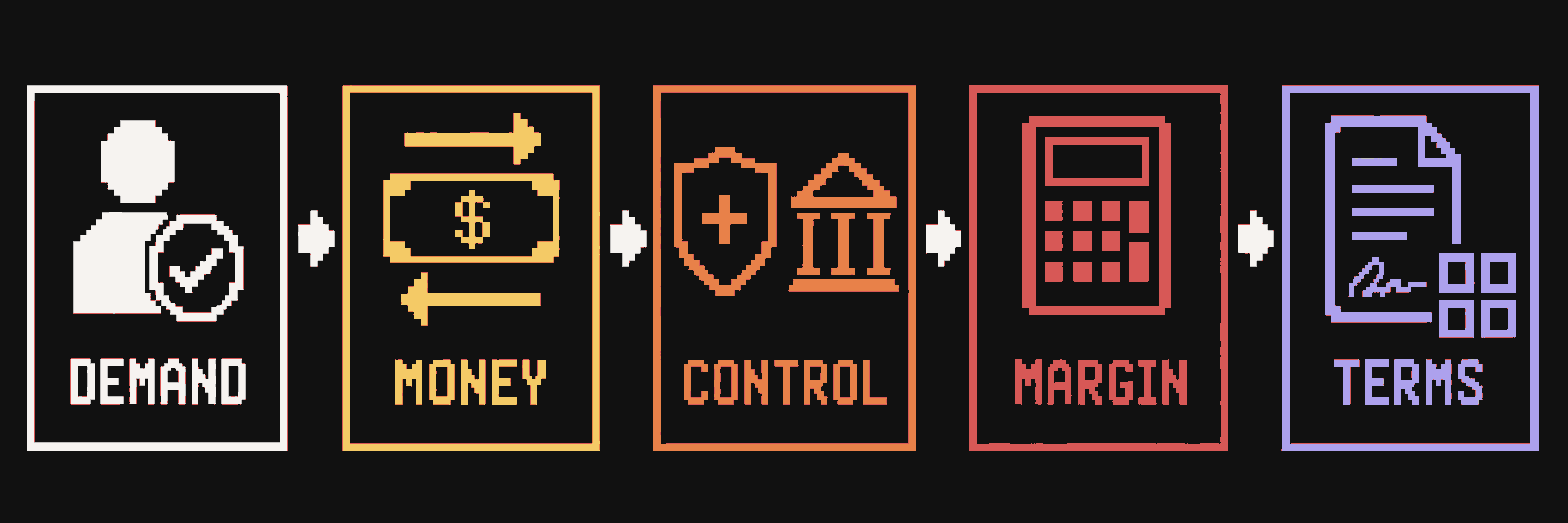
Use the five gates in order. A weak answer at an early gate changes how you read every metric that follows.
1. Confirm the customer and financial job
Name the user, buyer, financial job, and alternative in one sentence. “Payments for small businesses” is too vague. “Accounts-payable software that helps regional freight brokers approve invoices and send bank payments” gives you something testable.
Then ask for evidence that the problem is painful and frequent:
- customer calls with both daily users and budget owners
- cohort retention rather than a blended lifetime average
- usage tied to the core financial action
- sales-cycle length, implementation work, and time to first value
- concentration by customer, channel, geography, and industry
Pre-seed numbers will be small. The point is to test whether customer behavior supports the founder's story. Our 5T framework is useful for the broader team, timing, traction, technology, and market review.
Before moving on, press the team on three fintech-specific questions:
- Who owns compliance and partner operations? Name the person accountable for compliance and the person running daily work with sponsor banks, processors, custodians, carriers, or other critical partners. At a small company, one founder may own both. The responsibility still needs a name.
- What founder execution evidence applies here? Ask for a regulated launch, partner integration, underwriting or fraud system, audit, or incident response that a founder personally owned. Pin down the founder's decisions and the measurable result, rather than relying on a résumé.
- What survives if an incumbent copies the interface? Look for an advantage in proprietary data, exclusive distribution, embedded workflows, risk performance, partner access, or cost structure. Then ask what evidence shows that advantage will compound and remain difficult to copy.
2. Draw the money and data paths
Follow one customer transaction from start to finish. Identify which entity receives the instruction, touches funds, keeps the ledger, moves the money, handles a return or dispute, and reconciles the final balance. Do the same for sensitive data: collection, storage, sharing, access, and deletion.
This exercise exposes the company behind the interface. Ask for a current funds-flow diagram, data-flow diagram, daily reconciliation process, exception queue, and ownership of customer support. Match each operational claim to a contract, system record, or control.
3. Map permissions, partners, and failure points
List every regulated activity by product and jurisdiction. For each activity, record whether the startup, a bank, a licensed carrier, a broker-dealer, or another partner performs it. A registration number or counsel memo cannot stand in for the full map.
Review the evidence behind the structure:
- current licenses, registrations, exemptions, or agency arrangements
- counsel's analysis of the present product and launch jurisdictions
- sponsor-bank, processor, custodian, carrier, and data contracts
- audit rights, reserve requirements, termination clauses, and transition support
- a backup plan, including the time and cost to move to another partner
- ownership of anti-money-laundering, sanctions, know-your-customer, complaints, and regulatory reporting work
The operating chain matters because regulated partners keep their own obligations. U.S. banking regulators state that a bank's use of a third party does not diminish its responsibility. A startup can lose its distribution or infrastructure when a partner's risk appetite changes.
Security belongs here too. Review the latest penetration test, material incidents, access controls, encryption, vendor inventory, incident response, recovery objectives, and cyber insurance. Some financial businesses fall under the FTC Safeguards Rule, which requires covered firms to maintain a written information-security program. Scope depends on the company's activities and regulators.
4. Rebuild the unit economics from the raw drivers
Top-line growth can hide pass-through money, funding costs, credit losses, or fraud. Reconcile pitch-deck metrics to bank statements, processor reports, accounting records, and cohort data. Ask who prepared the numbers and which costs sit below the displayed margin.
The right metrics depend on the model:
- Financial software: annual recurring revenue, gross and net revenue retention, implementation cost, support cost, gross margin, customer acquisition cost (CAC), and CAC payback.
- Payments: total payment volume, transactions, net take rate after network and processor fees, gross profit per transaction, fraud loss, chargebacks, reserves, and partner concentration.
- Lending: originations, outstanding principal, funding cost, net interest or fee income, delinquency by vintage, charge-offs, recoveries, provisions, approval rate, and facility covenants.
- Insurance: gross written premium, net revenue, commission or take rate, loss ratio where the company bears risk, policy retention, CAC, and carrier or reinsurer concentration.
- Banking and cards: active funded accounts, deposits, interchange or subscription revenue, processor costs, fraud, servicing cost, reserve requirements, and sponsor-bank concentration.
- Wealth and investing: assets under management, net flows, fee rate, revenue, custody costs, customer retention, and concentration by asset or channel.
Use net revenue for the economic engine. A payments company processing $100 million has not earned $100 million. A lender originating $20 million has not earned $20 million. Volume is useful only after you connect it to revenue, gross profit, losses, working capital, and cash.
5. Read the security and portfolio fit together
Separate the quality of the company from the terms of the investment. Review the current capitalization table, outstanding SAFEs and notes, option pool, debt, liquidation preferences, information rights, transfer restrictions, and the fully diluted effect of the new round.
For a SAFE, identify the valuation cap, discount, most-favored-nation clause, conversion triggers, company capitalization definition, and any pro rata side letter. Pro rata rights are not automatic. Model several future financing sizes and prices with counsel or another qualified adviser so you can see conversion and dilution under the actual documents.
Then compare the check with your portfolio plan. Our general partner Elizabeth Yin puts it plainly: “Don't try to pick a company. Select a portfolio.” Five fintech deals can still be one concentrated bet if they share a sponsor bank, funding source, customer type, or regulatory exposure.
A simplified fintech deal review
This hypothetical review is a teaching example, not a recommendation or projection. The company and figures are fictional and shown as of September 30, 2026.
RelayLedger sells accounts-payable software to regional freight brokers and earns subscription revenue plus a net payment fee. It instructs payments through one regulated bank partner and never takes legal custody of customer funds.
The first pass looks promising:
- $900,000 in annualized subscription revenue and $600,000 in annualized net payments revenue
- 80 paying customers, with 95% gross dollar retention over the last 12 months
- 68% blended gross margin after processor fees, fraud losses, and payment operations
- evidence that invoice approval and reconciliation save finance teams several hours each week
- a completed third-party penetration test and a documented incident-response process
The weak spots change the decision:
- three customers produce 42% of subscription revenue
- one bank and one processor support the entire payment flow
- the bank contract can be terminated on 90 days' notice
- management excludes two operations salaries from the pitch-deck gross-margin calculation
- the proposed post-money SAFE has no pro rata side letter, and other SAFEs are already outstanding
The right next step is conditional diligence, rather than an immediate yes or no. Recalculate gross margin with all direct operating labor, call the three largest customers, review termination and transition clauses, confirm the regulatory analysis, and model all SAFEs on a fully diluted cap table. The company may still earn an investment. The unresolved risks should determine the check size and the evidence required before wiring.
This is where market imagination and operating discipline meet. Our general partner Eric Bahn asks, “is something that is true today going to be true tomorrow?” A growing market can expand a company's upside. It cannot repair a brittle money path or weak economics.
Write a one-page decision memo
Finish diligence with a memo short enough to revisit. Record:
- the customer, job, and reason the timing may be right
- the money path and party responsible at each step
- the required permissions and critical partners
- the three metrics that drive gross profit and cash needs
- the strongest evidence for demand
- the two risks most likely to kill the company
- the security, terms, dilution, and rights you are buying
- the check size and how it fits your portfolio plan
- the evidence that would change your decision
Save the memo whether you invest or pass. Comparing the original thesis with later results is how a repeatable process gets better. A focused diligence process is more useful than collecting a huge data room without deciding which facts matter.
If you want to review curated opportunities, compare notes with other investors, and practice this process before going solo, apply to Angel Squad.
This material is for general education only and is not legal, tax, investment, accounting, or valuation advice. The example is hypothetical and simplified as of September 30, 2026. Actual outcomes depend on the governing documents, fees, carry, taxes, capitalization, valuation policy, future financings, and timing. Startup investments are speculative, illiquid, long-term, and can result in total loss. Past results and current marks do not guarantee future results. Review the governing documents and seek independent advice from qualified legal, tax, financial, accounting, and valuation professionals.