
How to Evaluate a Founder’s Learning Ability Before You Invest
At pre-seed, the founder you meet today will face problems neither of you can name. A polished résumé tells you what they already know. It says less about how they respond when customers, data, or markets prove them wrong. That makes learning ability a core diligence question. You can assess it through past behavior, live discussion, work artifacts, and references, without confusing charisma or agreeableness with good judgment.
What founder learning ability actually means
Founder learning ability is the speed and quality with which a founder turns experience into better decisions. It follows a visible loop:
- Belief: The founder states what they think is true.
- Evidence: They collect information that can support or challenge that belief.
- Revision: They explain what changed in their thinking and why.
- Action: They change the product, process, or plan.
- Measurement: They check what happened and feed the result into the next decision.
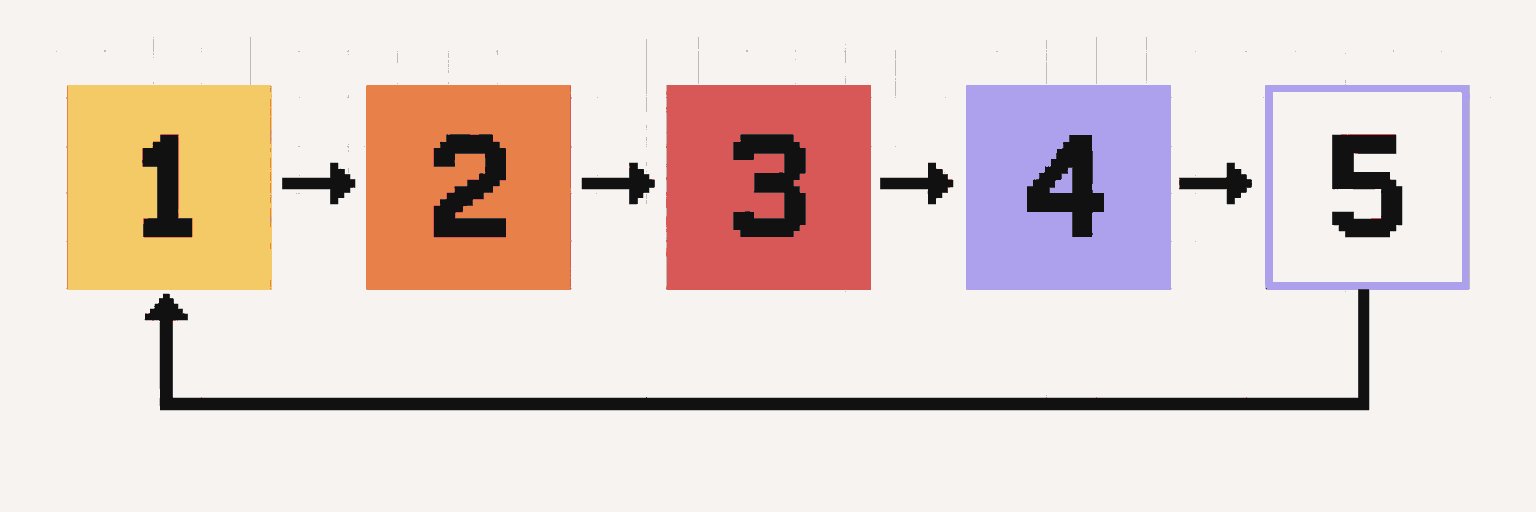
Speed matters because startups have short runways. Quality matters because a founder who reacts to every comment can move quickly in circles.
This is why our Hustle Fund co-founder Eric Bahn includes rapid learning in his definition of hustle:
“Great execution meets high velocity.”
Learning ability overlaps with coachability, but the terms are different. One study describes founder coachability as the degree to which an entrepreneur seeks, considers, and integrates feedback, and finds it related to product innovation. Learning ability also covers evidence the founder generates without a coach, the judgment used to accept or reject advice, and the action that follows. The distinction matters. A founder can politely accept every suggestion and still learn very little. Founder coachability research supports looking beyond a pleasant response.
There is no reliable one-question personality test for this. An academic review found that “learning agility” remained poorly defined and measured despite its popularity in talent selection. Treat learning as a pattern of behavior, then gather several examples of that pattern. Learning agility research gives investors a good reason to resist fake precision.
Evaluate the learning loop, not the founder’s story
A polished failure story proves that a founder can prepare for a meeting. It does not prove that they update well.
Pick one material decision, then reconstruct the learning loop. Customer profile, pricing, onboarding, hiring, and distribution are good subjects because they leave evidence behind.
These eight questions work as a sequence. They fit alongside our broader pitch meeting questions when learning ability is the risk you need to examine.
- What did you believe about this business six months ago that you no longer believe? This establishes a clear before state.
- What first made you question that belief? Listen for a specific event, metric, customer, or observation.
- What other evidence did you collect before changing course? One loud customer is a clue. It is rarely a market.
- What part of your original view survived? Strong learners update in proportion to the evidence. They do not throw away everything they know.
- What did you change, and how long did that take? Learning that never reaches the operating plan has limited value.
- What happened after the change? Look for a result, a surprise, and another question.
- Tell me about useful advice you chose not to follow. Why? This separates independent judgment from compliance.
- Which current assumption would hurt most if it were wrong, and what would change your mind? This tests whether the loop is active today.
Follow the nouns. If the founder says “customers wanted something simpler,” ask which customers, what they said, what changed, and where the result appears. Strong answers become more concrete as you probe. Weak answers dissolve into slogans such as “listen to users” or “hire slowly.”
The best evidence has a before and an after. You should be able to see the prior belief, the contradictory signal, the decision, and the result.
Test learning against the founder’s actual job
A generic failure story is easy to rehearse. Choose a prompt that matches the learning demands ahead, then ask for the full loop:
- Regulatory learning: Ask which regulatory constraint changed the product or plan, who supplied the new evidence, and how the founder built that lesson into the roadmap or operating process.
- Nontechnical founder working with engineering: Ask for a recent technical tradeoff. Listen for how the founder framed the user problem, learned the relevant constraints, and changed a decision without pretending to be the engineer.
- Hiring and talent judgment: Ask about a hire they would assess differently today. Look for a concrete change to interview questions, scorecards, reference checks, onboarding, or role design.
- Cross-domain transfer: Ask what carried over from the founder’s previous industry and what broke in the new one. A strong learner can name both the reusable principle and the context that required a new model.
- Continuous learning habits: Ask what the founder reviews each week, whose dissent they seek, and which current experiment came from that habit. A reading list alone is not an operating system.
- Technical founder learning distribution: Ask which go-to-market (GTM) or distribution belief changed after customer conversations, then trace how that insight affected the product, pricing, or channel. Technical skill alone does not create demand.
Run the evaluation across two touchpoints
One pitch meeting rewards fast talkers and practiced stories. A short time series gives you more signal.
1. Record the founder’s current view
Choose one live uncertainty that matters to the investment case. It could be the ideal customer, a sales channel, retention, pricing, or the next key hire.
Ask the founder to explain:
- their current hypothesis
- the evidence for and against it
- what remains unknown
- the next action
- the result that would change the plan
Write down the answer before discussing it with anyone else. That protects the evidence from hindsight and from a louder investor’s opinion.
2. Inspect existing work
Use artifacts the company already relies on. Product changelogs, customer interview notes, experiment logs, funnel dashboards, and investor updates can show whether learning is part of the operating rhythm.
Do not create a homework contest. A beautiful memo produced for diligence may reveal writing skill and available time. An imperfect document the team uses every week reveals how the company works.
For companies without revenue or mature metrics, those artifacts may be the clearest operating evidence available. Our guide to evaluating pre-seed founders without metrics shows how to keep the assessment grounded in what the team has already done.
3. Revisit the same issue
At the next touchpoint, return to the recorded hypothesis. Bring any real contrary evidence you found. Never invent a fact or offer bad advice as a trap.
Observe whether the founder:
- asks clarifying questions before reacting
- separates facts from assumptions
- states what the new information changes
- preserves the parts of the thesis that still hold
- proposes a bounded way to resolve the uncertainty
- follows up with an action or result
The goal is not to make the founder agree with you. You are watching how they process a new input.
4. Ask references about repeated behavior
Use founder-provided references and independent references. Former colleagues, direct reports, customers, and previous investors see different parts of the loop.
Ask for episodes rather than adjectives:
- When did this founder change their mind after seeing evidence?
- What kind of feedback do they seek without being prompted?
- Which mistake did they make more than once?
- When did they reject good advice, and what happened?
- How do they handle disagreement with a co-founder?
A generic “very coachable” is weak evidence. A dated example with a changed behavior is useful.
Members of Angel Squad, our angel-investing community, practice this kind of diligence on real startup opportunities and compare notes with other operators and investors. The group discussion matters because it exposes when one person is rewarding confidence, pedigree, or a familiar communication style instead of the learning loop.
Use a simple founder learning scorecard
A scorecard makes your notes comparable. It does not turn founder judgment into math.
Rate each dimension from 0 to 2:
- 0: vague claim or no supporting evidence
- 1: one specific example with part of the loop missing
- 2: specific evidence of the full loop, backed by an artifact, result, or reference
Score these five dimensions:
- Reflection specificity: Can the founder state their former belief, mistake, and lesson without rewriting history?
- Evidence quality: Do they use customer behavior, operating data, or several independent observations? Do they look for evidence that could prove them wrong?
- Update quality: Is the revision proportional to the evidence? Can they explain what changed and what stayed constant?
- Action cadence: Did the insight produce a focused action while it was still useful?
- Measurement: Did the founder define a result, inspect it, and begin another loop?
Do not set an automatic cutoff. Record the score before the investment discussion, circle the lowest dimension, and decide what further evidence would resolve it. The value is a consistent comparison and a clear follow-up question.
Consider a hypothetical vertical software founder who believed small businesses would complete onboarding without help. Fourteen interviews and session replays showed that managers stalled at security approval. The founder paused paid acquisition, shipped assisted onboarding six days later, and tracked activation. Activation improved, but all interviewed customers came from the founder’s network.
That example earns strong marks for specificity, updating, action, and measurement. Evidence quality remains mixed because the sample may share the same bias. The scorecard points to the next diligence step: talk to customers outside the network. It does not manufacture a yes or no.
Avoid the five false positives
Agreeableness
A founder who takes every investor suggestion can look coachable. They may also lack conviction. Ask about advice they rejected and the evidence behind that decision.
Confidence and verbal speed
Quick, polished answers can reflect preparation, native-language fluency, or a familiar social style. Give founders time to think. Accept written follow-ups. Score the content and subsequent action separately from the delivery.
Frequent pivots
Changing direction often is not proof of learning. Ask what evidence caused each change and what the team learned from the result. Random motion has no closed loop.
Deep industry experience
Expertise gives a founder a valuable starting model. It can also make old assumptions harder to see. Ask experienced founders which industry convention they have questioned and what evidence changed their approach.
Instant certainty
Some questions deserve “I don’t know yet.” A founder who names the unknown and designs a credible test often gives a stronger answer than one who improvises certainty.
Our Hustle Fund co-founder Elizabeth Yin puts the broader habit plainly:
“Going back to first principles is super important since the market always changes and evolves.”
Know the strongest signals and red flags
Strong signals tend to appear together:
- The founder names a former belief before revealing the lesson.
- They seek disconfirming evidence, not only supportive anecdotes.
- They can show where a lesson changed the product or operating plan.
- They update without swinging to the opposite extreme.
- They know when speed matters and when a decision is hard to reverse.
- They can reject advice without becoming dismissive.
- Their references describe the same learning pattern.
Red flags also form patterns:
- Every failure was caused by a bad employee, investor, customer, or market.
- Lessons stay generic and have no resulting behavior.
- The story changes to match the listener’s opinion.
- Every new data point triggers a pivot.
- The founder cannot name a current assumption that may be wrong.
- References describe the same mistake happening repeatedly.
- The team collects information for months without making a decision.
These learning-specific warnings belong beside the broader founder red flags in your diligence notes. Avoid using eye contact, enthusiasm, accent, or body language as proxies. Use the same core questions for each founder, review written and operating evidence, and let more than one investor score the answers independently.
Keep learning ability in the full investment case
A survey of 885 institutional venture capitalists found that investors regarded the management team as more important than product, technology, and other business characteristics. It also found that investors attributed more of an investment’s eventual success or failure to the team. The VC decision study helps explain why founder assessment receives so much attention.
Learning ability still cannot rescue every company. Use our 5T framework to keep it in context with the rest of the startup, and Due Diligence 101 to extend the founder review beyond this one trait. Assess the learning loop across the founding team, then place it beside the rest of your investment memo.
A strong learner gives the company a better process for meeting surprises. They do not remove the chance of failure, and any early-stage investment can lose all of its value.
If you want to evaluate founders alongside experienced operators and investors, apply to Angel Squad. You’ll learn our diligence frameworks, examine real opportunities, and build a repeatable process before writing your next check.













.png)