George Clooney Investments: Casamigos and Other Ventures
Brian Nichols is the co-founder of Angel Squad, an angel investing community where aspiring and active angels learn from Hustle Fund’s approach, review curated deal flow, and connect with peers.
George Clooney's business headlines mix company ownership, paid endorsements, and homes. Those relationships create very different kinds of income and risk. His Casamigos story is especially useful for understanding how founders build value, what an acquisition price means, and which lessons carry over to angel investing.
What has George Clooney invested in?
Public announcements document Clooney's involvement in several businesses. They don't provide a complete inventory of his private investments or establish ownership in every case.
- Casamigos. Clooney co-founded the tequila brand with Rande Gerber and Mike Meldman in 2013. Diageo acquired the business in 2017 under an agreement worth up to $1 billion.
- Smokehouse Pictures. Clooney and Grant Heslov formed the production company in 2006. Sony's production partnership announcement identifies them as its partners. Smokehouse is an operating business in an industry Clooney knows firsthand.
- Crazy Mountain. Clooney, Gerber, and Meldman introduced this non-alcoholic beer brand in March 2026. The brand's launch announcement identifies the three men behind the launch. It doesn't establish their individual ownership stakes or invested capital. A new brand launch provides no basis for a Casamigos-style exit comparison.
Two other categories often appear alongside these businesses, but deserve separate treatment.
Clooney's Nespresso work is publicly documented as a brand-ambassador relationship, which began in 2006. Nespresso's U.S. ambassador announcement describes that commercial role. An ambassador agreement alone doesn't establish an equity investment.
Architectural Digest's reporting on their homes attributes the Villa Oleandra purchase on Lake Como to Clooney and the Domaine du Canadel purchase in Provence to George and Amal Clooney. Those reports don't establish current legal title or investment returns. A home's purchase price or estimated value leaves out financing, upkeep, improvements, taxes, and any eventual sale proceeds.
How Casamigos became a business
Casamigos began with a product the founders wanted to drink themselves. Its origin story describes Clooney and Gerber working toward a tequila they could enjoy with friends, before turning it into a commercial brand.
That customer perspective helped give the brand a clear identity. The founders could explain who it was for and why they cared about making it. Clooney's recognition and public profile also gave the brand a promotional advantage.
Fame doesn't tell us whether buyers will come back for another bottle, though. Casamigos sold 120,000 cases in 2016, primarily in the United States, according to Diageo's acquisition announcement. That gave the buyer evidence of commercial demand beyond the founders' personal enthusiasm.
A founder's own frustration can inspire a product. Customers paying for it creates a business. Repeat purchases, sustainable margins, and a reliable route to those customers determine whether that business can keep growing.
What the Casamigos acquisition price means
Diageo's 2017 acquisition announcement specified $700 million in initial consideration, plus up to $300 million through a performance-linked earn-out over ten years. An earn-out is additional payment tied to agreed future performance. The maximum announced consideration was therefore $1 billion, with part of it conditional.
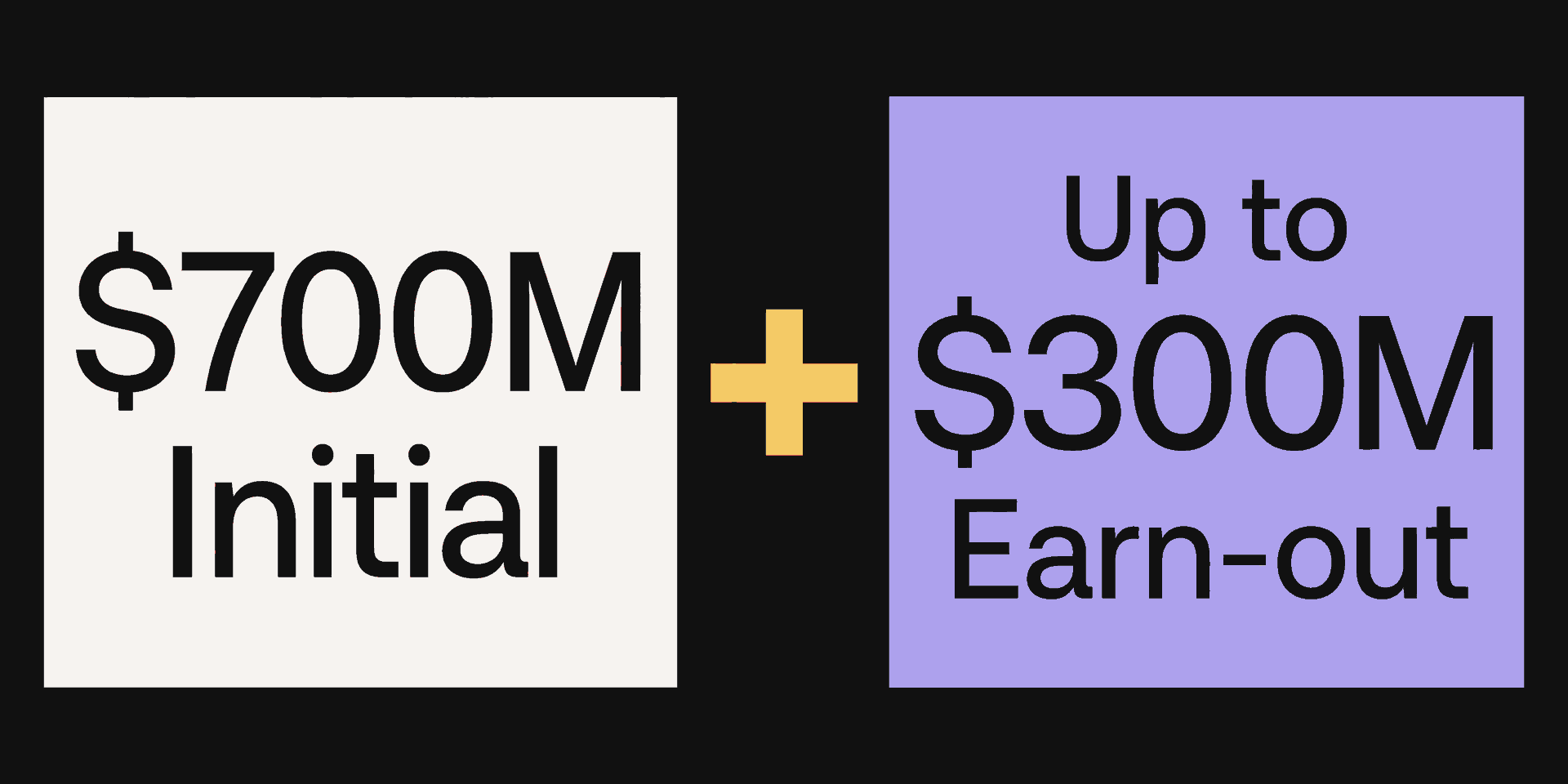
That is a price for the business. It isn't a statement that Clooney personally received $1 billion, or that the full contingent amount was guaranteed.
The announcement doesn't disclose his individual net proceeds or invested capital. Without those details, it cannot establish his personal investment return. Dividing the maximum deal value by an assumed founder contribution would produce a misleading result.
This distinction applies well beyond celebrity businesses. A company can announce a large acquisition while its shareholders receive different amounts, at different times, under different terms. The headline sale price alone cannot tell an angel investor what their own investment would have returned.
Why the buyer mattered
Diageo described Casamigos as a complement to Don Julio and highlighted its international potential. The business had traction concentrated in the United States; the buyer brought an established global drinks operation.
Our reading is that the acquisition connected an emerging brand with a buyer equipped to expand it. That makes distribution part of the business case. Awareness can bring customers to a product, while retail availability and dependable supply make it possible for them to purchase it again.
An acquisition story still doesn't justify any entry price. An angel investing before that outcome faces uncertainty about demand, funding needs, competition, and whether a suitable buyer will ever make an offer.
What angel investors can learn from Clooney's businesses
At Casamigos, Clooney participated as a founder, with skills and relationships that affected the business. A passive investor writing a check has a different role. That difference matters when translating his experience into an investment approach.
Look for a specific founder advantage
Clooney's experience in film is relevant to Smokehouse. His public profile was relevant to introducing a consumer brand. Those are identifiable advantages connected to the work each business needed to do.
The same logic applies to less famous founders. A former hospital administrator may understand purchasing delays that an outsider misses. A restaurant operator may know why a new ordering tool will fail during a dinner rush. That knowledge becomes more valuable when the founder can turn it into a product customers use and pay for.
Our startup evaluation framework considers the team alongside traction, timing, technology, and deal terms. A strong background earns attention. Evidence of execution determines how much weight it deserves.
An investor's contribution also needs to be concrete. Introductions to prospective customers, help hiring an experienced operator, or knowledge of a difficult sales process can address a real constraint. A vague promise to “open doors” is harder to assess.
Separate attention from durable demand
A celebrity can help a brand attract attention quickly. The operating questions remain familiar.
- Customer behavior. Repeat purchases and customer retention show whether interest lasts beyond a launch.
- Economics. Gross margin, the share of revenue left after product costs, and the cost of acquiring customers show how much room the business has to grow without consuming more cash than expected.
- Distribution. Availability, sales to end customers, and retailer reorders show whether products move through the channel.
- Dependencies. Reliance on one founder, retailer, or promotional channel can make early traction fragile.
Even an established brand can face setbacks. In its fiscal 2026 annual report, Diageo reported a 25% decline in Casamigos organic net sales for the year ended June 30, 2026. The organic measure adjusts for factors including currency movements and acquisitions. This global brand figure includes tequila and mezcal and excludes ready-to-drink and non-alcoholic variants.
The decline doesn't undo the founders' acquisition outcome. It shows why a successful exit and a permanently growing brand are separate claims. Competition, consumer demand, and execution continue to matter after a sale.
Build a repeatable decision process
Our co-founder Elizabeth Yin writes in Democratizing Knowledge, “The more disciplined you are in your thought process/rubric, the more you can improve over time.”
A useful investment memo records the reason for investing before the outcome is known. It names the founder's advantage, the evidence of demand, the largest unresolved risk, and what progress would support the original thesis.
For a consumer brand, that might mean distinguishing growth from opening new retail accounts from growth in sales at existing stores. Both can increase revenue. Only the second directly demonstrates that established locations are selling more product. Recording that distinction makes later results easier to interpret.
This process also gives investors something specific to discuss with peers. Two people can agree that a founder is impressive and still disagree about whether the customer evidence supports the price.
Keep one exceptional outcome in perspective
Casamigos is a visible success. It doesn't show how often similar ventures fail, how many never find a buyer, or how long an investor's capital might be tied up.
As Elizabeth puts it in Democratizing Knowledge, “Don't try to pick a co. Select a portfolio.” That perspective keeps a famous win from becoming a reason to concentrate money in one appealing story.
Most startup bets may fail, and an angel portfolio can lose money. A business may also keep operating without producing a sale or other way for investors to get their money back. Our guide to your first angel investments puts individual deals in the context of a longer-term investing practice.
If you want to build that practice with other investors, apply to Angel Squad. Members get the founders, terms, and Hustle Fund's investment rationale with each shared deal, giving you concrete material for practicing your own evaluation.
Startup investing is speculative, illiquid, long-term, and can result in a total loss. Past outcomes don't guarantee future results. This content is educational and isn't investment, accounting, valuation, legal, or tax advice. Seek independent advice from qualified legal and tax professionals about your circumstances.