Brian Acton: WhatsApp, Signal and the $850M Decision
Brian Nichols is the co-founder of Angel Squad, an angel investing community where aspiring and active angels learn from Hustle Fund’s approach, review curated deal flow, and connect with peers.
Brian Acton’s story is often flattened into two headlines: Facebook rejected him, then bought his company. The better story for investors starts earlier and keeps going. It runs through an operator network, a disciplined product thesis, a disputed acquisition clause, and a second act built around privacy. Those details show where Acton’s edge came from, what he actually invested in, and where the popular version of his story gets sloppy.
Who is Brian Acton?
Brian Acton is an American software engineer, entrepreneur, investor, and philanthropist. He was born in Michigan in 1972, earned a computer science degree from Stanford in 1994, and worked at Apple, Adobe, and Yahoo before co-founding WhatsApp with Jan Koum.
Today, Acton is executive chair of the Signal Technology Foundation, the nonprofit parent of Signal Messenger. He co-founded the foundation with Moxie Marlinspike in 2018 and supplied its initial funding. Acton and his wife, Tegan Acton, also lead the Wildcard Giving network of philanthropic organizations.
His career has four distinct capital roles:
- Operator: He built technical and operating experience inside established companies.
- Founder: He helped finance and scale WhatsApp while retaining a large ownership position.
- Shareholder: WhatsApp’s sale converted that ownership into life-changing liquidity.
- Mission funder: He used part of the proceeds to back privacy technology and philanthropy on his own terms.
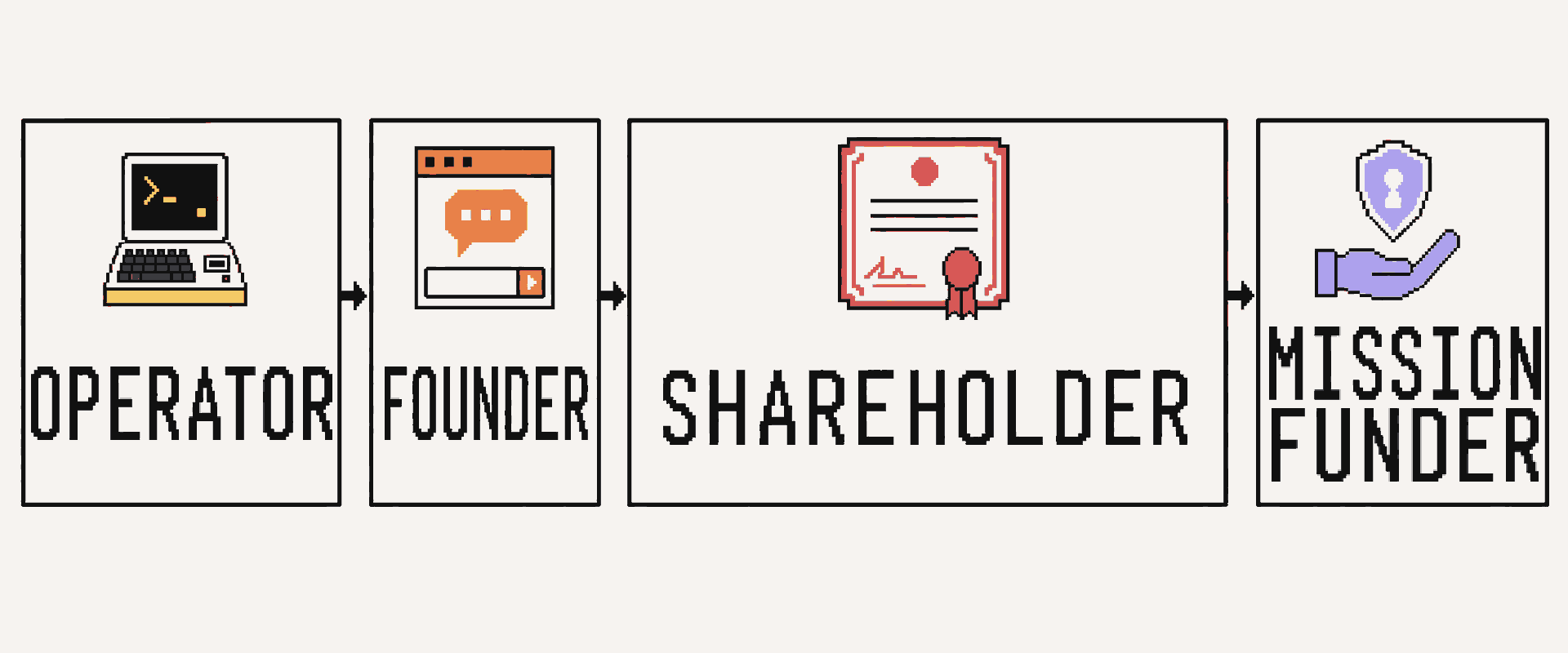
Treating all four as “Brian Acton investments” misses what made each decision work.
Brian Acton and Jan Koum built trust before WhatsApp
Acton met Jan Koum in 1997, when Koum was testing Yahoo’s advertising systems for Ernst & Young. Koum joined Yahoo later that year, and the two worked together for roughly a decade. They left in 2007, traveled through South America, and later failed to land jobs at Facebook.
The rejection makes a great meme. Their Yahoo network mattered more.
Koum incorporated WhatsApp in February 2009. Early versions struggled, and he considered quitting. Acton urged him to keep going. When messaging took off inside the app, Acton persuaded five former Yahoo colleagues to put $250,000 into the company’s seed round. He formally joined WhatsApp in November 2009 and received co-founder status and equity. Forbes’ early company history also records that Sequoia later invested $8 million, then another $50 million in 2013.
That sequence matters to angels. Acton’s first financing edge was earned trust with people who had watched him operate for years. He brought money into the company, but he also brought recruiting judgment, infrastructure experience, and credibility with future investors.
WhatsApp’s product choices were equally clear. The founders wanted a fast, dependable messaging service with no ads, games, or gimmicks. They charged users in some markets, kept the team small, and resisted venture capital until they found an investor willing to respect the model.
The WhatsApp sale was announced at $19 billion and closed near $22 billion
Facebook announced its agreement to buy WhatsApp in February 2014. The consideration included $4 billion in cash, about $12 billion in Facebook shares, and $3 billion in restricted stock units for WhatsApp employees. Those are the terms behind the familiar $19 billion headline in the SEC-filed announcement.
Facebook’s share price rose before the transaction closed in October, pushing the reported value to roughly $22 billion. That is why credible accounts use both numbers.
Acton held an estimated stake of about 20%. Forbes estimated that he received roughly $3 billion from the deal. The exact value moved with Facebook stock, taxes, vesting, and later sales, so a single precise payout figure creates false certainty.
Why Brian Acton left WhatsApp and gave up $850 million
Acton stayed at Facebook until September 2017. By then, he and Facebook leadership disagreed about targeted advertising, the commercial use of WhatsApp data, and how the service should make money.
The acquisition agreement contained a protection that could accelerate the founders’ remaining stock if Facebook implemented monetization without their consent. Acton believed Facebook’s plans triggered it. Facebook’s lawyers argued that the company had explored monetization rather than implemented it. Acton chose to leave without fighting for the final tranche.
Forbes reported that the unvested awards were worth about $850 million. The same account says Facebook proposed a settlement with a nondisclosure agreement, another reason Acton declined to settle.
It is tempting to frame this as pure heroism. Acton already had billions. The investor lesson is more practical: values need contractual mechanics.
A founder may care deeply about privacy, pricing, independence, or customer treatment. If an acquisition can change those choices, the sale agreement, board rights, vesting terms, and definitions of prohibited conduct determine how much leverage remains. “Monetization” sounded protective until two sides disagreed about whether exploration counted.
What Brian Acton does now: building Signal as a nonprofit
Acton launched the Signal Foundation with Moxie Marlinspike in February 2018 and committed an initial $50 million. The foundation became the nonprofit parent of Signal Messenger, which Marlinspike and a small team had developed before Acton joined.
That distinction corrects a common mistake. Marlinspike created the original Signal app and protocol before the foundation existed. Acton co-founded the foundation that gave the project a permanent organizational home and far more operating capacity.
Signal’s structure is part of the product thesis. It has no advertising business or outside equity investors. Donations support a free messaging service, and the nonprofit owns the operating company. Acton’s $50 million was mission capitalization. It carried no conventional venture equity or exit target. WIRED’s launch report captures both the funding and Acton’s move into day-to-day leadership.
This was also a response to the limits he experienced after selling WhatsApp. Instead of trying to preserve a privacy mission through a clause inside an acquirer’s contract, Acton helped place Signal inside a structure designed around that mission.
Brian Acton’s publicly disclosed investments
Acton does not publish a complete personal portfolio, and private-company databases disagree about what belongs in it. The defensible public record is shorter than many profiles suggest.
- Trak N Tell: In 2016, The Economic Times reported Acton’s participation in the Indian vehicle-telematics company’s Series A. The terms and exact amount were undisclosed. The report said Acton and two unnamed investors were believed to have invested about $3.5 million in total, so that figure should not be described as Acton’s personal check. Trak N Tell’s CEO also said Acton was helping with strategy and growth planning. In 2019, TechCircle reported a fresh $5 million investment from Acton based on Indian corporate filings.
- DuckDuckGo: Acton was named among the investors in a transaction of more than $100 million completed in 2020. The round was mainly secondary, meaning much of the money purchased shares from existing holders. Acton’s personal amount was not disclosed. Technical.ly reported the investor list and transaction structure.
- Signal Foundation: Acton’s initial $50 million funded a nonprofit, with no conventional equity upside. Classify it separately from startup checks when assessing his investment portfolio.
The common thread is privacy and connected technology, especially in DuckDuckGo and Signal. The record is still too small and incomplete to infer a rigid sector thesis, preferred check size, or repeatable portfolio strategy.
Philanthropy with Tegan Acton
Brian and Tegan Acton established Wildcard Giving in 2014. Its network includes Sunlight Giving, Acton Family Giving, and Solidarity Giving. The organizations support different areas, including basic services for young Bay Area families, community initiatives, and wider social causes.
Forbes reported that Acton placed about $1 billion of his Facebook proceeds into philanthropic arms. That is money moved into charitable vehicles, which is different from saying every dollar had already been granted to operating nonprofits.
This distinction is another reason to sort Acton’s capital by purpose. A grant seeks impact. A nonprofit loan or contribution seeks organizational capacity. A secondary share purchase gives liquidity to an existing holder. An early-stage equity check seeks ownership and a financial return. The dollar sign alone does not tell you what decision was made.
Four lessons for angel investors
1. An operator network can become a financing edge
Acton did not meet WhatsApp’s first backers at a pitch event. He had worked beside them at Yahoo. They could assess how he handled hard technical and operating problems because they had direct evidence.
That is the real advantage behind many founder-turned-investor stories. Domain knowledge helps, but trusted access and the ability to judge former colleagues can be even more valuable. New angels can build a similar edge by starting with sectors, customers, and operator communities they understand.
2. Mission alignment needs structure
WhatsApp and Signal pursued a similar privacy promise through different ownership structures. WhatsApp sold to an advertising company and relied partly on negotiated protections. Signal placed the mission inside a nonprofit that does not issue outside equity.
Neither structure is automatically right for every founder. Investors should ask how a company’s stated values interact with its revenue model, board control, financing needs, and likely exit paths. A mission slide cannot resolve a conflict built into the cap table or business model.
3. Study the decision, then return to your portfolio
Acton could concentrate $50 million in Signal because WhatsApp had already made him a billionaire. Copying that check would be absurd for almost every angel.
Our co-founder Elizabeth Yin puts the alternative plainly: “The more disciplined you are in your thought process/rubric, the more you can improve over time.” The useful move is to record why a deal fits your thesis, budget, and portfolio plan. Celebrity investors give us case studies. Your own budget and portfolio set the allocation policy.
Inside Angel Squad, members get repeated practice reviewing curated deals with peers and learning the questions our Hustle Fund team asks. That repetition matters more than copying a famous investor’s outcome.
4. Ask which part of today’s market may stop being true
Acton’s disclosed backing of DuckDuckGo fits the privacy direction he had pursued for years. The same question applies to any early-stage thesis: which constraint, behavior, or market size could change?
Hustle Fund co-founder Eric Bahn asks it cleanly: “is something that is true today going to be true tomorrow?” A good investment memo states the current evidence and the change required for the company to become much larger. Then time can prove the thesis right or wrong.
Brian Acton FAQ
What is Brian Acton’s net worth?
Brian Acton’s exact net worth is not public. He received an estimated $3 billion from the WhatsApp sale and later moved substantial assets into charitable vehicles, so any point-in-time net-worth figure depends on private holdings, transfers, and the estimate’s methodology.
Does Brian Acton still own WhatsApp?
No. Facebook acquired WhatsApp in 2014, and Facebook later renamed its parent company Meta. Acton left in 2017 and has no operating role at WhatsApp.
Is Brian Acton the founder of Signal?
Acton co-founded the Signal Foundation with Moxie Marlinspike in 2018. Marlinspike created Signal’s predecessor technology and built the app before the foundation existed. The accurate title for Acton is co-founder of the Signal Foundation. Marlinspike is the creator of Signal.
How old is Brian Acton?
Acton was born in 1972, making him 53 or 54 in 2026 depending on his birthday. Major public profiles do not consistently report a full birth date.
Build a thesis you can repeat
Brian Acton’s path is memorable because the dollar figures are huge. The repeatable parts are smaller: earn trust before you need it, know what change your thesis requires, match the financing structure to the mission, and write down why each check belongs in your portfolio.
If you want to build that discipline alongside other aspiring and active angels, apply to Angel Squad.
Disclaimer: This content is for educational purposes only and does not constitute legal, tax, accounting, valuation, or investment advice. Startup investments are speculative, illiquid, long-term, and may result in total loss. Review the governing documents and seek review from qualified, independent legal and tax professionals, as well as qualified accounting, valuation, and investment advisers where appropriate, before investing.