
Austin Startup Community: A Field Guide for Angel Investors
Austin offers plenty of startup access. The harder investor decision is choosing a channel that fits your stage, sector, eligibility, and time. A busy operator seeking peer diligence needs a different route from a technical angel sourcing university spinouts. Start by deciding whether you need relationships, filtered deal flow, diligence support, or follow-on capital.
Read Austin’s funding headline carefully
Austin has real capital activity. Opportunity Austin’s July 16, 2026 update, citing PitchBook’s Q2 estimates, reported about $6.5 billion raised by Austin-region companies in the first half of 2026, up from $2.9 billion in the same period of 2025. Its report also put full-year 2025 funding at $7.24 billion. These are regional, all-stage estimates, rather than a count of angel-ready rounds. July funding update
Three Q2 rounds named in that update totaled $930 million. That is roughly 14% of the entire first-half estimate in three deals. The lesson is simple: a large market total can coexist with a much smaller supply of pre-seed and seed opportunities that fit an individual angel’s check size, sector expertise, and ownership goals.
Use funding data to understand market momentum and follow-on capacity. Never treat it as evidence that a specific company is well priced, well governed, or available to you.
Evaluate the channel before you evaluate its deals
Every part of the Austin startup community has an operating model. Learn that model before you give it your evenings, reputation, or capital.
Ask these questions:
- Stage fit: Does the channel surface formation-stage companies, institutional seed rounds, later-stage businesses, or a mixture?
- Sector fit: Is it broad, or does it concentrate on deep tech, software, healthcare, climate, defense, consumer, or impact?
- Access rules: Can anyone register, is membership required, must you be accredited, or does an organizer approve attendees?
- Sourcing quality: Who brings companies in, and why do strong founders choose that route?
- Diligence support: Do you receive a deck, data room, reference calls, written memo, and a named diligence lead?
- Follow-on network: Are there investors who can support later rounds, or is the network strongest only at the first check?
- Incentives: Does the organizer earn dues, sponsorship revenue, equity, management fees, carry, or goodwill?
- Conflicts: Is the host also an investor, adviser, service provider, founder, or paid promoter?
- Time commitment: Is this a two-hour event, a six-week diligence cycle, or an ongoing member role?
Our general partner Shiyan Koh gives investors the right starting principle:
“Show me the incentives, and I'll show you the outcome.”
Shiyan Koh, Hustle Fund GP
An incentive is not automatically a problem. Hidden incentives are. Write down who gets paid, who owns equity, who controls the process, and who carries the downside before relying on any channel’s judgment.
The Austin startup investor community, channel by channel
The broad ecosystem includes founder communities, formal angel networks, hubs, university programs, events, directories, and remote communities. The formal Austin angel investing community is one part of that larger network.
Founder communities and meetups: broad access, light filtering
Founder communities are the easiest entry point for learning Austin’s vocabulary and meeting people before they start fundraising. FIESTA brings founders, investors, operators, and newcomers into one broad community. The Austin Startup Meetup serves a similarly wide audience through its event calendar.
These rooms are useful for hearing what founders are building, which people repeatedly help others, and which problems appear across companies. They are weak substitutes for an investment process.
Best suited to: New local angels building relationships, operators with a specific functional skill, and investors still narrowing a sector thesis.
What to expect:
- Event-level registration rules and attendee mixes can change.
- Companies may range from idea stage to revenue-generating businesses.
- Organizers generally do not provide investor diligence or allocation.
- The time cost sits in follow-up. One good conversation usually needs several later calls before it becomes actionable.
A useful approach is to attend as a domain expert. A healthcare operator who asks founders about procurement cycles will learn more than an investor who asks everyone, “Are you raising?” Help first, then observe who follows through.
Angel networks: structured access with real participation requirements
An angel network can compress sourcing, peer review, and diligence into one channel. It also asks more of you than an event ticket.
Central Texas Angel Network
The Central Texas Angel Network focuses on early-stage opportunities and runs a formal member-driven process. CTAN says it offers up to six funding cycles per year, with each cycle lasting at least six weeks. Members vote on applications, attend screening and pitch events, and form deal teams for customer calls, competitive analysis, market sizing, and team references.
Prospective members must qualify as accredited investors, meet a board member, agree to membership rules, pay annual dues, use the network’s online platform, and participate in the ecosystem. CTAN also says members invest independently and appear on the cap table themselves. The organization facilitates the process and does not endorse the opportunities or share in member profits.
Best suited to: Accredited investors who want repeated early-stage exposure and will contribute to screening or diligence.
Investor lens: The process can improve information quality, but its value depends on active deal teams. Ask who led each workstream, what was independently checked, how dissent was recorded, and whether anyone has a commercial relationship with the company. Budget real time during diligence weeks.
SWAN Impact Network
SWAN Impact Network has a narrower thesis. It focuses on companies seeking measurable social or environmental impact alongside financial outcomes. Its Angel Members are accredited investors who contribute capital, expertise, and mentoring. Associate Members can learn and contribute time or skills without joining as accredited Angel Members.
SWAN says members can participate in screening and due diligence, then mentor founders. That creates a useful learning route for an aspiring angel who is still developing an impact thesis.
Best suited to: Impact-focused angels, sector experts who can assess outcome claims, and newcomers who want a participation route before they are eligible to invest in accredited offerings.
Investor lens: Define the impact standard before reviewing the pitch. Ask how the company measures additional impact, whether the business model depends on grants or policy, and how the network handles a tradeoff between mission and financial terms. A strong mission does not resolve valuation, governance, or follow-on risk.
Capital Factory and STATION Austin: separate the hub from the investor
A prominent Austin startup hub now contains two distinct roles.
Capital Factory remains an investment organization. In a March 10, 2026 announcement, it launched STATION Austin as a nonprofit to carry forward community programming, mentorship, events, and collaborative space. The announcement says some STATION content and its mobile app are member-only, while individual events have their own access rules. STATION Austin launch
That split matters to investors. A founder’s presence at STATION can show community participation. It does not tell you whether Capital Factory invested, whether the company passed an investment committee, or whether an allocation exists.
Use the current event calendar to find pitch days, meetups, and sector gatherings. Read each listing for city, audience, price, and approval requirements. Capital Factory runs events across several cities, so its next listed event may be outside Austin.
Best suited to: Local operators who can attend repeatedly, investors in deep tech or software who want Texas-wide relationships, and angels who can contribute customers, talent, or technical expertise.
Investor lens: Ask which entity hosts the event, whether a presenting founder is a portfolio company or community member, and whether sponsors or investors receive preferential access. Treat community density as a sourcing advantage. Do your own work on the deal.
UT Austin commercialization: differentiated technology, specialized diligence
University commercialization can surface companies before they look like conventional software startups. It can also introduce intellectual property, licensing, regulatory, and technical risks that a generalist investor is poorly equipped to judge.
The Austin Technology Incubator is UT Austin’s deep-tech incubator and serves university entrepreneurs and community founding teams. Its current focus areas include circular economy, energy, food and agriculture technology, healthcare, microelectronics, mobility, and water. ATI sits within Discovery to Impact.
Discovery to Impact provides a public directory of UT-related startups. Use it to identify companies and research themes. Directory inclusion is a starting point for outreach, not an investment recommendation or a securities offering.
Best suited to: Technical operators, clinicians, energy specialists, hardware investors, and angels comfortable with longer commercialization timelines.
Investor lens: Add these questions to your usual due diligence checklist:
- Who owns the core intellectual property?
- Is the license executed, exclusive, transferable, and broad enough for the business plan?
- Which milestones require more grant, strategic, or venture capital?
- What evidence comes from independent customers or technical reviewers?
- Which later-stage investors understand the regulatory and capital path?
University affiliation can improve technical access. It does not remove product, market, or financing risk.
Events: efficient discovery, expensive distraction
Austin’s event calendar can fill every night of the week. Use major events as compressed sourcing windows with a written objective.
- Capital Factory and STATION Austin events: The live calendar lists pitch days, meetups, and summits throughout the year. Check the city and registration rule on each event.
- SXSW 2027: The official dates are March 15 through 21, 2027. The program spans far beyond startups, so sector-specific sessions and smaller side events usually fit an investor thesis better than a generic badge schedule. SXSW 2027
- Texas Venture Gala & Forum 2027: The fourth annual gathering is scheduled for May 27 and 28, 2027 in downtown Austin. It is a statewide investor and startup gathering, which makes it more useful for mapping relationships than proving local deal quality. 2027 gala details
Set three goals before you register: five people you want to meet, two questions you are researching, and one follow-up block already reserved on your calendar. Event access never guarantees company access, investment allocation, or diligence quality.
Directories and public resources: map the market before asking for introductions
A directory is the fastest way to turn “Austin startups” into a research list. Directory records can be incomplete, self-submitted, or slow to reflect company changes.
The Austin Chamber launched a regional ecosystem platform with Dealroom in 2022. The current Opportunity Austin portal lets users explore startups, investors, accelerators, funding rounds, and related organizations. The original launch record explains its purpose: market transparency and ecosystem discovery.
Use the portal to build a watchlist by sector, stage, and recent activity. Then confirm the company’s status through direct founder contact and primary materials before treating it as active deal flow.
The City of Austin Small Business Division serves a different purpose. It lists coaching, classes, city programs, and operating resources. That can help you understand founder support and local execution issues. It is not a venture-screening database. Many good local businesses also have no reason to pursue venture-scale outcomes.
Remote access: pair Austin research with a repeatable investing process
You do not need an Austin address to develop informed relationships in the market. You do need a reason for founders and local investors to keep responding.
A credible remote path has four parts:
- Build a focused Austin watchlist from Opportunity Austin and Discovery to Impact.
- Attend virtual or hybrid sessions where the organizer identifies the audience and follow-up process.
- Offer domain-specific help, such as customer introductions or technical review, before asking for allocation.
- Run every opportunity through the same memo, reference, and portfolio process you would use at home.
A national community can add peer review and a consistent education layer. Angel Squad is our angel-investing community for learning, comparing notes with other operators, and considering co-investing opportunities sourced through Hustle Fund. It does not promise Austin-specific deal flow or allocation, so use it alongside local research rather than as a substitute for local relationships.
For any remote special purpose vehicle (SPV) or syndicate, review the lead’s economics, fees and carry, allocation method, information rights, conflicts, and follow-on policy. A polished memo does not transfer the lead’s conviction or access to you.
Community membership and investment eligibility are separate
Membership in Angel Squad does not require accredited-investor status. Investing in relevant private offerings does. The same distinction matters across local and remote communities: joining a group does not make someone eligible for every deal the group discusses.
The SEC’s accredited-investor rules govern eligibility for many private offerings. This is general education, not legal advice. Get independent guidance from qualified securities counsel for your circumstances.
Two practical paths into Austin
The best route depends on what you already know and how much time you can contribute.
Local path: the energy operator
You live in Austin, work in grid software, and can spend six hours a month. Start with one energy or climate event, review ATI’s energy companies, and meet impact-focused investors through SWAN. If a relevant deal appears, volunteer for customer and technical diligence. Your expertise creates access and makes the group’s work better.
Skip broad events that produce no relevant conversations. Join CTAN only if you can meet its accreditation and participation requirements and want broader early-stage exposure.
Remote path: the B2B software operator
You live in Chicago and can spend three hours a month. Build a 15-company watchlist from the Opportunity Austin portal, identify five local investors who repeatedly appear in your stage, and attend one virtual sector event. Use a remote community to compare notes and practice writing memos. Ask for an introduction only when your operating experience is relevant to the founder.
Your location is a small disadvantage. An unclear thesis and inconsistent follow-up are much larger disadvantages.
Your first 30 days
The goal of month one is a working sourcing and evaluation system. Writing a check is optional.
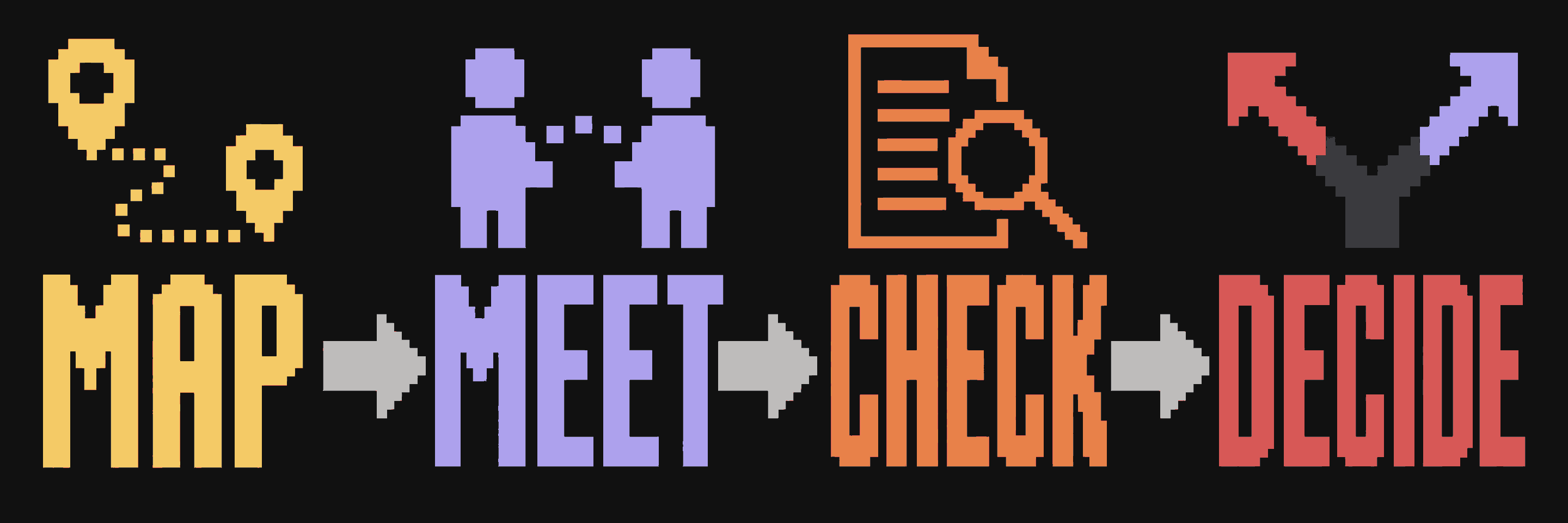
Week 1: map
- Write a one-sentence thesis with stage, sector, check range, geography, and exclusions.
- Choose three channels that fit the thesis.
- Build a 15-company watchlist and a 10-person relationship list.
- Block a monthly startup-investing time budget before accepting invitations.
Week 2: meet
- Attend one broad founder event and one thesis-specific event.
- Ask every organizer how companies enter the pipeline and what happens after a pitch.
- Record what you learned, what you offered, and the next action within 24 hours.
- Remove any channel whose audience or access rules do not match your plan.
Week 3: verify
- Review one real or archived opportunity without committing capital.
- Write a one-page memo covering team, problem, evidence, market, terms, risks, and open questions.
- Compare the organizer’s claims with primary company materials and two independent references.
- Ask who leads follow-on rounds and what support exists after the initial investment.
Week 4: decide
- Select one primary sourcing channel and one backup.
- Decide whether your advantage is local presence, sector expertise, diligence labor, or remote network reach.
- Set a quarterly opportunity target and an annual capital limit.
- Make a go or no-go decision on your current process. Make an investment only when the company and the portfolio both fit.
Use a go or no-go memo before every check
Before you invest in Austin startups, answer these questions in writing:
- Would I consider this company if it were based somewhere else?
- What did the community or organizer independently verify?
- What remains founder-reported?
- Who has an economic interest in my decision?
- Do I understand the security, valuation, dilution, and ownership outcome?
- Can the company reach its next milestone with the round it is raising?
- Who could lead the next round, and why would that investor care?
- What is my realistic post-investment time commitment?
- How does this check fit my total startup allocation and diversification plan?
Our general partner Elizabeth Yin puts the last point plainly:
“Don't try to pick a company. Select a portfolio.”
Elizabeth Yin, Democratizing Knowledge, quoted in our first five deals guide
Startup investments are illiquid, information is uneven, and many companies fail. A local introduction can improve your access. It cannot turn one company into a diversified strategy.
Austin has enough community infrastructure to support several investing styles. Choose a channel for the job it actually does, contribute something useful, and keep your underwriting independent. If you want an ongoing community for building those angel-investing habits and reviewing opportunities with other operators, apply to Angel Squad.







.png)