Minimum Angel Investment: How Much Should You Start With?
Brian Nichols is the co-founder of Angel Squad, a community where you’ll learn how to angel invest and get a chance to invest as little as $1k into Hustle Fund’s top performing early-stage startups.
This is general education, not investment, legal, accounting, or tax advice. Private startup investments are speculative, illiquid, long-term, and can result in total loss. Eligibility, rights, fees, carry, tax treatment, and outcomes depend on the offering and governing documents. Read those documents and seek independent advice from qualified investment, legal, accounting, and tax professionals.
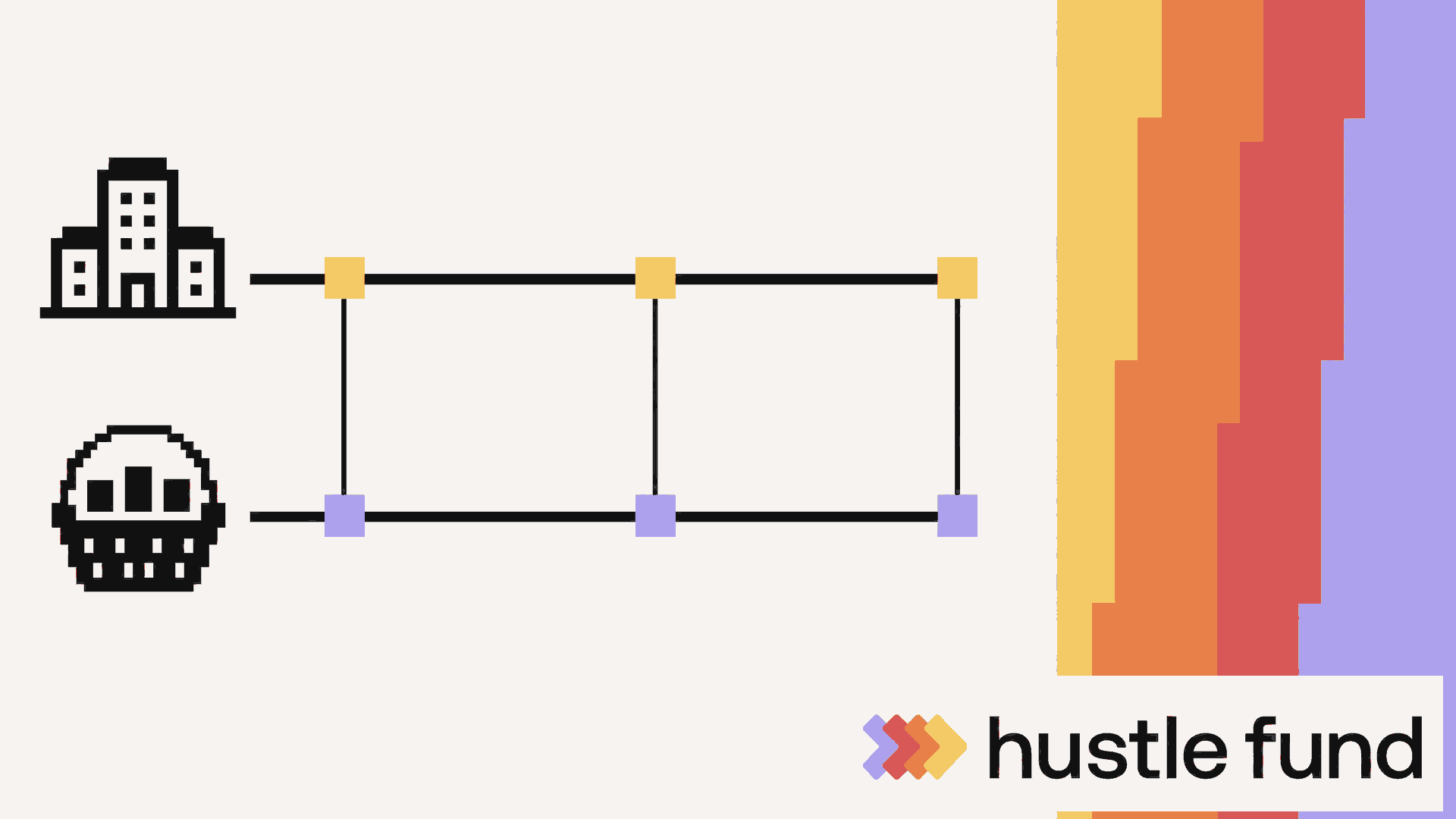
The minimum printed on a deal page answers only one question: how much that vehicle will accept. It says little about what you can afford, how many companies you can back, or what fees you will pay. A useful starting number has to pass all three tests.
There is no universal minimum angel investment
No U.S. rule sets one dollar amount that makes you an angel investor. The startup, fund, syndicate lead, special purpose vehicle (SPV), or funding portal sets the minimum for each offering.
That creates a wide range. Some Regulation Crowdfunding offers accept checks in the low hundreds. Many SPV and syndicate opportunities start around $1,000 to $5,000. Organized angel groups may set deal minimums around $5,000 to $25,000, sometimes alongside membership dues. A startup raising directly from individuals may prefer $10,000 to $25,000 or more, though the amount is negotiable.
These are route patterns, not industry rules. A $1,000 deal and a $25,000 deal can sit side by side on the same platform.
The cleaner answer is:
- Legal minimum: There is no universal dollar minimum.
- Deal minimum: The issuer or investment vehicle sets it.
- Practical first check: Often the smallest amount a suitable deal accepts, commonly $1,000 through an SPV.
- Personal minimum: Enough to start without touching money needed for living expenses, emergencies, taxes, debt payments, or near-term goals.
That last number matters most. A low entry point makes angel investing more accessible. It does not make the investment safer.
How minimums change by investment route
The route affects your eligibility, paperwork, economics, access, and minimum check. Understand the route before comparing dollar amounts.
Regulation Crowdfunding
Regulation Crowdfunding offerings run through an SEC-registered broker-dealer or funding portal. Both accredited and non-accredited investors can participate, though the SEC limits how much non-accredited investors may invest across these offerings in a 12-month period. Securities bought this way also generally cannot be resold for one year. The SEC crowdfunding rules explain the current framework.
Published minimums can be below $1,000. That can make crowdfunding a low-minimum route into an individual private company. Deal quality, terms, fees, investor rights, and access to information still vary by offering.
SPVs and syndicates
An SPV pools many investors into one entity, which then invests in a startup. The startup sees one line on its capitalization table instead of dozens of small individual investors.
This structure makes $1,000 to $5,000 checks workable in rounds where a direct check might need to be larger. The lead or manager sets the minimum. You own an interest in the SPV, and the SPV owns the underlying startup security. Review our practical SPV guide for the full ownership and administration path.
Through Angel Squad, members learn alongside an angel-investing community and can choose whether to join eligible Hustle Fund co-investment opportunities, with deal minimums typically starting at $1,000. Participation is optional and each deal has its own documents and eligibility requirements.
Angel groups
Angel groups share deal sourcing, screening, diligence, and sometimes education. Some members invest individually. Others pool capital through an SPV. A group may charge dues, set its own participation rules, and impose a per-deal minimum.
Ask whether the quoted number is a membership cost, a minimum for one company, an annual expectation, or a fund commitment. Those amounts are easy to confuse and create very different cash obligations.
Direct startup investments
In a direct deal, you sign the startup's financing documents and hold the security yourself. The founder or lead investor decides which check sizes fit the round.
A founder may accept $1,000 from someone with valuable expertise or introductions. Many founders still prefer larger checks because every direct investor adds signatures, communications, and cap-table administration. Small checks often move through an SPV for this reason.
Angel funds
A fund minimum is a commitment to a pooled portfolio, not a check into one startup. Capital may be called over time, and management fees, carry, investment period, and fund term affect the real obligation.
Do not compare a $25,000 fund commitment directly with a $1,000 SPV check. One buys exposure to a managed pool. The other buys exposure to one company through one vehicle.
Accreditation is separate from the minimum check
A person can have enough cash for a deal and still be ineligible for that offering.
Many private startup deals use exemptions that limit or restrict participation by non-accredited investors. Under the current SEC accredited investor criteria, an individual can qualify through routes including:
- Net worth above $1 million, excluding a primary residence, alone or with a spouse or partner.
- Income above $200,000 individually or $300,000 with a spouse or partner in each of the prior two years, plus a reasonable expectation of the same in the current year.
- Certain professional credentials in good standing, including the Series 7, Series 65, or Series 82.
- Certain roles, such as a director, executive officer, or general partner of the issuer.
Other routes apply to knowledgeable employees, family offices, and entities. Our accredited investor guide explains the distinctions in more detail.
Non-accredited investors still have paths into private companies, including eligible Regulation Crowdfunding offerings. The offering exemption determines who can invest. The label “angel” does not.
Calculate a first-check size from the portfolio backward
Picking a first check in isolation creates a common trap. A deal minimum can consume so much of your allocation that you have little room for other companies.
Start with this simple framework:
- Set a total angel allocation. Use only capital you can leave illiquid for years and lose completely without changing your financial plans.
- Choose whether to hold a reserve. A reserve can cover later opportunities or follow-on checks, though access and rights are never guaranteed.
- Choose an initial position count. There is no magic number. More positions can reduce dependence on one company, while adding more weak deals does not improve a portfolio.
- Divide initial capital by that position count. The result is your target base check.
- Compare it with the deal minimum and all-in cost. If the deal floor is higher, the route may not fit your plan.
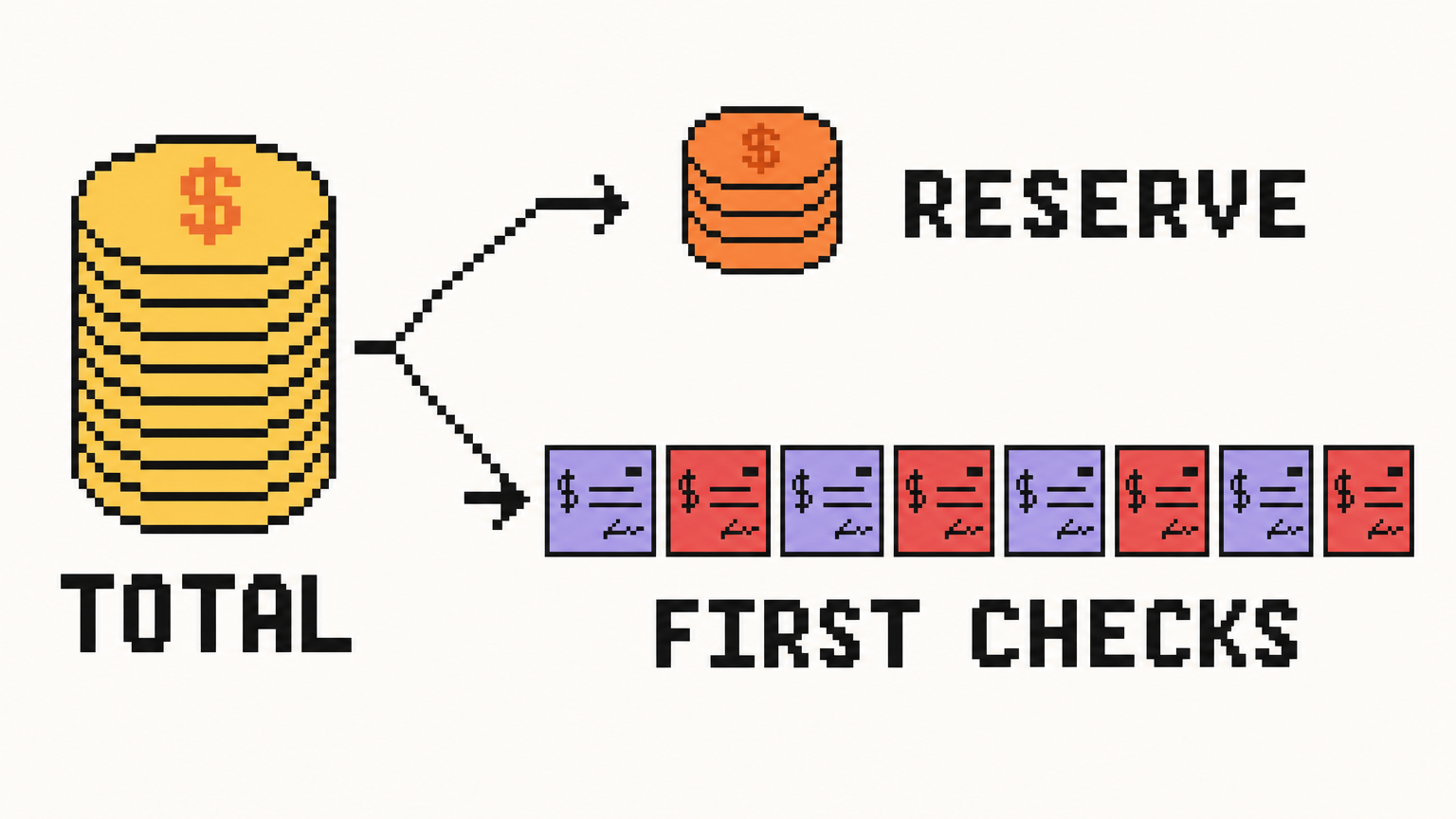
A simplified, hypothetical example: You set aside $20,000 of investable principal over several years, reserve $5,000, and plan 15 initial positions. That leaves $15,000 for first checks, or $1,000 each. A route with a $5,000 minimum would allow only three initial positions, so it fails the plan even though you can technically afford one check. This allocation example excludes fees and says nothing about expected returns.
Our co-founder and GP Elizabeth Yin puts the portfolio principle plainly: “Don't try to pick a co. Select a portfolio.” Small minimums matter because they give you more control over position sizing.
What $5,000, $10,000, or $25,000 can support
These simplified, hypothetical examples assume $1,000 deal minimums and show investable principal after fees. They are allocation illustrations, not recommendations.
- $5,000 total: Five $1,000 positions with no reserve. You get real exposure and five decisions to learn from, though this remains a concentrated startup allocation.
- $10,000 total: Eight $1,000 initial positions and a $2,000 flexible reserve. The reserve can fund later new deals or eligible follow-ons.
- $25,000 total: Fifteen $1,000 initial positions and a $10,000 reserve, or as many as 25 equal initial positions with no reserve. The choice depends on your access, thesis, and willingness to make future decisions.
You do not have to deploy on a schedule. Passing on a weak deal is better than filling a portfolio quota. A budget is a ceiling, not a mandate.
Count the all-in cost, not just the advertised minimum
The minimum investment may be only part of the cash commitment. Before subscribing, identify:
- Upfront or setup fees: Whether they are added to your wire or deducted from the amount invested.
- Ongoing administration expenses: How they are allocated across investors and whether they can continue for years.
- Carried interest: The share of profits, if any, paid to a lead or manager.
- Membership dues: A separate cost for access, education, or community.
- Tax and transfer costs: Potential Schedule K-1 preparation, wire fees, foreign exchange, withholding, and professional advice.
- Follow-on expectations: Whether any future participation is optional and whether pro rata access exists.
A small flat fee consumes a larger share of a $1,000 check than of a $10,000 check. Compare the total cash paid per company and the net amount that actually buys the security. The subscription agreement, operating agreement, offering memorandum, and fee schedule control the answer.
Your first small check should buy learning, too
Small checks create more chances to practice without pretending early conviction is certainty. Hustle Fund GP Shiyan Koh captures the point: “Learning by doing matters more than ever in this era.”
Make each decision produce a record you can revisit:
- Write down why this team, market, timing, and price make sense to you.
- Name the two or three facts that would prove your thesis wrong.
- Record the terms, ownership route, fees, and expected update cadence.
- Note what you can contribute beyond capital, such as customer introductions, hiring help, product feedback, or sector knowledge.
- Revisit the memo when the company sends updates. Early markups are not cash returns, and silence is also information.
A community or lead can improve access and give you more perspectives. It cannot outsource your judgment. Use a consistent due diligence checklist even when the check feels small.
When to increase your angel check size
A larger check should follow stronger capacity and a repeatable process. It should not follow excitement alone.
Consider increasing your base check only when:
- Your total-loss budget has grown without weakening the rest of your finances.
- You can still pursue the portfolio breadth you chose.
- You have written and reviewed enough decision memos to know where your judgment is useful.
- The all-in fee burden remains reasonable.
- Your thesis explains why this opportunity deserves more capital than the alternatives.
- You understand the new concentration created by the larger position.
The Angel Capital Association says individual angels are generally advised to limit the asset class to five to eight percent of net worth and notes that more than half of startups fail to return capital. Treat that as one industry association's guardrail, not a universal allocation rule. Your cash needs, existing exposure, taxes, and risk tolerance may call for less or none.
A $1,000 minimum is enough to begin making real angel-investing decisions. Your responsible starting point is the smallest check that fits a broader plan, survives the fee math, and leaves your life unchanged if it goes to zero.
If you want structured education, peer discussion, and optional access to curated co-investments with $1,000 minimums, apply to Angel Squad. You can join the community without accredited-investor status, while relevant private investment opportunities still require it.