LP commitments: getting LPs to re-invest in your fund
Brian Nichols is the co-founder of Angel Squad, an angel investing community where aspiring and active angels learn from Hustle Fund’s approach, review curated deal flow, and connect with peers.
Your existing LPs have seen your investments, updates, and response to problems. Asking them to back your next fund means turning that history into a new investment decision.
For managers preparing Fund II or beyond, the work starts well before a re-up pitch and continues through diligence, documentation, and funding.
What an LP commitment means
A limited partner (LP) is an investor in a fund. The general partner (GP) manages the fund and its investments. An LP commitment is the amount the investor agrees to contribute under the fund’s governing documents.
In a typical venture fund, an accepted subscription, the LP’s agreement to join the fund, creates an obligation to provide capital as required by those documents. A capital call requests some of that committed money. Paid-in capital is money already contributed; an unfunded commitment is the amount still available to be called, subject to the fund’s terms. The International Senior Lawyers Project’s fund governance handbook explains these mechanics, including that a contribution may be due at admission or later.
A re-up is a new commitment from an existing LP to a later fund managed by the same firm. Fund II has its own documents and obligations. Paying a capital call for Fund I fulfills an existing commitment; it doesn’t commit the LP to Fund II.
Keep those conversations separate. Existing LPs need clear information about their current fund even if they decide against the next one.
Start the relationship work before the next raise
The next fundraising announcement shouldn’t be the first substantial message an LP has received in months.
In her 2021 Fund II account, our co-founder and general partner Elizabeth Yin wrote, “we started building relationships with new potential LPs right away.” She distinguished that immediate outreach from beginning the Fund II raise about three months after raising Fund I.
For existing investors, continuing updates also give them a view of your work before the next fund is ready.
Set a reporting calendar that meets the fund’s obligations and that your team can reliably deliver. A short interim note can add context between formal reports. It doesn’t replace the formal financial and investor reporting required by the fund’s documents.
Use a consistent structure so LPs can follow changes over time:
- Portfolio activity: New investments, follow-on decisions, exits, and losses, within confidentiality limits.
- Fund position: Capital contributed, distributions, remaining commitments, and the latest reported valuations, with their dates.
- Decisions and lessons: What you believed, what happened, and what you’re doing differently.
- Next milestones: Expected reporting dates and any known upcoming capital needs, clearly distinguished from formal call notices.
If a report will be late, explain the delay and give a realistic delivery date. Silence makes an LP do extra work to understand what’s happening.
Be candid about losses and operational problems
It’s easy to write an update when a portfolio company announces a financing. The harder test comes when an investment fails, a promising deal falls through, or your fund has an administrative problem.
Losses and administrative problems belong in your updates. Venture investing is risky, and most of a fund’s startup investments may fail. An LP needs to understand how you respond when your original expectations don’t hold.
For a difficult development, explain four things:
- What happened. State the event in plain language, without hiding it beneath unrelated wins.
- What it affects. Describe the known impact on the investment, fund, or LP administration. Separate confirmed facts from estimates and open questions.
- What you’re doing. Name the action and responsible person. Explain what changed in your process when a change is warranted.
- When they’ll hear more. Give the next update date, even if the issue may still be unresolved then.
For example, if an administrator error delays a statement, say which statement is affected, who is correcting it, and when you expect to deliver it. Avoid assurances that the delay has no other consequences unless you have a basis for saying so.
The Institutional Limited Partners Association identifies alignment, governance, and transparency as the foundations of effective fund partnerships in its voluntary best practices. Candid communication gives an LP evidence of those practices. It cannot make a weak investment case strong or guarantee another commitment.
What our newsletter showed one hesitant investor
In our early days, one prospective LP wasn’t convinced by our model. They agreed to receive our LP newsletter and saw how we communicated over time.
We sent the updates we’d promised. We addressed obstacles and losses openly. The investor got a clearer sense of what working with us would be like and eventually invested.
That was an initial investment, not a documented re-up. The useful lesson is that regular communication gave someone evidence they couldn’t get from a single pitch.
In Democratizing Knowledge, quoted in our LP closing guide, Elizabeth writes, “It helps potential LPs understand who you really are and what you believe.” Your existing LPs can also judge whether your decisions match those beliefs.
Give the LP a decision-ready case for the next fund
A friendly relationship doesn’t answer whether the proposed fund is a good use of the LP’s capital. Prepare a concise re-up brief that connects your past decisions with what you’re asking them to fund next.
Start with a dated performance summary. Distributions to paid-in capital (DPI) is cumulative distributions divided by contributed capital. Total value to paid-in capital (TVPI) adds distributions to the reported remaining fund value, then divides that total by contributed capital. Distributions can include cash or securities, and unrealized valuations can change.
Present the measures on a consistent basis. Identify whether figures are gross or net and which fees and carried interest they reflect. Carried interest is the manager’s contractual share of investment profits.
State the valuation date and policy, and separate realized outcomes from unrealized valuations. Our TVPI and DPI guide explains why a headline multiple alone is incomplete evidence.
Then connect the numbers to the work:
- Original plan versus actual portfolio: Show where you followed the stated stage, sector, check size, and capital reserved for follow-on investments, and explain material departures.
- Evidence of your process: Include examples of sourcing, investment selection, securing a place in financing rounds, and supporting founders. Attribute the work to the people who will manage the next fund.
- Changes in the successor fund: Explain differences in fund size, strategy, team, fees, carried interest, GP commitment, governance, and reporting. The GP commitment is capital the manager commits to the fund.
- Unresolved risks: Address remaining portfolio uncertainty, team gaps, operational issues, and what the next fund still has to prove.
For a young fund, acknowledge when it’s too early to judge the eventual outcome. Don’t present a higher reported valuation as a distribution or imply that past results establish future returns.
Make the supporting materials easy to find in a controlled-access data room, a shared collection of diligence documents. Our fund-manager diligence guide covers the questions behind the evidence. Keep confidential company information within the access and disclosure rights that apply to it.
Ask about capacity and timing before proposing a check
An LP can value the relationship and still have no room for another commitment. They may have obligations to several funds, fewer distributions than expected, a changed investment mandate, or a different approval process.
Our discussion of why LPs re-up explains the allocator’s side of that decision. As the manager, your job is to understand the constraint before treating every hesitation as an objection to your fund.
Ask questions that produce useful next steps:
- Are you considering commitments to another venture fund in this allocation period?
- What commitment range could fit alongside your existing obligations?
- Who needs to review the proposal, and what materials do they need?
- What questions remain about our current fund or the successor fund?
- Which decision dates and fund-close dates could realistically line up?
Keep forecasts for capital calls and distributions clearly labeled as estimates. Don’t suggest that expected distributions from Fund I will necessarily cover the LP’s obligations to Fund II.
A timing problem calls for a different response from a concern about strategy or trust. If the LP needs a smaller commitment, assess whether it fits your fund’s actual terms and capacity. If they can’t participate, accept the answer.
Make a specific re-up ask
Once the LP has the relevant information and has discussed capacity, name the proposed fund and commitment amount. Ask what remains for a decision and agree on the next step.
A hypothetical conversation might sound like this: “Would a $250,000 commitment to Fund II fit your allocation plan? If so, what remains for your decision, and which close could your team realistically join?”
Follow the answer. An investment committee meeting may require a short memo. A question about reserves may require a portfolio discussion. Document review may require time with counsel and the administrator.
Use a real close date and the actual document deadlines. Don’t manufacture scarcity or describe expected commitments as money already raised. A warm response is useful information, but it still leaves work to do.
Track interest, accepted commitments, and cash separately
Keep one record for each LP and each fund. A single “committed” label is too vague to run a re-up process.
An LP can stop before acceptance. Funding may be due at admission or later, depending on the documents.
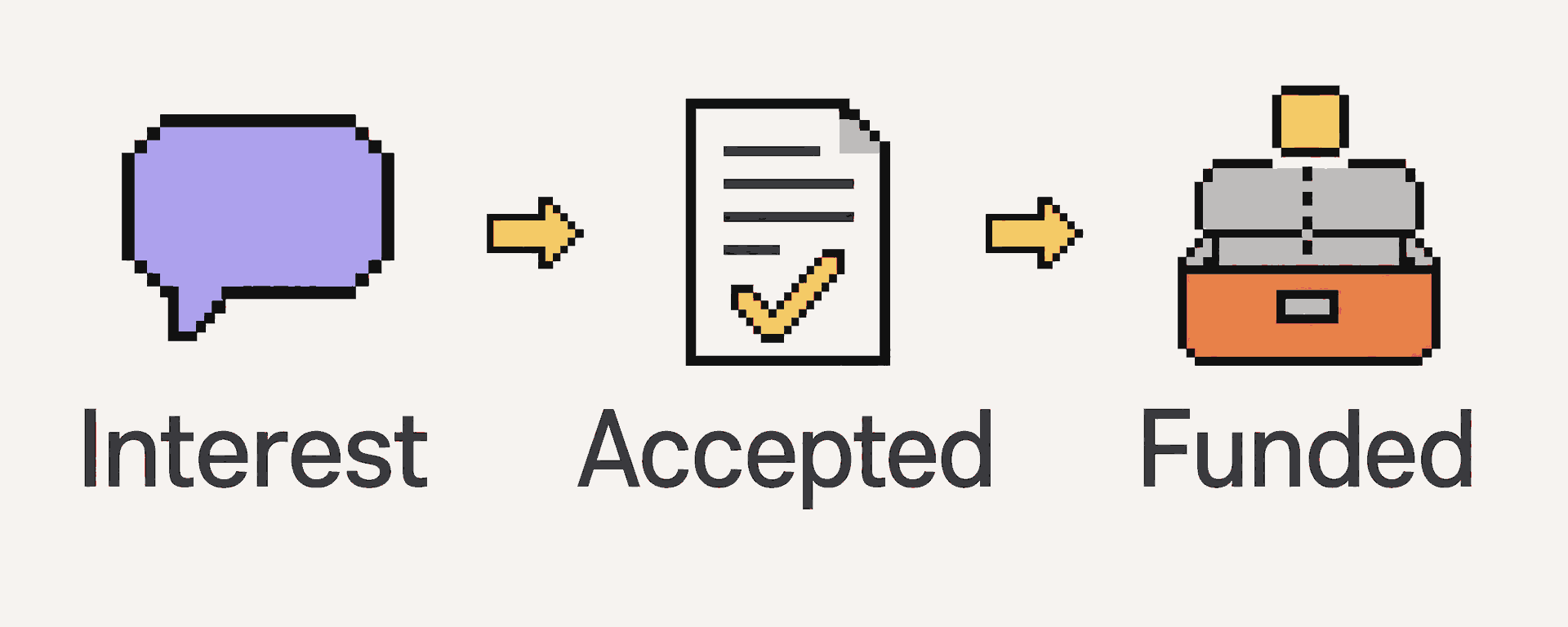
Use stages with evidence behind them:
- Interest expressed: The LP is open to discussing the next fund. No amount is assumed.
- Amount indicated: The LP has discussed an amount or range, with any conditions recorded. Treat it as a nonbinding indication for planning.
- Diligence and documents in progress: Track open questions, approvals, and subscription materials. A document sent or signed by the LP may still await acceptance or other closing conditions.
- Commitment accepted: Acceptance and any admission steps required by the actual fund documents have been confirmed with counsel or the administrator. Record the accepted amount, effective date, and evidence supporting that status.
- Capital funded: Record actual contributions and remaining unfunded obligations in the fund’s books, separately from the fundraising forecast.
For every active re-up, also record the relationship owner, last contact, next action and date, decision-makers, unresolved conditions, and source of the latest status. Keep Fund I obligations separate from the Fund II opportunity.
Suppose an LP indicates $250,000 for Fund II but still needs committee approval. Your pipeline has a $250,000 indication with an open condition. It has no accepted commitment or funded cash from that conversation. If the amount changes during approval, update the record rather than leaving the larger number in your forecast.
Reconcile accepted commitments and contributions with the administrator’s records. Newsletter opens, meeting attendance, and an enthusiastic email don’t belong in the accepted-commitment total.
Keep serving LPs who decline the next fund
When an existing LP passes, ask whether they’re willing to share the reason. Record what they volunteer without turning the conversation into another pitch.
A concern about reporting may reveal an operational problem you need to fix. A concern about a much larger fund may require a clearer strategy case. A liquidity constraint may leave nothing you can solve in the current raise.
End the current fundraising sequence after an explicit no. Ask permission before sending optional future-fund updates, and honor their answer. Continue delivering the reporting and service owed to them in the funds they already backed.
Before your next re-up meeting, prepare one brief for that LP: the evidence for the next fund, their stated capacity and decision process, the proposed commitment, and one next action with an owner and date.
This is educational information, not investment, legal, tax, accounting, or valuation advice. Fund obligations and closing procedures depend on the governing documents and jurisdiction. Seek independent review from qualified legal, tax, and financial professionals.
Venture investments are speculative, illiquid, and long-term, and investors can lose their entire investment. Past results and current valuations do not guarantee future results.